
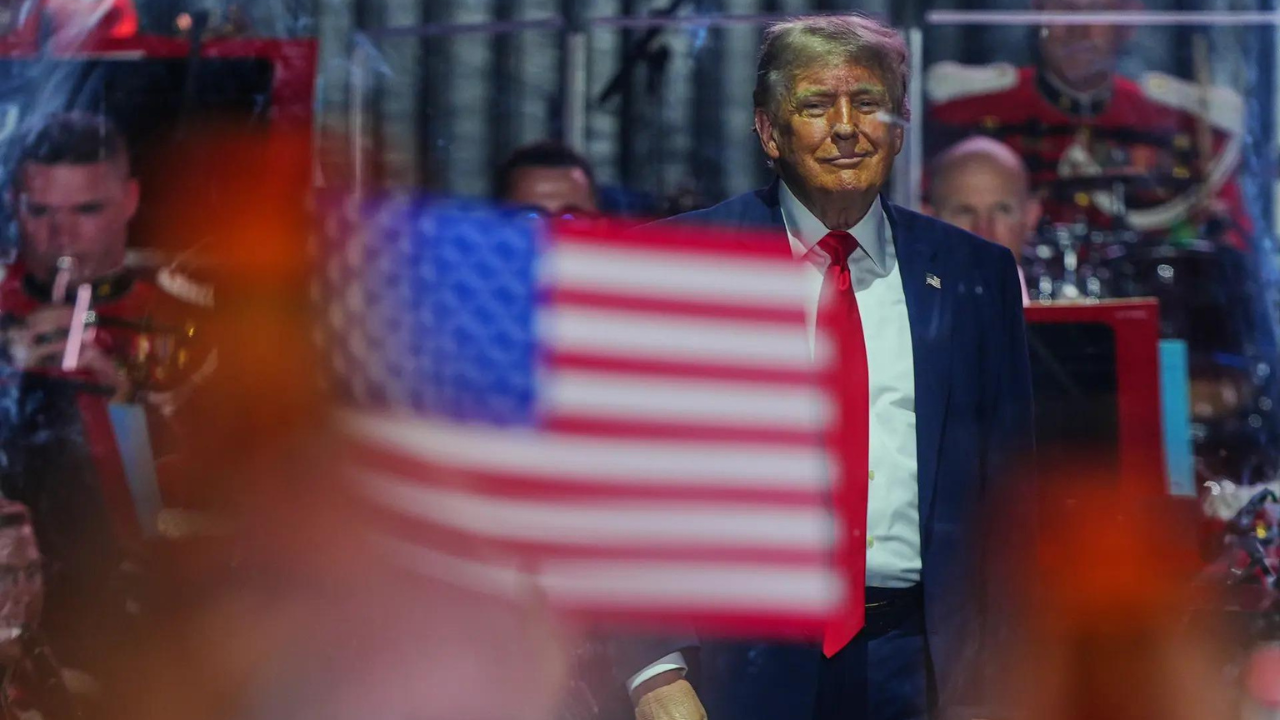
File photo: US President Donald TrumpTOI correspondant from Washington: The US Senate on Friday approved a bill that will allow President Trump to impose 100% tariffs on the world's top five purchasers of Russian oil or natural gas, including India, China, and Turkey. The legislation also targets countries helping Russia evade energy sanctions, Russian banks, officials, and so-called oligarchs and shadow fleet of tankers.
By an overwhelming 86-11 vote, senators approved the Graham bill, formally the Lindsey O. Graham Sanctioning Russia and Iran Act of 2026, a sweeping legislation named for the late Republican Senator, war hawk, and staunch Ukraine supporter, who died July 11.
The bill now heads to the House, so the US President does not yet have a new 100% tariff bazooka just yet. Trump’s tariff menu has now become rather like a Washington restaurant: reciprocal tariffs, national-security tariffs, sectoral tariffs, country tariffs, Russia tariffs, China tariffs, and today's chef's special, “100% punitive tariff, subject to presidential discretion.”
Tariff hee tariff, as they would say in India. There is an important difference, however.
Most of Trump's earlier tariffs were justified as instruments to correct trade deficits, protect American industry or respond to “unfair trade practices.” This one is explicitly a secondary sanction: India or China could be punished not for what they sell America, but for whom they buy energy from, a considerably more muscular and explosive use of American market power.
India gets a particularly awkward deja vu, having already been through this news reel just months ago and seemingly coming out of it. In August 2025, Trump imposed an additional 25% tariff on Indian goods because India was buying Russian oil, taking the combined tariff on many Indian imports to 50%.
Washington subsequently removed that additional 25% in February 2026 after India agreed to stop buying Russian oil as part of a broader trade deal (which now appears to be in coma). The new bill therefore raises an obvious question: if India has already been rewarded for abandoning Russian oil, why give the president another legal switch with which to threaten it?
Because geopolitics, apparently, now comes with an erratic reset button wielded by a mercurial President. A 100% tariff would not necessarily mean all that trade disappears, the bill gives Trump discretion, and there are national-interest waiver provisions and exemptions.