
Assam’s flood future: Shorter rains, higher peaks and more extreme events
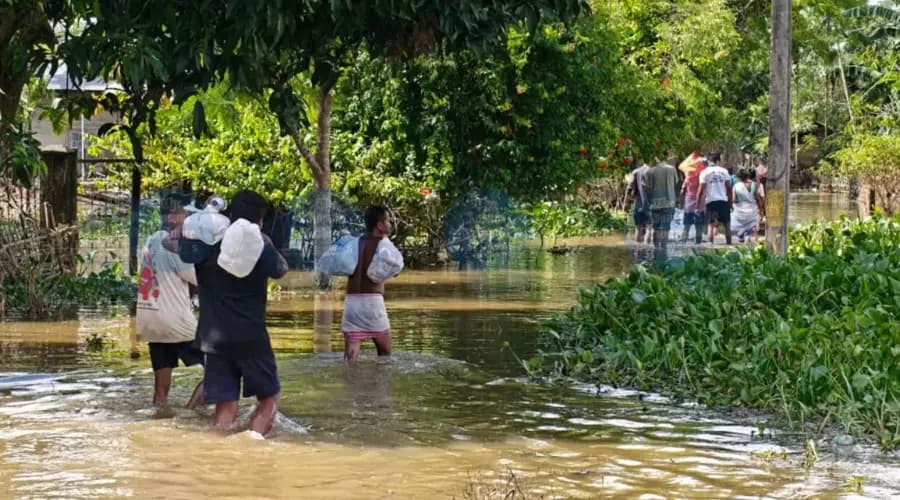
GUWAHATI, Aug 10: Climate models have sounded a stark warning for Assam, indicating that a shorter wet season coupled with increasingly intense rainfall will trigger higher flood peaks, reduce drainage time, and significantly increase the frequency of extreme flood events in future.An analysis by climate think tank Climate Trends that examines the science behind Assam’s evolving flood crisis says floods in the State are no longer a monsoon phenomenon. Instead, they are being driven by the combined effects of global warming, changing river dynamics, and rising human exposure, making them more frequent, complex and increasingly destructive.“The State’s flood crisis is becoming more frequent, more complex, and increasingly destructive. It is now driven by the interaction of global warming, changing river dynamics and growing human exposure, making floods more frequent, more complex and more costly,” the report stated.The analysis draws on the recent study, ‘Causes and Mitigation of Flooding in the Brahmaputra River Basin: A Systematic Review’, which identifies a major shift in rainfall patterns across the basin. The study notes that the monsoon’s peak rainfall is gradually moving from July to August, while post-monsoon precipitation is increasing and pre-monsoon rainfall is declining.The study says the shortening of the wet season, combined with intense rainfall, is expected to generate higher flood peaks while leaving less time for water to drain. It also projects a sharp rise in extreme rainfall events, with daily precipitation exceeding 100 mm likely to occur more frequently in the lower Brahmaputra sub-basins.Hydrological simulations further suggest that average streamflow in the basin could increase by 13-15 per cent by the middle of the century. More alarmingly, the frequency of extreme floods is projected to rise sharply by 2080. Under a high-emissions scenario, a high flood event that currently occurs once every 10 years could recur as frequently as once every two years.The report also highlights the growing influence of glacial changes on river flows. At present, glacier and snowmelt contribute nearly 27 per cent of the Brahmaputra’s upstream discharge. In the near term, rising temperatures are expected to accelerate glacier and snowmelt, increasing early-season runoff. However, continued glacier retreat over the longer term is likely to reduce meltwater contributions, altering flood timing and creating a mismatch between heavier rainfall and diminished snow storage. Climate Trends noted that while there is broad scientific consensus on these trends, uncertainties remain regarding their magnitude.The Assam State Action Plan on Climate Change (SAPCC) 2021-2030 projects a 5-38 per cent increase in extreme rainfall events and more than a 25 per cent rise in flood occurrences under future climate scenarios.Climate projections also indicate that increasing temperatures and precipitation could raise the Brahmaputra’s annual streamflow by around 13 per cent, while sediment loads may surge by nearly 40 per cent by the end of the century. Such changes are expected to intensify riverbank erosion and heighten flood risks across the State.The report adds that human-induced factors, including deforestation, rapid urbanisation and unplanned land-use changes, are compounding the problem by increasing surface runoff and reducing the landscape’s natural capacity to absorb and retain water.“We have been witnessing sharp intraseasonal variations in rainfall patterns. Either rainfall is extremely intense or break-monsoon periods are unusually prolonged, triggering extreme weather events. This is a direct impact of global warming,” said Dr Akshay Deoras, research scientist at the National Centre for Atmospheric Science, University of Reading, UK.“Most parts of East and Northeast India, including Assam, have so far recorded below-normal monsoon rainfall. Yet Assam has experienced some of the worst flooding in a decade. It is time we prepare for the changing nature of the monsoon by focusing not only on the amount of rainfall but also on its changing patterns and intensity,” he added.