
From Ladakh to Nepal flood relief: How IAF mastered relief missions
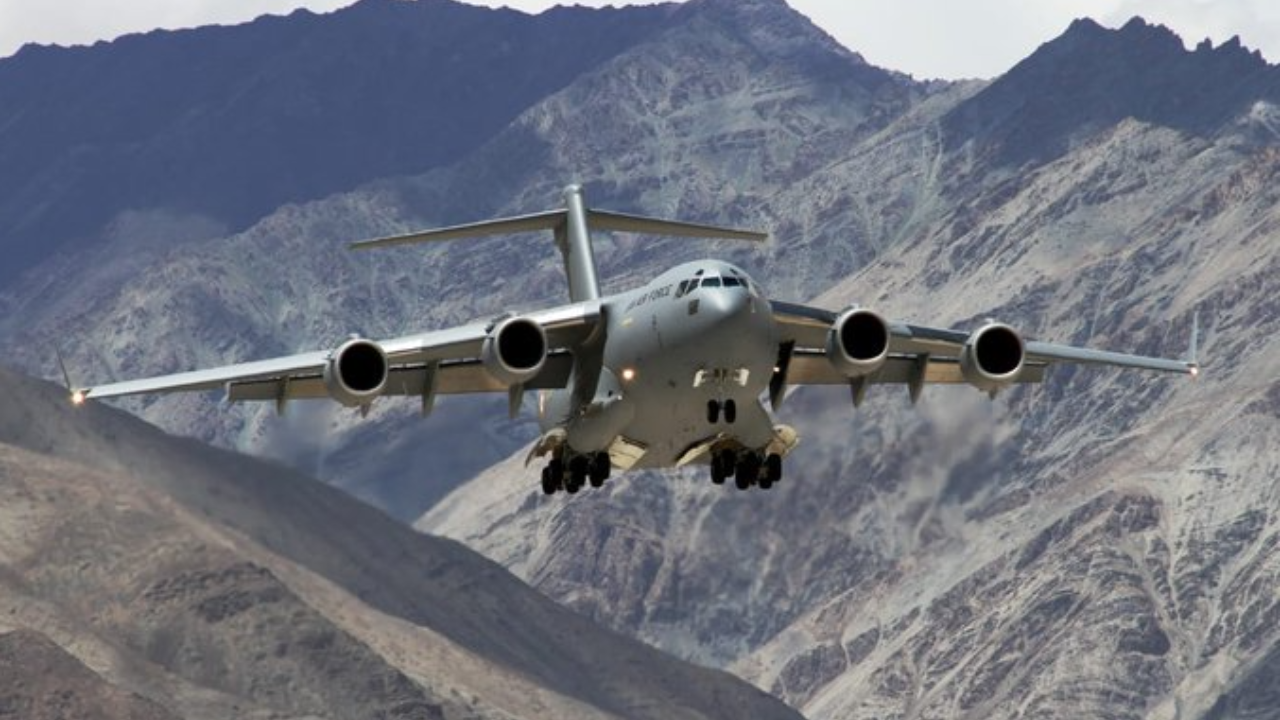
An Indian Air Force C-17 strategic airlifter operating in the Ladakh region. (Image credit: IAF)India's ability to move troops, equipment and relief material across vast distances by air was on full display, as the Indian Air Force (IAF) ferried its fifth tranche of relief supplies into flood-hit Nepal. The first of these flights took off, like clockwork, just hours after the flash flood unexpectedly hit Nepal. This follows a long list of similar airlifts earlier this year to Venezuela after a devastating earthquake and to Turkey during the 2023 earthquake. These flights demonstrate the IAF's global reach. Even within the country, during both conflict and calamity the transport fleet of the air force has demonstrated its ability to provide relief material and military equipment alike where and when needed.Strategic airlift differs from its tactical counterpart in both scale and reach. While tactical airlifters move troops and supplies within a single theatre of operations, strategic airlifters are built to shift entire units, heavy equipment and large volumes of cargo between distant theatres altogether, often across international borders, in a matter of hours.Nepal Flood Crisis: 8,900 Army Personnel Deployed As Search For Missing People ContinuesIndia's own experience with this capability stretches back decades. During the 1947 operations in Jammu and Kashmir, the newly independent nation's fledgling air arm carried out one of its earliest large-scale airlifts, ferrying troops and supplies to Srinagar just in the nick of time to ward off marauding tribesmen that were close enough to over run Srinagar and then later at Poonch, where the garrison, under the command of Brigadier Pritam Singh was sustained for an entire year by air, at a time when road access had been cut off.Over two decades later, the 1971 war produced perhaps India's most celebrated airlift operation, the Tangail airdrop, where IAF transport aircraft dropped paratroopers behind enemy lines in East Pakistan, hastening the war's end. More recently, following the 2020 Galwan clash with China, the IAF undertook a massive, sustained airlift of troops, tanks, artillery and supplies to forward positions in Ladakh, a build-up that reinforced India's military posture along the Line of Actual Control at a very critical moment. Another key example of the IAF's transport fleet in changing the destiny of a nation was when its transport fleet carried paratroopers of the Agra based Parachute Brigade to thwart the coup attempt in the Maldives under the ambit of Operation Cactus.The IAF had also delivered covid relief material both within and outside the country. Each of these missions, though vastly different in geography and purpose, drew on the same underlying capability, strategic airlift, the ability to move heavy loads across continents at short notice. This demonstrates the IAF's ability to influence operations both near and far.Globally, the United States remains in a league of its own on this front, operating the world's largest strategic airlift fleet and backing it with a dedicated Air Mobility Command that oversees global logistics and troop movement. The United States logistics fleet is larger and heavier than the next four nations combined. Russia and China follow at some distance, both maintaining sizeable heavy-lift fleets of their own, though neither matches Washington's scale or reach.India's own strategic airlift fleet, by comparison, remains comparatively modest, built around 11 Boeing C-17 Globemaster IIIs, each capable of hauling 77 tonnes of cargo, and a fleet of Soviet-era IL-76 aircraft, originally 17 strong but now down to around 11 or 12 airworthy airframes due to age and spares shortages. With Boeing's C-17 production line now shut and the IL-76 fleet approaching the 40-year mark, the IAF is exploring a Medium Transport Aircraft programme and eyeing an eventual indigenous heavy-lift aircraft to sustain its strategic reach for decades to come. For now, though, missions like the Nepal relief effort continue to demonstrate that even with a leaner fleet, India's strategic airlift muscle remains very well exercised.