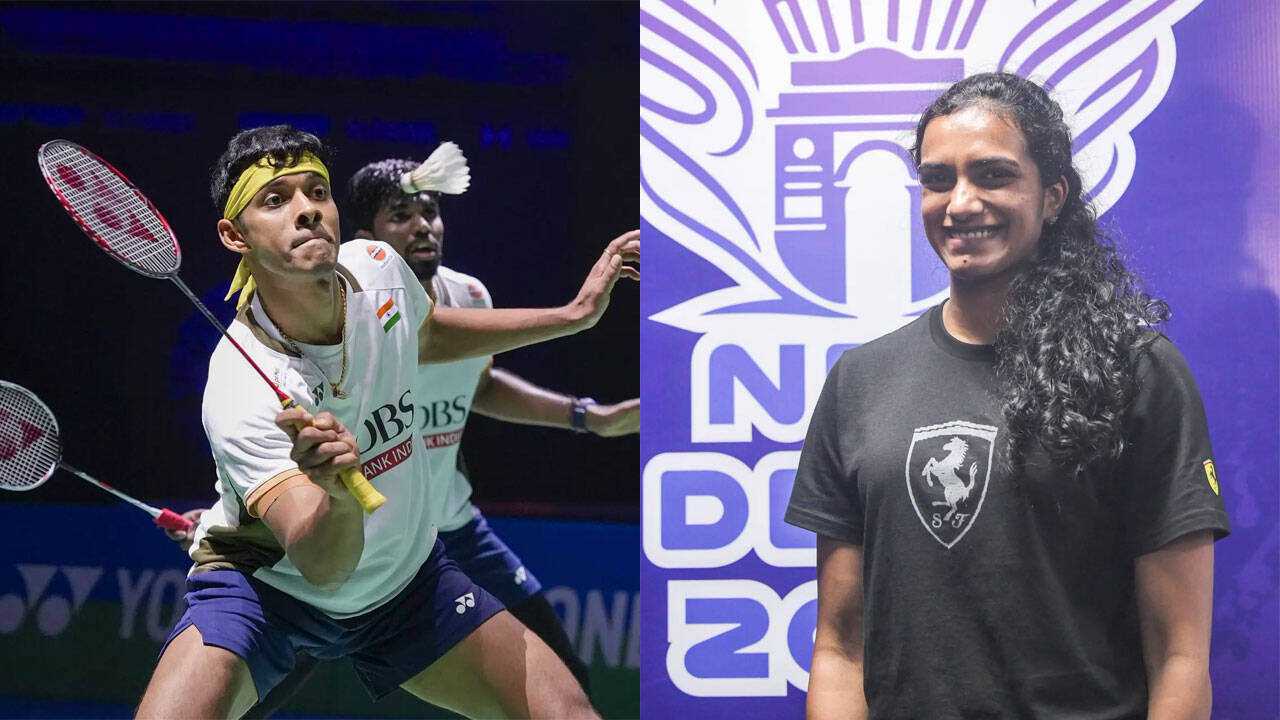
Satwiksairaj Rankireddy, Chirag Shetty, and PV SindhuWhen the world’s best badminton players walk into the Indira Gandhi Indoor Stadium on Monday, India will not merely be hosting the World Championships for the second time. Seventeen years after Hyderabad staged the event, the tournament returns to a country where badminton has grown multiple folds — in popularity, participation, elite success and commercial reach.
The transformation is visible in the numbers. Forty-three per cent of Indians follow badminton, while 32% actively participate in the sport, making it the country's second-most played sport and its leading racket sport.
At the Paris Olympics, badminton was the most-followed sport among Indian consumers, with 21% saying they would follow it, according to a YouGov poll. In 2009, India was already a passionate badminton nation, but the sport's footprint today is on an entirely different scale.
From a host to a major badminton marketIndia now hosts four BWF World Tour tournaments every year, underlining its importance on the international calendar. The India Open alone reached a potential 403 million household viewers across broadcast and digital platforms in 2024.
That commercial growth has been accompanied by a much deeper Indian presence at the highest level. India's first World Championships medal came through Prakash Padukone in 1983.
Since 2011, however, an Indian player or pair has won a medal at every edition, creating a remarkable 15-year streak of podium finishes. From Padukone to Sindhu, Satwik-ChiragThe list of medallists also shows how India's strength has expanded across generations and disciplines.
Saina Nehwal won silver in 2015 and bronze in 2017, while PV Sindhu became India's biggest World Championships star, winning five medals, including the country's first and only gold in 2019. Kidambi Srikanth won silver and Lakshya Sen bronze in 2021, HS Prannoy added another men's singles bronze in 2023, while Satwiksairaj Rankireddy and Chirag Shetty have established India as a force in men's doubles with medals in 2022 and 2025.
The three Olympic medals won by Indian badminton players — Saina's bronze at London 2012 and Sindhu's silver at Rio 2016 and bronze at Tokyo 2020 — further underline the country's rise. And perhaps the biggest sign of the sport's expanding ecosystem is para-badminton.
India now has more than 1,000 athletes in national training programmes and 302 internationally classified players, while Indian para-badminton athletes have won more than 1,200 international medals in the past decade. The country has also collected nine Paralympic badminton medals, including golds at Tokyo 2020 and Paris 2024.