🔥 TRENDING452 people are currently reading about the Upper Assam Flood Relief efforts⚡ BREAKINGNew IT hub in Guwahati expected to generate 10,000+ jobs by next year🔥 TRENDING452 people are currently reading about the Upper Assam Flood Relief efforts⚡ BREAKINGNew IT hub in Guwahati expected to generate 10,000+ jobs by next year
'Will not step down': Manan Mishra reiterates as plea in SC seeks his removal | The Local News
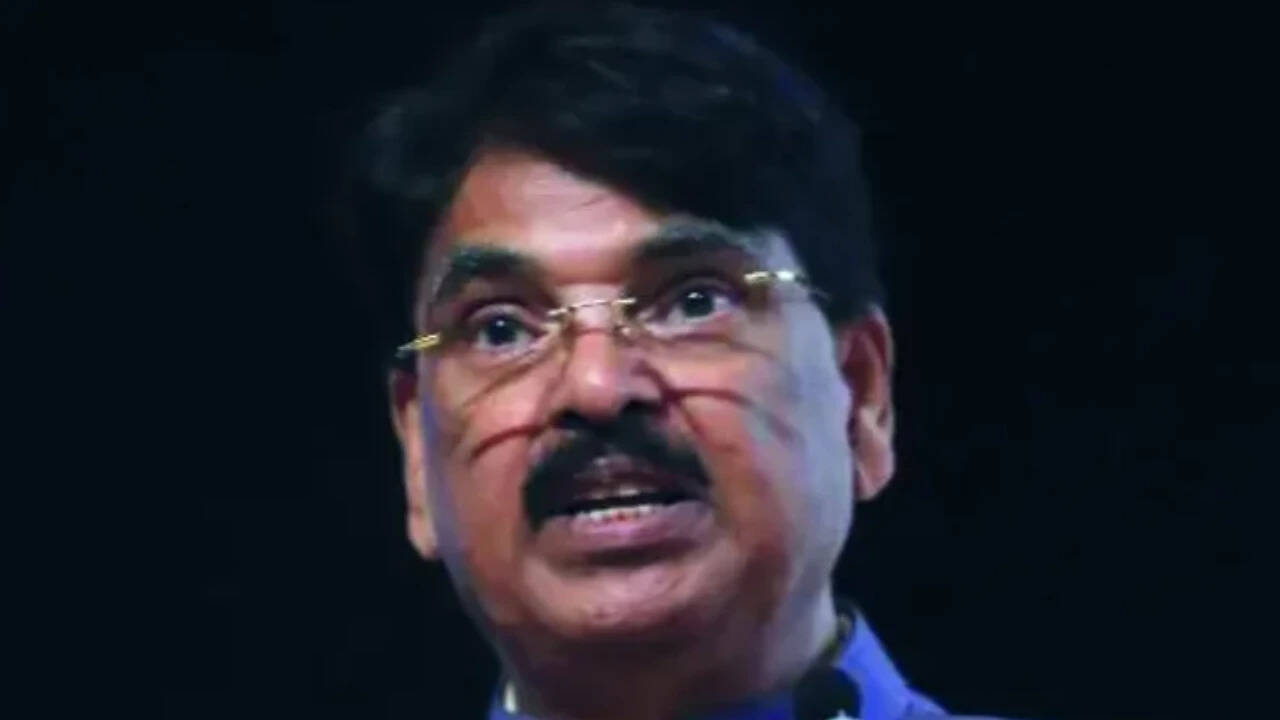
Manan Mishra also addressed the recent controversy involving students of NALSAR University of Law. NEW DELHI: Bar Council of India (BCI) chairman and Rajya Sabha member Manan Kumar Mishra rejected demands for his resignation, saying he holds the position through an election and represents around 25 lakh lawyers across the country.
Mishra made the remarks a day after a group of lawyers from different Bar Associations in Delhi staged a protest outside the BCI office in New Delhi. The protesters raised several concerns, including Mishra's long tenure, the lack of welfare measures for advocates and the proposed increase in the enrolment fee for lawyers."
I have served as the chairman of the Bar Council of India for 12 to 14 years because I was elected. Manan Mishra represents 25 lakh lawyers; he will not step down simply," Mishra said, responding to the protest.
He further said: " I am an elected representative. I was neither selected nor nominated to the Bar Council of India.
It is a statutory body established under the Advocates Act." The lawyers demanding his resignation also sought the implementation of an Advocate Protection Act and questioned the proposed increase in registration fees at State Bar Councils.
Supreme Court petition challenges Mishra's tenureAmid the controversy, a petition has also been filed in the Supreme Court challenging Mishra's continuation as BCI chairman. The petitioner has relied on Rule 12(2) of the BCI Rules, which provides for a two-year tenure for the chairman and vice-chairman, or until they cease to be members, whichever is earlier.
The plea has also challenged an April 21, 2025 Gazette notification that allegedly extended Mishra's tenure until 2030. It has asked the Supreme Court to quash the notification and direct the BCI to withdraw or rescind it.
According to the petition, Mishra first became BCI chairman in 2012. Although he briefly left the post in 2014, he returned as chairman in November that year and has remained in the position since then.
The petitioner has claimed that his re-election in March 2025 was his seventh consecutive term. The plea has argued that the absence of a cumulative limit on repeated re-election allows the office to remain concentrated in one individual for an extended period."
Although Rule 12(2) prescribes a two-year tenure, no meaningful restriction exists upon repeated re-election. Consequently, the office has remained with the same individual for nearly twelve years.
Such prolonged concentration is prima facie inconsistent with the representative scheme embodied in Section 4(1)(c), under which every State Bar Council contributes to the composition of the Bar Council of India. A national institution representing the entire legal profession should not permit its highest office to remain concentrated indefinitely in one individual or a narrow regional grouping," the petition stated.
The petitioner has sought Mishra's removal and fresh elections within a time-bound period under independent supervision. It has also asked for a cumulative cap on the number of years a person can serve as BCI chairman, along with a rotation system and cooling-off period to allow representatives from different states and regions to head the council.
The plea has further sought an independent committee headed by a former Supreme Court judge or former chief justice of a high court. The proposed committee would be assisted by an auditor nominated by the Comptroller and Auditor General (CAG), along with financial and technical experts.
The petition has also sought an independent inquiry into the functioning and finances of the BCI Trust, " PEARL-FIRST", and the financial affairs of the All India Bar Examination. It has called for a time-bound audit of statutory funds, All India Bar Examination receipts, institutional receipts, trust finances, vendor contracts and related party transactions.
As an interim measure, the petitioner has proposed an independent administrative committee to oversee the BCI if the Supreme Court orders Mishra's removal. The plea has also referred to Mishra's political role.
It noted that he became a Rajya Sabha member after being nominated by the BJP in 2024. The petitioner has clarified that it is not claiming that Mishra's political affiliation alone makes him ineligible to remain BCI chairman.
Instead, it has raised concerns about the combination of political office and leadership of the statutory body responsible for regulating the legal profession." Petitioner does not seek the removal of any individual merely because of political affiliation or personal disagreement with any office bearer.
Nor does the petitioner invite this Court to substitute its own opinion for that of the statutory authority. Mishra defends action over NALSAR student controversyMishra also addressed the recent controversy involving students of NALSAR University of Law in Hyderabad and the Chief Justice of India (CJI), who is also the university's chancellor."
Lately, there has been a lot of irresponsible and absurd commentary circulating on social media. Students from NALSAR University, Hyderabad, decided to boycott the Chief Justice of India - who is also their Chancellor - and refused to attend the convocation ceremony where he was to preside," Mishra said."
As the Chairman of the Bar Council of India, I found this deeply objectionable," he added. According to Mishra, the BCI initially issued an order stating that the enrolment of the students involved would not be processed.
He said the decision was withdrawn within 15 minutes after their grievances were addressed." Within 15 minutes, that order was revoked, and the students' grievances were addressed," he said.
Mishra alleged that the episode was later used by members of the Aam Aadmi Party and a group he described as the " CJP group" to demand his resignation." I have served as the Chairman of the Bar Council of India for 12 to 14 years because I was elected," he reiterated.
He also said around 15 students had gathered outside the BCI office on Thursday night to demand that he step down." Yesterday, about 15 students came here at night demanding a resignation," Mishra said.
Meanwhile, another group of lawyers gathered in support of Mishra and defended his position as an elected representative of the legal profession. Advocate Satyam Singh said protests alone could not remove the BCI chairman because he had been elected by members of the legal community."
The BCI Chairman is an elected official who has been consistently voted into office. He hasn't been appointed through a selection process or an exam where you can simply show up and demand his resignation," Singh said."
5 million lawyers across the country, representing them successfully for years on end," he added. On the NALSAR controversy, Singh said the issue should be viewed in the context of respect for legal institutions."
The CJI is the head of the Constitution--in a sense, its guardian--while NALSAR students are future lawyers and judges who will become part of this profession, whether on the Bar or the Bench. If they do not respect or trust that institution, where does that leave us?"
he said. Singh also defended Mishra's decision to issue the initial order, while acknowledging that it was subsequently withdrawn."
He withdrew it and admitted it was issued in haste. However, it was necessary to send a message that one must trust and respect the institution; that was the intent behind the move," Singh said.
Lawyers raise welfare and fee concernsThe protest, however, was not limited to the demand for Mishra's resignation. Lawyers also raised broader concerns about welfare measures and working conditions within the profession.
Advocate Raman Sharma alleged that there had been no significant nationwide welfare scheme for lawyers despite Mishra's long tenure as BCI chairman. Advocate Umesh Kumar raised the issue of a national insurance scheme for lawyers and objected to the proposed increase in enrolment fees to Rs 22,500.
Other protesters, including advocate Perdeep Nagar, called for greater scrutiny of lawyers' credentials and urged the BCI to give greater attention to the welfare of members of the legal profession.
Some readers may find this article distressing. A teacher in the US state of Oregon tackled a teenager who entered her classroom during a school shooting and at...