
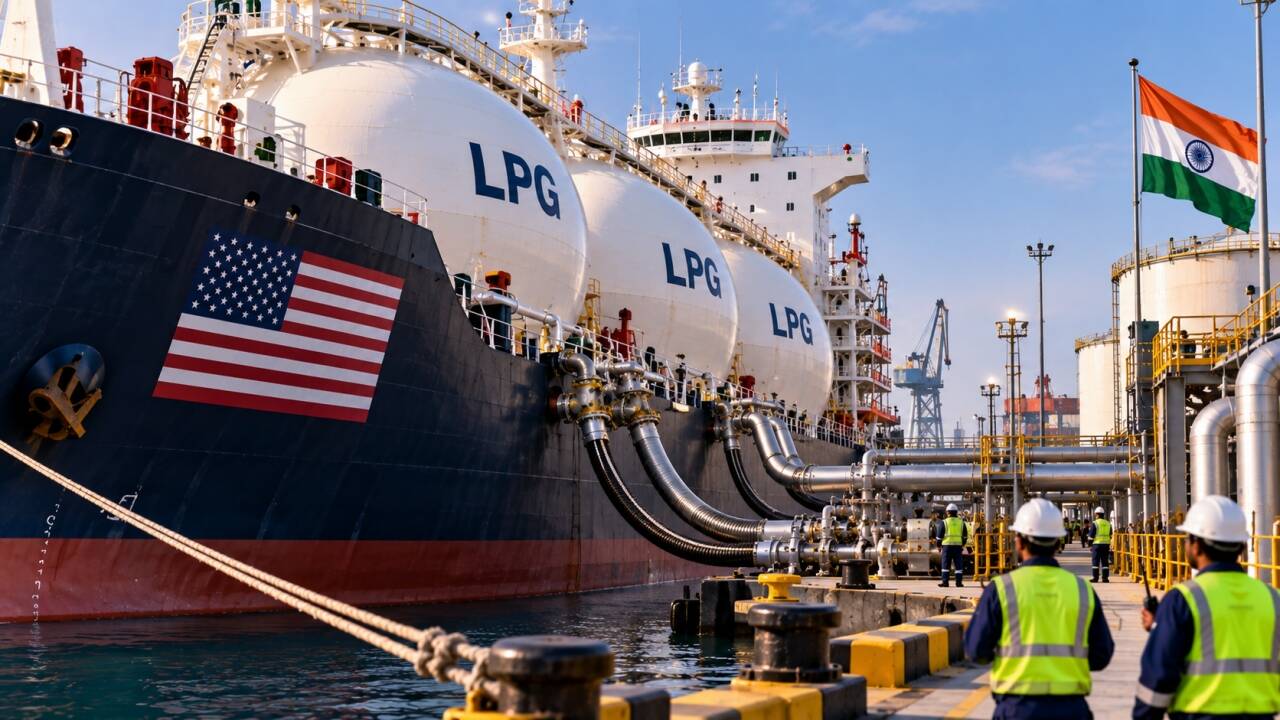
When US President Donald Trump announced that India would step up energy purchases from America, everyone thought of oil. 85 million tonnes of LPG in 2025, with about 90% coming from the Middle East, while imports met around 66% of domestic LPG consumption.
India is heavily dependent on Middle East countries for its LPG supply that is increasingly being used as a household fuel. With Strait of Hormuz closed and supplies choked, India has actively looked elsewhere to meet its needs while stepping up domestic production at refineries at the same time.
Even as Russia remains India’s largest crude oil supplier, the US has emerged as the biggest LPG exporter for India and the trend is likely to continue despite higher costs if Middle East supplies remain uncertain. Long-term contracts are being forged and India is reportedly looking to get a notable chunk of its LPG needs from the US.
In August, the US supplied over 50% of India’s LPG imports. Will such a high number continue?
Rising US share in India’s LPG importsIndia’s LPG import mix has seen drastic changes as Middle East supplies stay disrupted due to the conflict. The supply mix has shifted sharply towards the US since the start of the conflict.
In fact, from March onwards, the US has become the biggest supplier of LPG to India. 9% in March.
It crossed 50% in May, and peaked at 73% in July, according to Kpler data. The UAE, Qatar and Saudi Arabia have all lost share as US supplies increased.
4% over the same period. 6% in January to zero by July.
However, August has brought back some diversification back into the mix. So, while the US has become the dominant source, the latest data suggests India is still drawing supplies from a wider set of countries.
Why the rise? The reason is straightforward: India needed to make up for the loss of Gulf cargoes, which had represented around 85–90% of its LPG imports before the crisis, while the US had supply available.
According to Natalia Katona, Commodity Analyst, the US was already the world’s largest LPG exporter, and its propane was cheaper than Asian alternatives even before the war. “Freight costs for US LPG were not treated as much of a constraint because, with Middle Eastern cargoes unavailable and few alternatives on the market, India had to secure supplies wherever it could,” she explains.


