Figure caption, Video shows scale of flash flood hitting Nepal-Tibet borderByOlivia Ireland and Henry MooreUpdated 2 hours agoMassive landslides and flash floods on the Nepal-Tibet border have caused widespread damage and left hundreds dead or missing. Search and rescue operations are continuing after Wednesday's disaster.
There are risks of more floods: a lake of rising water has formed at a site along the China-Nepal border - prompting fears it could burst its banks. Here is what we know so far.
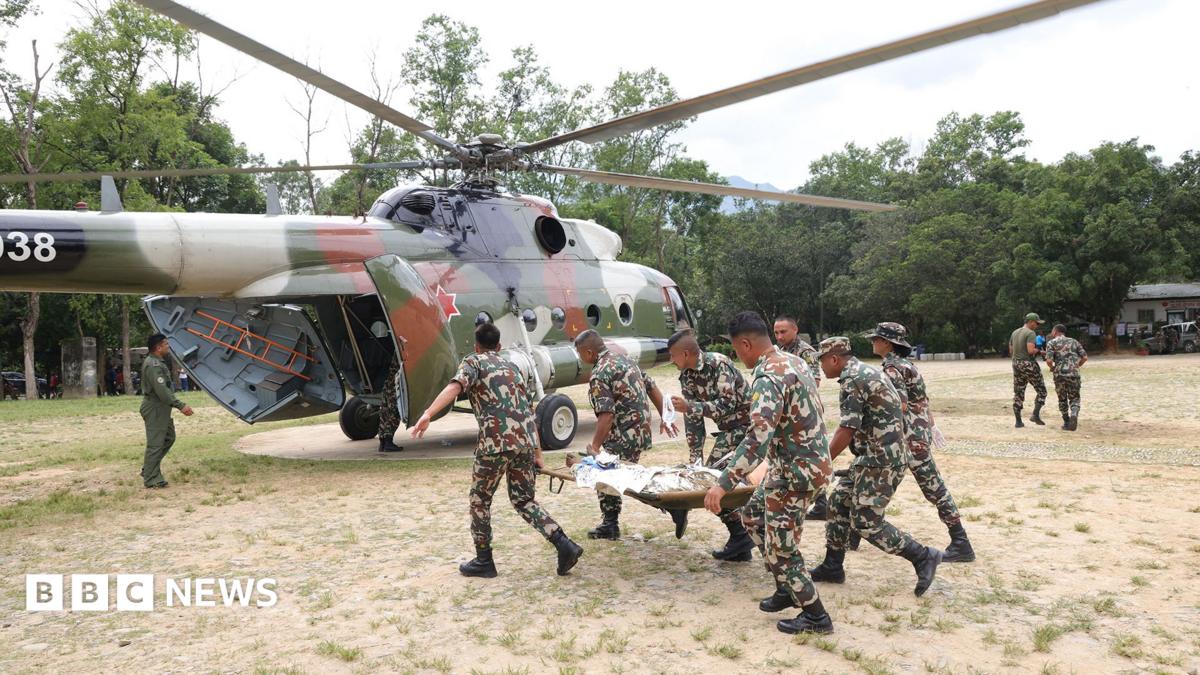
Image source, Nepal Army via EPAImage caption, Military teams were brought in to help with rescue and evacuation following the flooding on WednesdayWhat caused the deadly landslide? Initial reports of an earthquake on the Nepal-Tibet border led many to believe that a tremor had caused a landslide, which in turn caused the devastating flood.
However, the US Geological Survey has clarified that the disaster was caused by a "glacial collapse", which is when a glacier or part of a glacier disintegrates. 2, according to USGS data and scientists who have analysed the event.
Debris flow from the collapse "caused subsequent catastrophic impacts downstream" the USGS said. Climate change is known to be driving faster glacier melt in the Hindu Kush Himalaya region and, as rescue efforts continue, scientists are trying to piece together the exact order of events.
Cook said his team had detected that the lower part of a glacier in Nepal near the Langtang Lirung peak - which is approximately 15km (9 miles) west of the site of the floods - had collapsed. Figure caption, He estimated that the glacier collapsed in a north-westerly direction and then travelled westwards downstream.
Mike Searle, professor of Earth sciences at Oxford University, said the glacier could have collapsed "hours or days" before the flooding hit Nepal and Tibet. He told the BBC: " I think the sheer wave of debris suggests there was a landslide first, the water built up, (which) dammed the river, and then it burst in one huge great flood."
One possibility is that water from rainfall or melting ice may have destabilised the ground or ice, triggering a chain reaction. Scientist will be looking at satellite images of exactly where the landslide occurred, whether any glacial lakes suddenly drained, and where the river might have become blocked, as well as data on recent rainfall.
A deluge of material careered towards northern Nepalese towns, including areas popular with mountaineering tourists and pilgrims. 4km) north of Nepal's capital city Kathmandu.