
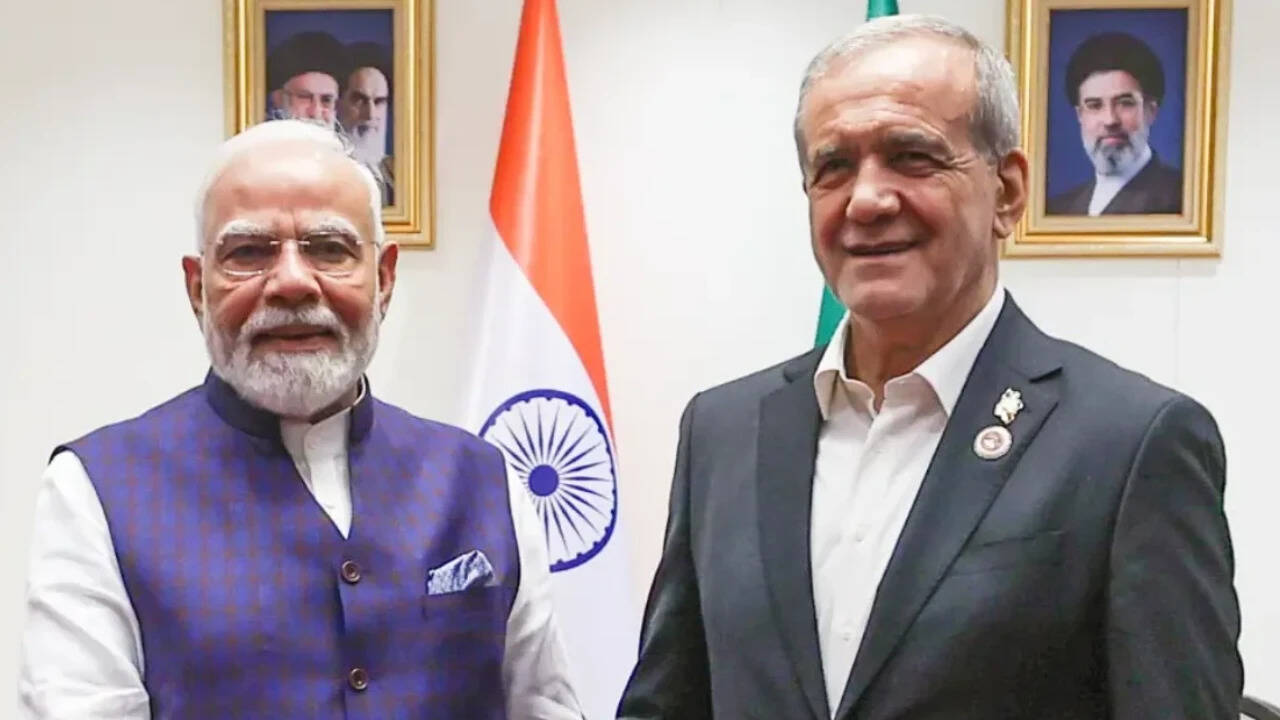
File Photo: PM Modi holds a bilateral meeting with the President of Iran, Masoud Pezeshkian, on the sidelines of the SCO Summit, in BishkekThe US has warned countries against helping Iran evade sanctions, saying those that assist Tehran in generating revenue could themselves face sanctions. US Secretary of State Marco Rubio issued the warning after Prime Minister Narendra Modi met Iranian President Masoud Pezeshkian on the sidelines of the Shanghai Cooperation Organisation (SCO) summit in Bishkek, Kyrgyzstan.
Asked about the PM Modi-Pezeshkian meeting and whether India and Iran were discussing a trade deal, Rubio said, “Well, I don't think there's a trade deal between India and Iran. Obviously there are, you know, countries all develop their own foreign policy, and many countries around the world talk to the Iranian regime.”
“No country should be helping Iran evade sanctions. “And if countries decide to do that, then we're going to have to sanction them, too,” he added.
PM Modi's meeting with Pezeshkian came as the Iranian president travelled to Bishkek for the SCO summit, where regional and international issues are expected to dominate discussions. Ahead of his departure, Pezeshkian said Iran did not seek war but would respond “with strength and determination” to any aggression.
“This meeting is very important and most of the leaders of the region will be present in it. In a situation where some international institutions are seeking to create a unified space in the world, this meeting is considered a symbol of the existence of diverse and independent voices in the global arena,” he said.
During the meeting with Pezeshkian, Modi is expected to discuss bilateral ties and regional developments. India has consistently called for dialogue and diplomacy to resolve issues in West Asia.
PM Modi had also spoken to Pezeshkian in March, when the Iranian president briefed him on developments in the region. PM Modi had stressed India's concerns over the safety of Indian nationals in the region, including Iran, as well as the need for uninterrupted transit of energy and goods.