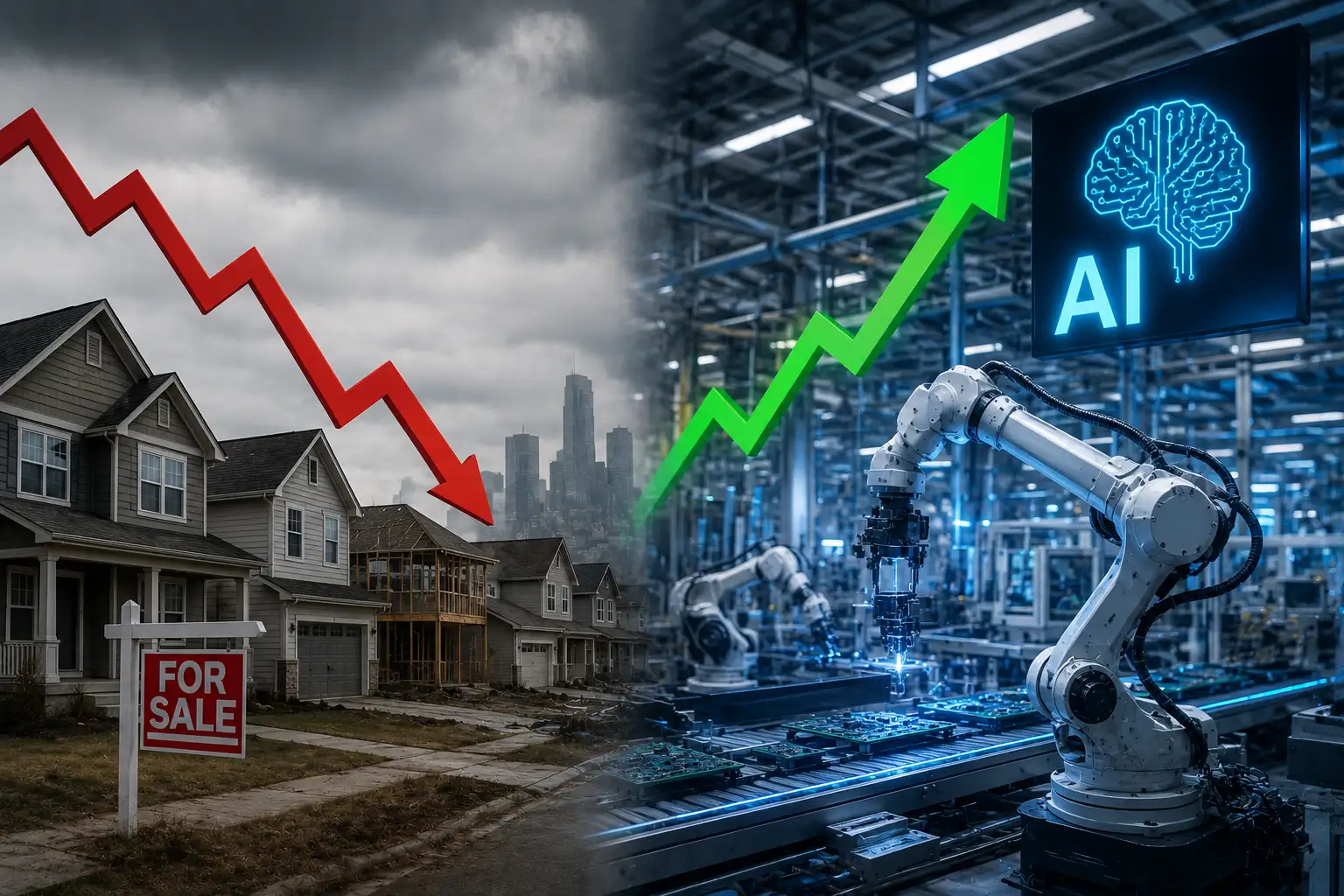
US single-family homebuilding fell sharply in July to its lowest level in more than three-and-a-half years, while contract signings for previously owned homes also declined, highlighting continued weakness in the housing market amid elevated mortgage rates and economic uncertainty. The housing downturn contrasted with stronger factory activity, as investment linked to artificial intelligence continued to boost production of high-tech equipment and industrial supplies.
9% in July to a seasonally adjusted annual rate of 808,000 units, the Commerce Department's Census Bureau said on Tuesday, Reuters reported. 7% decline from a year earlier.
5% to an annualized rate of 894,000 units. 1% higher than a year earlier, marking only the second annual increase in the past two years.
However, the pace of permits remained close to a three-year low. Reuters reported that elevated mortgage rates are discouraging builders from committing to significant new projects as they contend with completed homes and properties still under construction.
35 million. 37 million forecast.
The weakness extended to the market for existing homes. 3% in July from the previous month, reaching their lowest level since January, according to the National Association of Realtors.
The housing market continues to face pressure from high borrowing costs and limited affordability. 77% it remained close to its highest level in more than a year.
Builder sentiment also remains subdued despite a recent improvement, with high mortgage rates, elevated construction costs and broader economic uncertainty weighing on the sector. 3% increase in June.
The index reached its highest level since April 2022. Reuters reported that industries tied to the artificial intelligence investment boom were among the key drivers of the increase, particularly in durable goods manufacturing.
Strong demand for equipment and supplies needed to build and operate large data centres has provided support to the sector. 4% gain in industrial supplies.
The strength in AI-related investment is also beginning to extend beyond information-processing equipment, potentially supporting a broader range of capital goods and manufacturing activity. -led war with Iran.
68 million in June. Production of heavy and medium trucks, an indicator of demand from trucking and delivery businesses, also declined to its lowest level since March.