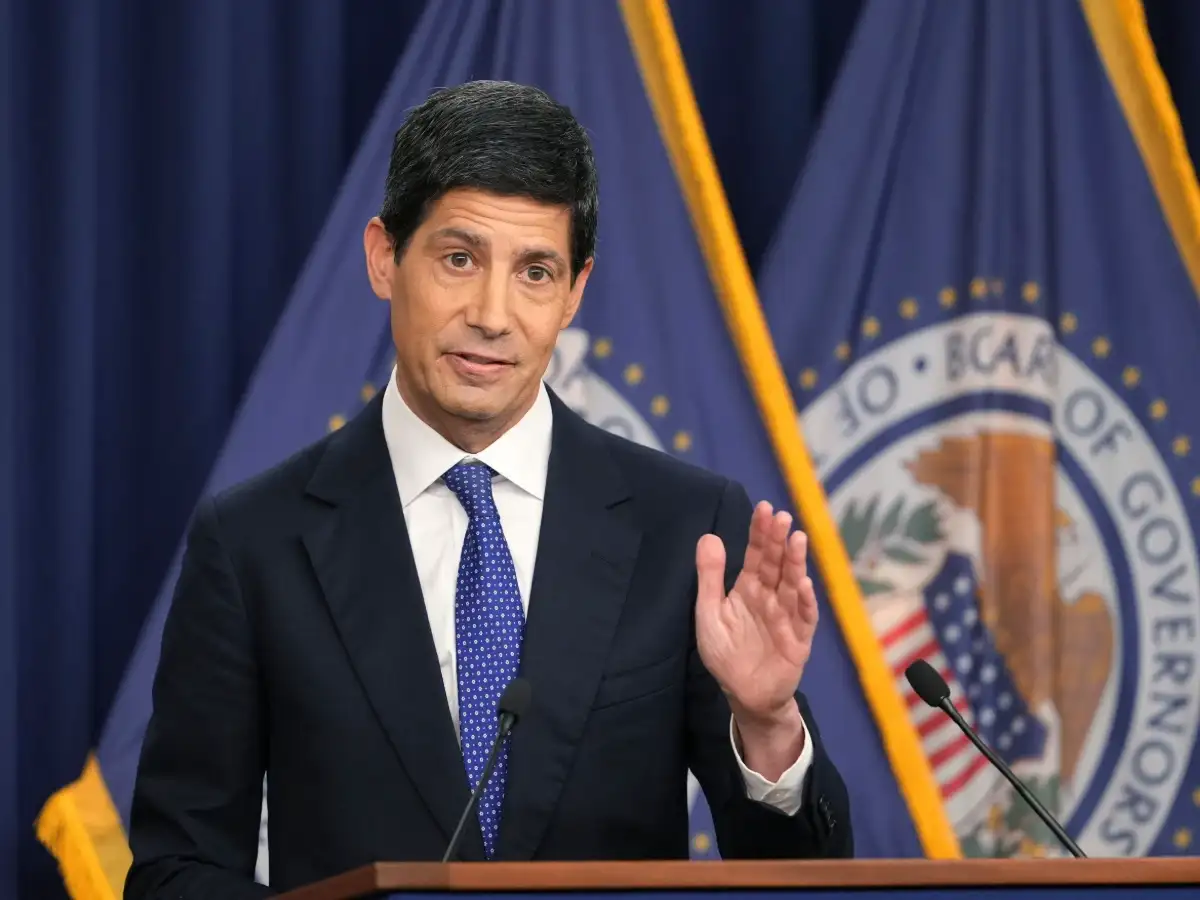
The strengthening of US economy and geopolitics pushing inflation higher were key reasons for the Federal Reserve to raise interest rates, its chair Kevin Warsh said on Wednesday. Reiterating his commitment not to give forward guidance on the rate path, he pointed to trends in the economic data to deliver the Fed's stated objective of price stability.
The American economy appears to be strengthening. New hirings, private sector earnings and business capital investment have improved in recent months.
Credit flows have been robust, he said at a press conference, adding, " I would be hard pressed to describe broad financial conditions as restrictive. So we removed the dose of accommodation, so that financial and credit conditions would be more consistent with our ultimate objectives.”
75%-4%. " Economic activity is expanding at a solid pace.
While uncertainty remains elevated owing, in part, to geopolitical developments, domestic spending has been resilient. Productivity growth is strong, and capital investment is robust.
Job gains have kept pace with the workforce, and the unemployment rate has changed little," the Fed said in a statement.. And while the job market also remains resilient, inflation has stubbornly remained above the Fed 2% target for years."
So our predominant focus is on the price stability side of our mandate. Plain fact is that inflation is too high, and has been for too long.
This summer's inflation readings do not tell me that underlying trends have meaningfully improved," he said. Follow US market live updates hereOn the rise in bond yields, Warsh said that they are not a function of a loss in confidence in the central bank.
Instead, the rise in real-world borrowing costs is due to economic strength, surging capital expenditures that have increased the competition for capital, and geopolitical factors, Warsh said in a press conference following the Fed’s latest meeting.