
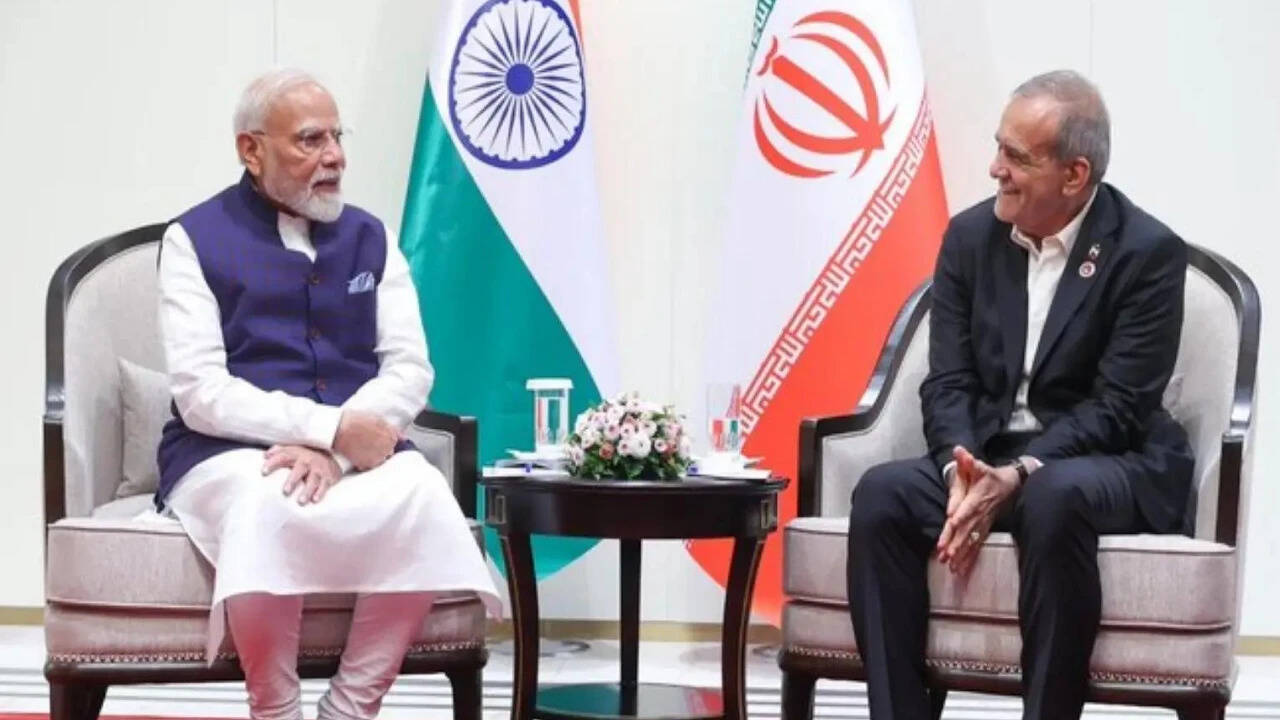
“I don’t think there’s a trade deal between India and Iran,” Rubio said Wednesday, after PM Narendra Modi’s meeting with Iranian President Masoud Pezeshkian on the sidelines of the Shanghai Cooperation Organisation (SCO) summit in Bishkek, Kyrgyzstan drew scrutiny in Washington DC. But he followed that reassurance with a warning that was plainly less accommodating: countries should not help Tehran create mechanisms to generate revenue that could finance terrorism or its nuclear programme, and those that do could themselves face US sanctions.
The timing of Rubio’s warning, coming on the heels of PM Modi's meeting with Pezeshkian, made the message to New Delhi – which prides itself on its independent foreign policy – difficult to miss. The two leaders discussed expanding and diversifying bilateral trade, the wars and instability in West Asia, and the need to protect freedom of navigation and commercial shipping after attacks in the region killed Indian seafarers.
India described the meeting as “fruitful” but no formal trade agreement was announced. Pezeshkian, for his part, is reported to have asked PM Modi to use India's extensive diplomatic contacts to encourage dialogue and help end the conflict.
For New Delhi, Iran is not simply another diplomatic relationship; it is a strategic geographic bridge. Iran's Chabahar port gives India a route into Afghanistan and Central Asia that bypasses Pakistan, while the International North-South Transport Corridor offers a potential land-and-sea connection from India through Iran to Russia and wider Eurasia.
Iran has also traditionally been an important source of energy for India. Such interests explain why New Delhi has repeatedly sought exemptions and accommodations from Washington over Chabahar even as US sanctions have made commercial dealings increasingly hazardous.
The Bishkek summit also gave Iran a larger diplomatic stage at a particularly vulnerable moment for Tehran. Pezeshkian met Russian President Vladimir Putin, thanking Moscow for its support and calling for closer cooperation against what he described as US “unilateralism.”
He also met Pakistan's Prime Minister Shehbaz Sharif. Yet his message was not simply defiance.
Addressing the SCO, he said Iran was prepared to reciprocate if Washington honoured commitments under an interim agreement reached in June, and indicated that Tehran remained open to negotiations. He also linked freedom of navigation through the strategically vital Strait of Hormuz to implementation of the agreement.