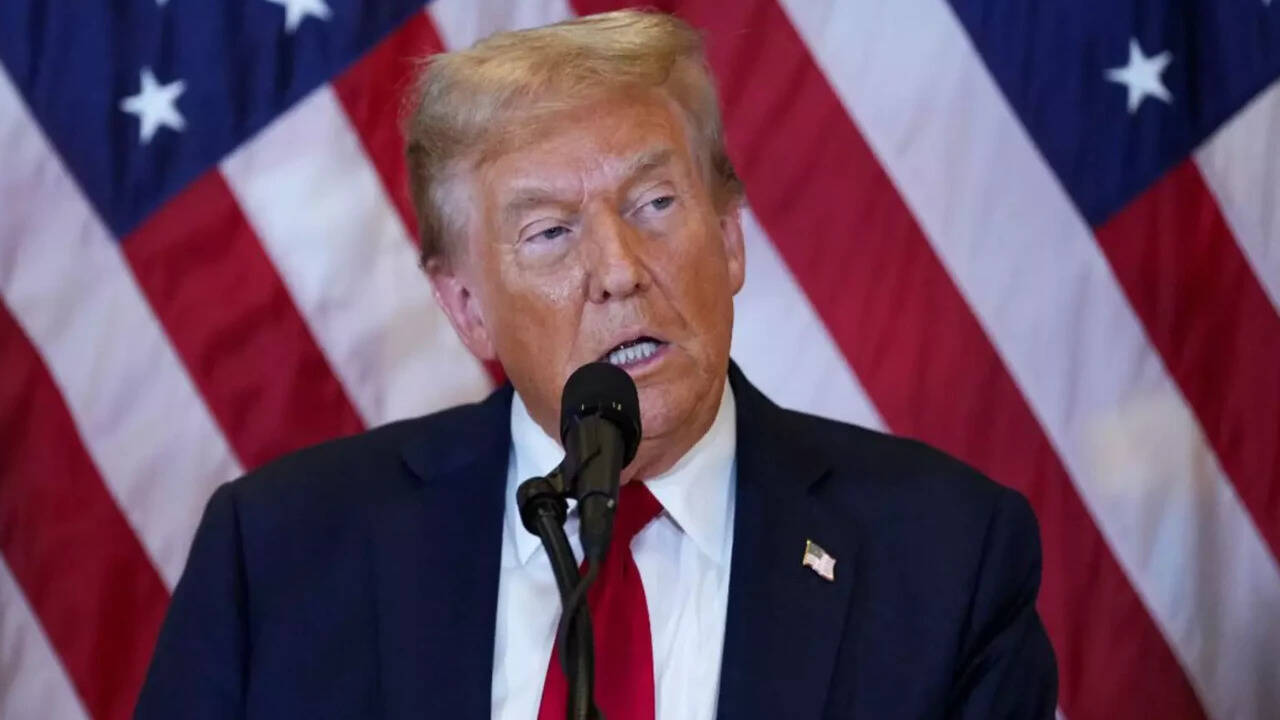
US President Donald Trump. Photo credit: ANIThe TOI correspondent from Washington: As the war against Iran drags on, the Trump administration on Monday announced an effort intended to cut Tehran off from the global economy.
Treasury secretary Scott Bessent said, “We are launching an economic onslaught against Iran’s financial connections around the globe. Our objective is to sever every economic lifeline that sustains this tyrannical regime until Tehran stands alone.
We are going to hold everyone accountable, and this is economic asphyxiation of this regime.” He added that countries not joining US sanctions would “share in the isolation” of Iran, and noted that Trump is making phone calls to world leaders with requests to stop their interactions with Tehran.
The US treasury department has mapped the networks, facilitators and financial channels that Iran uses to smuggle oil and evade sanctions and said that Washington would be working with US partners to target any source of Iran’s “illicit revenue”. The department said it has issued determinations against five sectors — digital assets, technology, gold, aviation and shipping — that the Iranian govt is using to prop up its economy.
“At dawn begins an economic D-Day — the single greatest financial offensive ever marshalled against an adversary,” Bessent wrote in the Financial Times, revealing that Trump had created the conditions for Washington to use “every agency, every authority” available to isolate Iran and sever “every economic lifeline” sustaining the Iranian regime. For New Delhi, the immediate concern is trade rather than strategic alignment.
Indian exports of rice, tea and pharmaceuticals to Iran have increasingly moved through Dubai, and UAE’s restrictions combined with tougher US sanctions could severely disrupt those flows. Bilateral trade has already fallen more than 90% from its 2018-19 peak of about $17 billion..
Beijing is Iran’s principal oil customer and has continued buying discounted Iranian crude through independent refineries and opaque shipping and payment networks. Iranian shipments to China fell to about 534,000 barrels a day in Aug from 823,000 in July, but flows have remained substantial.
Bessent has warned Beijing that cooperation would be in its own interest, but China has rejected unilateral sanctions, saying that they “do not help resolve the problem”. The administration has already imposed layers of sanctions on Iranian oil, shipping, banks and companies and has used a naval blockade to disrupt Iranian petroleum exports.