🔥 TRENDING452 people are currently reading about the Upper Assam Flood Relief efforts⚡ BREAKINGNew IT hub in Guwahati expected to generate 10,000+ jobs by next year🔥 TRENDING452 people are currently reading about the Upper Assam Flood Relief efforts⚡ BREAKINGNew IT hub in Guwahati expected to generate 10,000+ jobs by next year
The phone book that led us to Assad's spy chief in hiding | The Local News
At one time, Luka's own phone number was hard to avoid - in the early days of the Syrian civil war, it had been spray-painted on walls around the central city of Homs. The conflict was sparked by Assad's brutal crushing of a pro-democracy uprising in 2011 - a war in which hundreds of thousands of people would go on to be killed.
Luka was a local head of the Political Security Directorate, one of Assad's main intelligence agencies, and had been given the task of wresting the city from the rebels. At the time, rebel-held areas in Homs were under siege by the government, and residents were struggling to access food and medicine.
Several people, including former rebel fighter Motaz al-Zaydi, told us they had resorted to eating rats. Al-Zaydi remembers Luka's name and phone number appearing on a wall in his neighbourhood, and said the message began to spread that those wanting to flee the fighting could phone the number for safe passage.
Some are believed to have been granted safe transit out of the city by Luka, but others who called the number were never seen or heard from again, according to several people we spoke to, including al-Zaydi. Many told us they referred to Luka as " The Spider" because of his vast web of allies and informants, including some embedded in rebel groups.
" He was everywhere," Homs residents told us. But his most egregious action in the city, many argue, was his alleged involvement in the so-called Eid Massacre, known by some as the Children's Massacre, which the US noted when sanctioning him."
They were tiny children," he said with tears in his eyes. " The ground here was painted red with blood."
Twenty-eight people were killed, including 17 children and four women, according to the Syrian Network for Human Rights. Luka, according to a Syrian activist group, and a pro-opposition newspaper at the time, was responsible for the regime's selection of targets in the area that day.
His actions in Homs earned him a promotion, and by the time of the regime's collapse he ran the General Security Directorate (GSD) intelligence agency, making him one of the most powerful people in the country. The government security services could target anyone - from opposition fighters, journalists, doctors, or rights activists, to people believed to be opposed in any form to the Assad government.
Those arrested were detained in Syria's political prisons, including Sednaya in Damascus - a facility so notorious it was dubbed the "human slaughterhouse". Many imprisoned there were never seen again.
As head of the GSD, Luka had strategic control over Syria's detention policies, and his personnel would monitor communications to and from Sednaya. There are widespread calls across Syrian society on social media for former senior officials to be held accountable.
Some also say the new Syrian government is not doing enough to bring these people to justice. Syria's Attorney General, Hassan al-Turba, told the BBC the government had launched a lawsuit against Luka, accusing him of "premeditated murder, torture, and death resulting from torture"."
A warrant has been circulated domestically and we are working on circulating it internationally as well," he said, adding the administration was working to track the location and seek the extradition of Luka and other missing senior regime officials. As he continues to grieve for his son, Mohammed told the BBC he wanted Luka, alongside other senior regime officials, to be returned to Syria and executed."
They look like humans but have no humanity in them at all," he said. For months we drew a blank in our hunt for Luka.
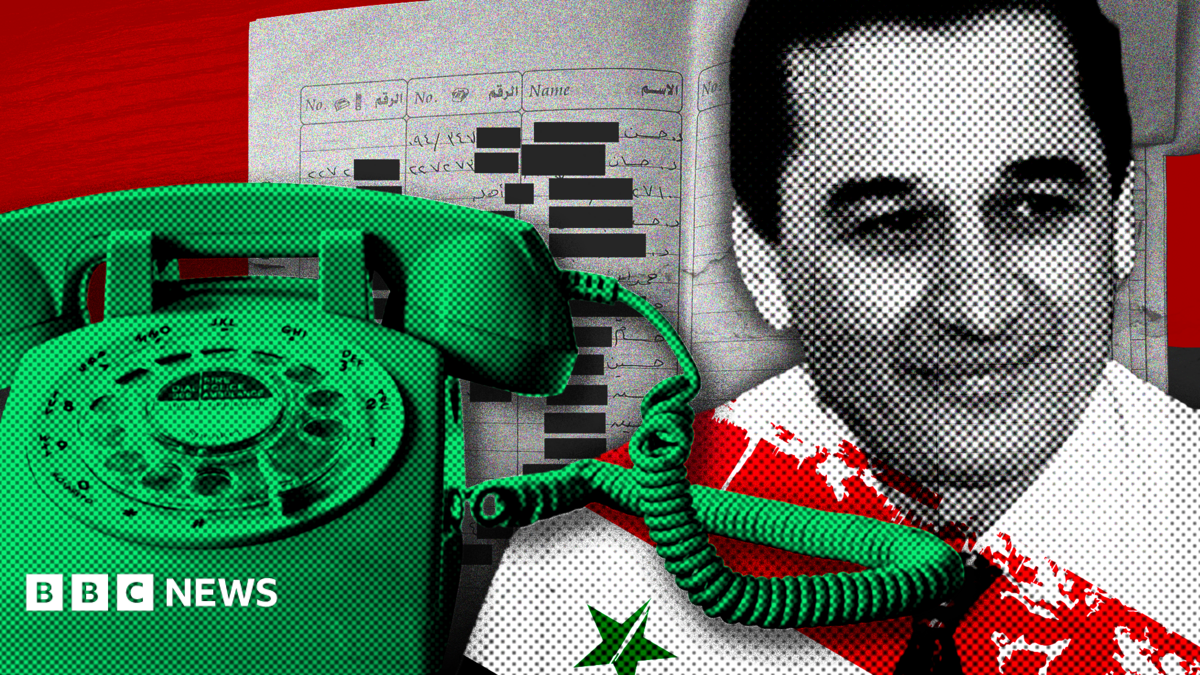
And then we had our first breakthrough. One of those listed in the book, who we tried calling again, finally answered the phone.
He had been the guard for Luka's apartment block, he told us, and eventually agreed to give us the number for someone he said had been Luka's personal bodyguard - a man we are calling Mahmoud. It took weeks to secure an interview with Mahmoud.
Meetings would be scheduled but he would not show up, or he would request a meeting in a private space such as a car or apartment, which our reporter judged too much of a risk. They eventually met at a hotel one night, just before midnight.
Broad-shouldered and physically imposing, Mahmoud seemed to be considering every answer carefully before he spoke. He told us he was angry with Luka for leaving him behind when the regime fell.
As word had spread in December 2024 that Assad's rule was on the brink of collapse - with rebels advancing on the capital - Luka had said he would stay and defend Damascus, Mahmoud told us. But by the early hours of the next morning, Luka had disappeared, taking a large sum of money with him from the office safe, Mahmoud said.
Mahmoud refused to share any contact details for Luka or his family, but did give us a number for Luka's driver, who he believed had driven the former spy chief out of the capital that night. This man proved even harder to reach.
When he answered the phone, his voice was nervous and unsteady. He repeatedly insisted he was just a driver, and knew nothing of Luka's activities.
Multiple meetings with us were never kept, and eventually he stopped replying. We turned our attention to Luka's possible escape routes, including neighbouring Lebanon - where the Iran-backed group Hezbollah had close links with the Assad regime.
One senior source in the Lebanese government told us he understood Luka had passed through Lebanon on a "good Russian passport but with a different name", before flying out to Russia. We managed to find a man, now based in Lebanon, whose name was listed in Luka's contacts book, but under a number that no longer worked.
He is one of many wanted by the new Syrian government, because of his close association with the Assad regime. This man, who we cannot identify, said he had a number for Luka.
We saw it, and realised it had a Russian country code. Russia was a key backer of the Assad regime, and in the days after his fall, Assad released a statement confirming that he had fled there.
Many of his inner circle were believed to have followed him. Back in Luka's apartment in Damascus, we had found clues that Luka also had strong links to Moscow - awards from Russia's foreign spy service, and even a New Year's card addressed to him from a senior Russian official.
Now, the Russian telephone number for him suggested we finally had proof that he was - as we had predicted - in Russia. We wanted to verify that this number really was Luka's.
So a few days later, with us present, the man agreed to put the person he said was Hussam Luka on speakerphone, and ask him questions which we believed only Luka would know the answer to, based on information we had gathered during our investigation. The voice on the other end of the phone sounded confused, but answered the questions instantly and correctly.
He refused, however, to speak to us directly. But our contact later agreed to call Luka again and allow us to try to interview him.
The same voice answered, and we introduced ourselves, explaining that we had questions about serious allegations relating to massacres and torture committed by the former regime official." I can't take any risk talking on the phone in the position I'm in," Luka said, his tone anxious.
Asked if Russia was blocking him from talking, Luka said: " I cannot talk. I can't explain.
You have to understand." When asked if he would meet us outside Russia, he said: " It's difficult."
He then hung up the phone. We later obtained a second number which we were told was also for Luka - this time registered in Syria and linked to social media and messaging apps which he appeared to be still using.
Over a period of a day, the BBC was able to locate him in two suburban areas on the outskirts of the Russian capital, Moscow. The locations seemed far removed from the luxurious lifestyle Assad is reported to be leading in exile in Russia, and to the life Luka himself once led in Syria.
We knew we could not approach him in person in Russia, where Assad's henchmen are shielded from international journalists and police, so we decided to try putting our allegations to him over the phone once again. We rang the number and the same voice as before answered, the line crackly.
He asked who was calling, and when told it was the BBC, he immediately hung up. We sent a message over WhatsApp, asking for his response to the many allegations against him, but he did not reply.
Confirmation that Luka is in Moscow is difficult news for those in Syria seeking justice. Russia is highly unlikely to extradite officials from the regime that it long supported.
The Russian government did not respond to BBC requests for comment about Luka's presence there, or whether it would ever consider an extradition request. Back in Homs, Mohammed says he will never let go of the hope that Luka, and other senior members of the Assad regime, will one day face justice.
Sheena Vasani writes about tech news, reviews gadgets, and helps readers save money by highlighting deals and product recommendations for The Verge. Thanksgivin...