
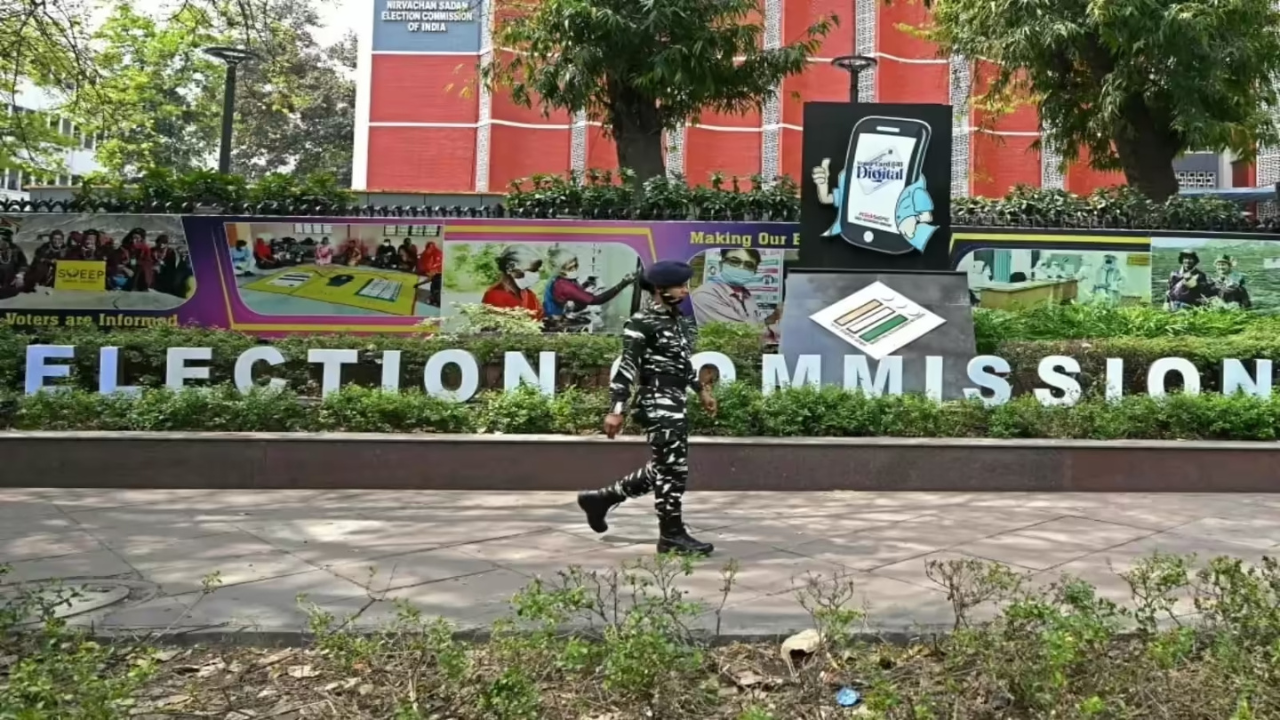
From TN Seshan’s battle over the Election Commission’s structure to Ashok Lavasa’s dissent in 2019, the poll panel has seen internal disagreements emerge into the public domain. NEW DELHI: The Election Commission is facing a fresh political storm over the Special Intensive Revision (SIR) exercise, with the opposition demanding Chief Election Commissioner Gyanesh Kumar's resignation following a report in The Indian Express on differences within the poll panel over the exercise.
According to the report, Election Commissioners Sukhbir Singh Sandhu and Vivek Joshi had objected at least 14 times over 10 months to SIR-related decisions, including those concerning voter deletions and electoral roll data. The report has brought into focus a question that has surfaced at different points in the Election Commission's history: what happens when members of the poll panel disagree over how it should exercise its powers?
There have been two prominent instances when such differences moved beyond the commission's internal proceedings and became matters of public and judicial scrutiny. In the 1990s, Chief Election Commissioner TN Seshan challenged the creation of a multi-member Election Commission and the appointment of two Election Commissioners alongside him.
In 2019, Election Commissioner Ashok Lavasa publicly dissented from the majority view on complaints alleging Model Code of Conduct violations by senior political leaders. When Seshan challenged other Election CommissionersTN Seshan was appointed Chief Election Commissioner in December 1990 and became known for his strict enforcement of the Model Code of Conduct and his assertion of the Election Commission's constitutional powers.
The structure of the commission changed in October 1993, when the government moved to make the poll panel a three-member body. On October 1, 1993, the President promulgated an ordinance providing for two Election Commissioners in addition to the CEC.
On the same day, MS Gill and GVG Krishnamurthy were appointed as Election Commissioners. Seshan challenged the move in the Supreme Court, alleging that the appointments were intended to dilute his authority and "sideline" him.
The government defended the move, maintaining that the Constitution permitted a multi-member Election Commission. The dispute soon spilled beyond the courtroom.
The Supreme Court's eventual judgment recorded "unpleasant exchanges" between Seshan and Krishnamurthy at a meeting in October 1993, noting that allegations and counter-allegations had been made by the two commissioners. Gill later spoke publicly about the strained relationship, recalling his attempts to establish contact with Seshan after the appointments."