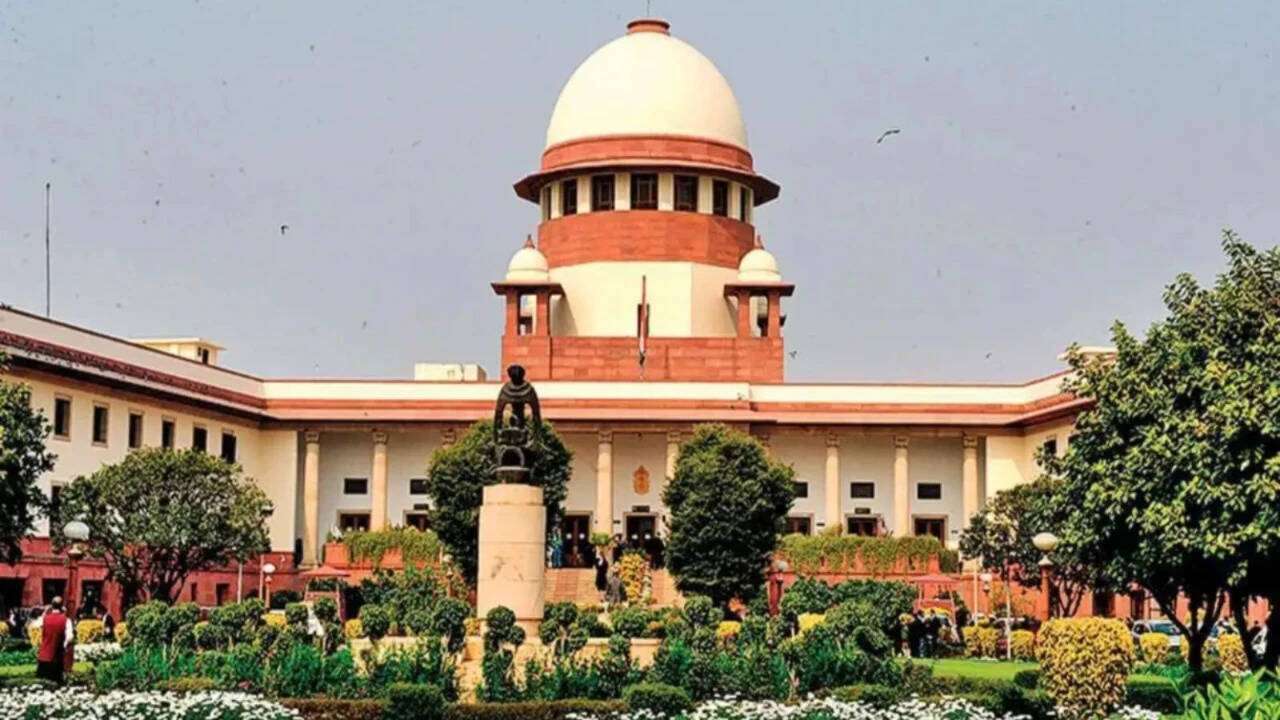
‘Decisions must be unanimous or by majority’, says Supreme CourtNEW DELHI: Supreme Court on Monday asked the Election Commission, CEC Gyanesh Kumar and ECs S S Sandhu and Vivek Joshi to clarify whether crucial decisions regarding the special intensive revision (SIR) of voter rolls were taken unilaterally by the CEC, and said it would injunct (bar) those decisions by the three-member commission which were neither unanimous nor by majority. A bench of CJI Surya Kant and Justices Joymalya Bagchi and V Mohana said irrespective of powers vested in the CEC, the law clearly mandates that all decisions must either be by unanimity or by majority among the three members of the EC.
“If we come across instances (where CEC has unilaterally taken decisions), we will annul them,” it said. The statement came after senior advocate Vikas Singh, appearing for a PIL petitioner, strongly argued for an interim direction to the EC to only take decisions by unanimity during pendency of the petition as the amended CEC and Other ECs (Appointment, Conditions of Service and Term of Office) Act, 2023, gave the CEC enormous powers.
The PIL has sought scrutiny of the validity of SIR decisions and ”alterations” in Form 6 for new voters. Singh said since the court could not undo elections, a direction must be issued that in the interregnum, EC must follow the statutory mandate.
He pleaded that EC be directed to preserve all records on SIR decisions and Form 6 alteration and produce them before SC for scrutiny. CEC, ECs need to either rebut or endorse allegations about ‘unilateral decisions’Let us have some authenticated facts before us through their responses.
They must respond in a clear and transparent manner. If the records show some of the decisions are not taken by majority, we will injunct those.
But we cannot put the cart before the horse, the bench said while also issuing notices to the Centre, deputy EC Manish Garg and EC’s director general (IT) Seema Khanna. This has set the stage for the CEC and, more crucially, the two ECs to either endorse or rebut the allegation that important decisions on SIR were taken by Gyanesh Kumar unilaterally and in violation of the law which lays down that the commission’s calls are to be made either unanimously or, failing that, by majority.
Justice Bagchi said, “We will examine the expression ‘or was’. Protection while in office is understandable.
Such protection (as provided under Section 16) is perhaps only with regard to the President. It is not given to constitutional court judges under Judges Inquiry Act.”