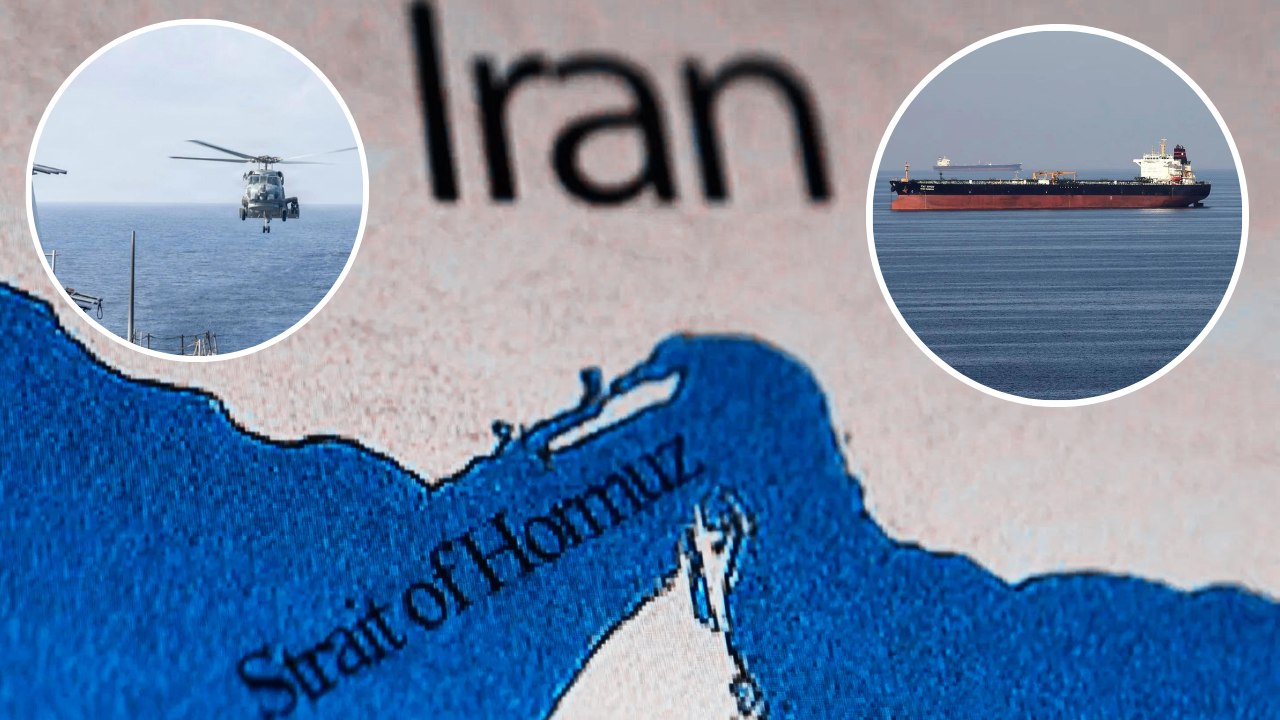
The operation allowed 15–20 tankers to move through a southern channel of the strait each night under US military guidance. The US military secretly helped commercial tankers navigate the Strait of Hormuz in recent weeks despite Iran's closure of the strategic waterway.
The operation allowed millions of barrels of oil to reach global markets each day despite the ongoing war with Iran, according to an Axios report citing two US officials familiar with the operation. As per the report, the operation allowed 15–20 tankers to move through a southern channel of the strait each night under US military guidance.
This carried close to 10 million barrels of oil a day, roughly half the volume that passed through the waterway before the war. The previously unreported operation has provided a crucial channel for keeping oil exports moving at a time when the conflict has severely disrupted one of the world's most important energy routes.
The flow has helped ease pressure on global oil supplies after the war sent crude prices sharply higher. How the US operation worksThe US effort involves more than escorting tankers already carrying oil out of the Gulf.
American forces are also helping empty tankers travel from the Arabian Sea through the Strait of Hormuz into Gulf ports, where they load oil before making the return journey. The ships are organised into scheduled inbound and outbound convoys each night.
The vessels then use the southern lane of the strait based on instructions from the US military." We have been controlling the southern lane of the Strait of Hormuz for two months now.
The Islamic Revolutionary Guard Corps can be a nuisance, but they don't control the strait. We do," one of the US officials, who has direct knowledge of the matter, told Axios.
The task force coordinating the operation is based at the Army headquarters in Fort Bragg, North Carolina, and works with Gulf partners to compile daily lists of tankers moving through the strait. US Air Force fighter jets are also providing protection against Iranian drones and cruise missiles as the vessels make the crossing.
Iran's ability to monitor traffic weakenedAccording to the US officials, the operation became possible after a two-week US Central Command campaign weakened Iran's radar and maritime surveillance capabilities. Iran now has limited visibility over traffic moving through the southern channel, relying on a small number of restored radar systems and "spotters" operating from IRGC fast boats, the officials said.