
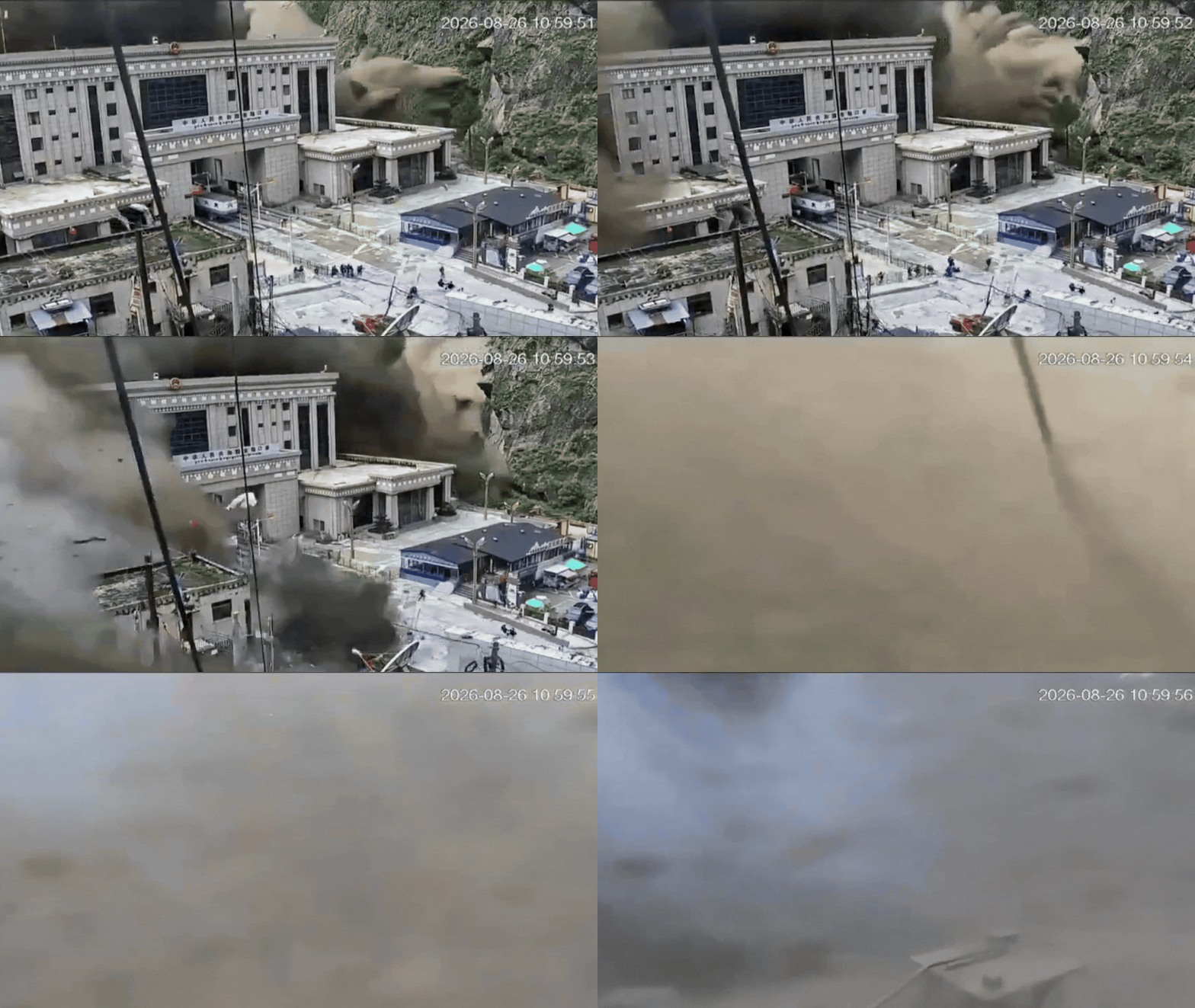
A visual from the flash floods that has killed over 1,100The glacier collapse that triggered a devastating landslide and flash floods along the Nepal-China border, killing over 1,100 showed visible signs of instability days before the disaster, according to a new report by the HiRISK scientific consortium. Scientists said there were “pre-event indications”, including meltwater that had turned visibly brown and signs of a crack propagating into the surrounding bedrock slope.
The findings have raised fresh questions over the lack of operational early warning systems for glacier-related hazards in the remote Himalayan region, with scientists saying more comprehensive systems downstream could have saved a “significant number of lives”. Warning signs before collapse?
“In hindsight, there were some pre-event indications,” the scientists said, pointing to visibly brown meltwater and a crack that was propagating into the surrounding bedrock slope days before the collapse. However, detecting such changes in a remote, high-altitude environment remains difficult.
The report said early warning systems had recently been established in the region to monitor several glacial lakes in China, but no operational system was in place specifically for glacier-related hazards in the area where the collapse occurred. Once the collapse began, the speed of the initial landslide meant conventional warning systems would likely have provided too little time to evacuate a border checkpoint that was among the first areas hit.
Further downstream, however, there may have been more time to respond. The finding stressed the need for systems that can monitor not only glacial lakes but also unstable glaciers and surrounding mountain slopes, while ensuring warnings reach vulnerable communities downstream.
Death toll rises to 1,127As the cause and rescue ops continue, 1,127 people have died in the floods, according to Nepal Police. A total of 45 bodies have been recovered from Rasuwa, 155 from Nuwakot, 59 from Dhading, 348 from Chitwan, 66 from Gorkha, 38 from Tanahun, 217 from Nawalparasi East and 190 from Nawalparasi West.
The death toll has risen to 1,127, with 45 bodies recovered in Rasuwa, 155 in Nuwakot, 59 in Dhading, 348 in Chitwan, 66 in Gorkha, 38 in Tanahun, 217 in Nawalparasi East and 190 in Nawalparasi West. Nine bodies have also been recovered in India.
So far, only 95 of the total recovered bodies have been identified and handed over to their families. The disaster has also renewed calls for greater cooperation between Nepal and China in monitoring hazards across the Himalayas.