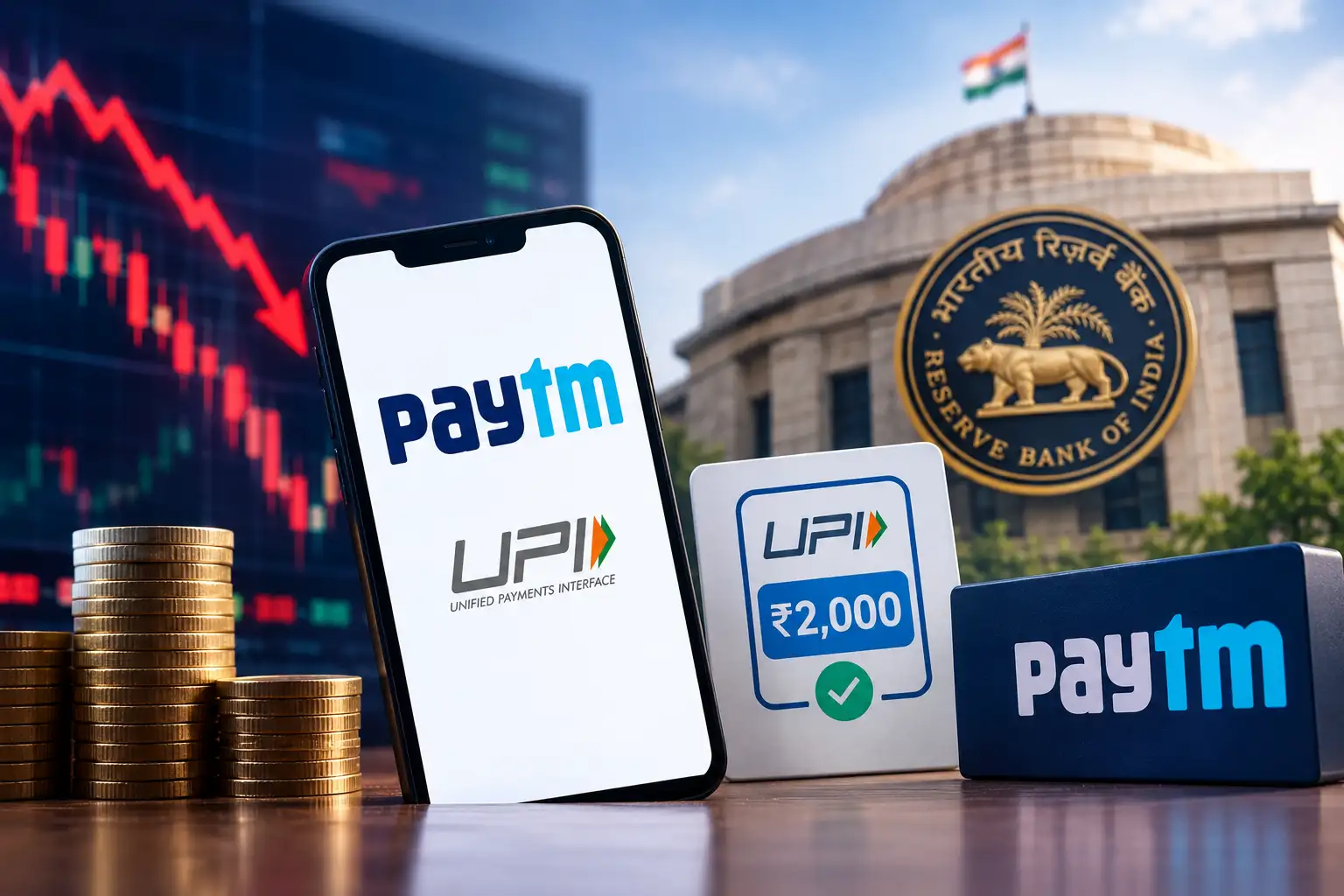
5% on Tuesday after the government directed banks and payment system providers not to levy charges on UPI transactions of up to Rs 2,000, leaving investors speculating about what happens to transactions above the said amount. 80 apiece on NSE on Tuesday morning.
6 apiece which the stock had hit in March this year. As per a gazette notification dated Monday, no bank or system provider would directly or indirectly impose any charge on a person making or receiving a payment through RuPay debit card or UPI transaction of up to Rs 2,000.
However, the government did not specify whether charges would be applicable to transactions above Rs 2,000, to be paid by merchants. Currently, there are no charges levied on UPI transactions, irrespective of the amount..
The government in a statement explained the rationale for imposing charges, stating that with exponential transaction volumes, the system requires significant and continuous upgrades in cybersecurity, fraud prevention, and infrastructure. Charges were required for market expansion and self sustainability, it said, adding that it is necessary to increase competition by encouraging more companies to expand operations, which requires a self-sustaining revenue model.
Reliance on subsidies alone is not viable for the next wave of growth, and a balanced framework is required to ensure that UPI remains robust, inclusive and future-ready, the statement further said. Why are Paytm shares falling today?
For nearly seven years, UPI became more and more popular as a transaction could be made so quickly without paying any additional charges. By specifically shielding UPI payments only up to Rs 2,000, the government has created the legal and regulatory space for a merchant discount rate, or MDR, to be eventually imposed on selected higher-value merchant transactions.
No such charge has yet been announced. The government has however repeatedly clarified that UPI will remain free for citizens and person-to-person transactions will continue without charges.
Finance Minister Nirmala Sitharaman has said any MDR would apply to merchants and not end-users, arguing that revenues generated within the payments ecosystem would enable banks and fintech companies to invest further in infrastructure, innovation and security. While discussing the costs of digital-payment infrastructure, RBI Governor Sanjay Malhotra in August said, “Someone has to pay the cost”.