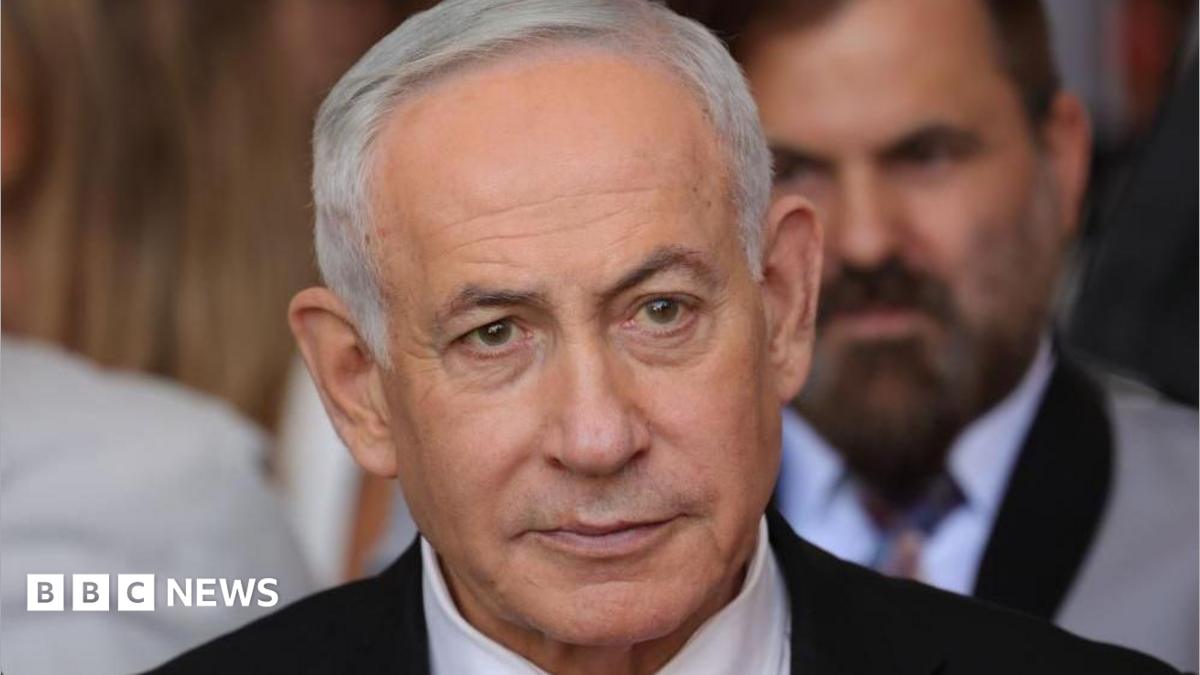
Israel's Prime Minister Benjamin Netanyahu may have categorically rejected the new Board of Peace roadmap to disarm Hamas in Gaza, but that is unlikely to be the final word. The White House is reportedly "not bothered" by Netanyahu's statement and views it as campaign rhetoric in the run-up to a heated general election."
We understand Bibi's political needs" the Israeli journalist, Barak Ravid, quotes a senior US official as saying – using a nickname to refer to the Israeli leader. " We have no problem with it as long as he continues to do what we ask – especially regarding restraining attacks in Gaza."
Recent days have seen an apparent pause in Israel's strikes on Gaza – something Hamas had demanded when signing on to the US-backed, 15-point roadmap. And there is another suggestion that Israel is ready to advance US President Donald Trump's peace plan for Gaza – getting ready for the deployment of the International Stabilization Force (ISF).
The force is made up of international troops, with the plan being for them to work with a new Palestinian police force to secure the territory. The expected construction of the first ISF base is still scheduled to begin amid the ruins of Rafah in southern Gaza at the end of this month, according to Israeli public radio, Kan News, which would allow reconstruction to begin at last.
In July, after months of delicate negotiations, Trump announced a "major milestone" in the implementation of his plan to end Israel's war in Gaza. Writing on his Truth Social platform, Trump said that the Board of Peace had reached an agreement for the complete disarmament of Hamas and other Palestinian armed groups in the territory.
The deal is meant to be carried out in phases, with all weapons decommissioned and stored by a new Palestinian administration in Gaza – which reports to the Board of Peace - and Israeli forces withdrawing from the more than 60% of Gaza they currently control. Senior Hamas officials confirmed that they had agreed to the new framework, conditioning it on mutual compliance by Israel.
This was widely viewed as a major potential breakthrough in the conflict. However, for more than a week, Israel did not give its formal response.
An Israeli spokesman said only that the roadmap did not "reflect Israel's positions." A far-right member of the government, Itamar Ben-Gvir, wrote on X that the deal was "unacceptable."
Increasingly, mainstream Israeli opposition politicians also raised doubts. They questioned whether all small arms would be decommissioned and the sequencing of the plan.