
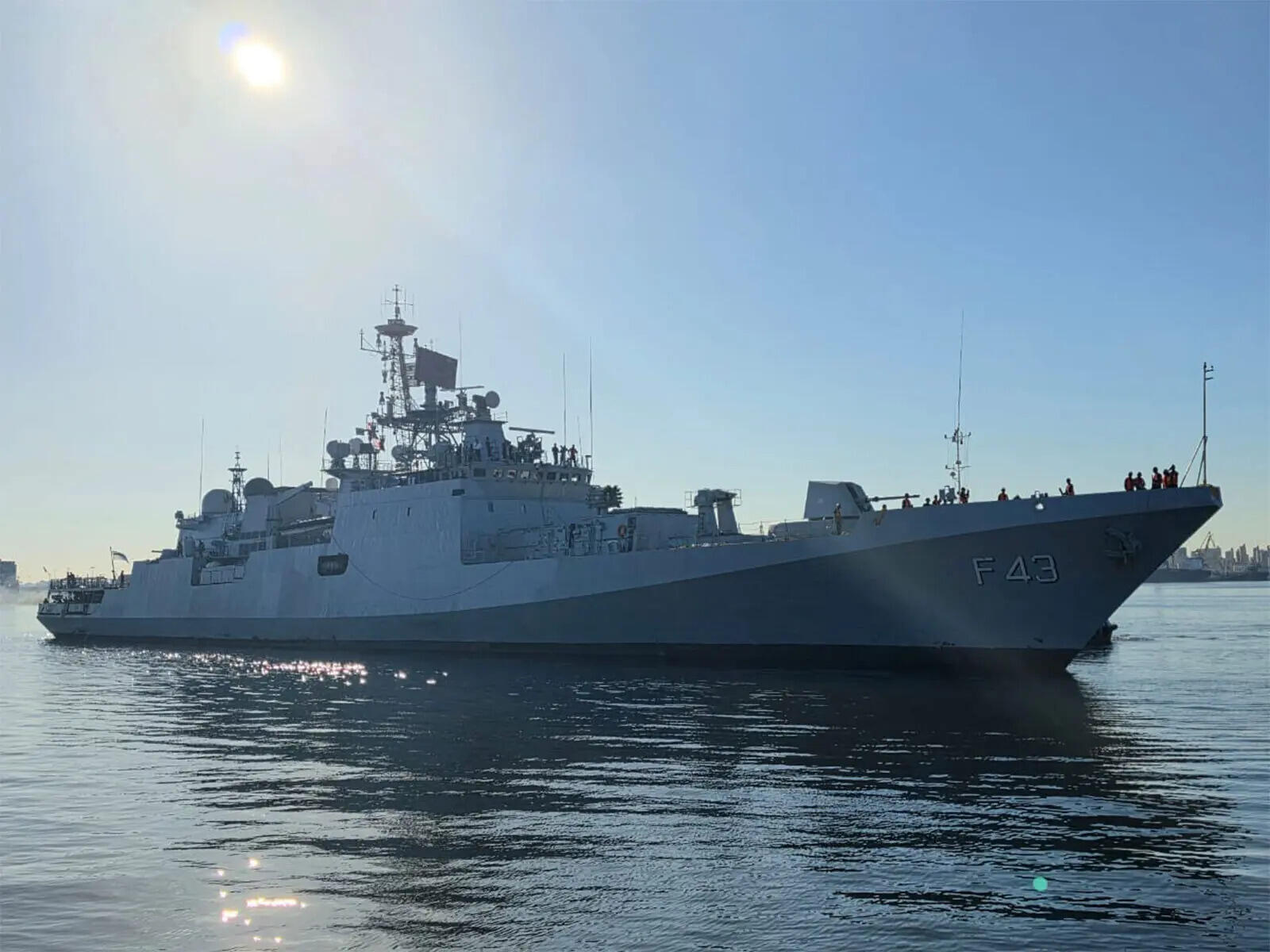
INS Trishul arrives in Alexandria, cultivating cooperation between Indian and Egyptian NaviesA Pakistani Navy ship collided with an Indian Navy vessel in the Northern Arabian Sea on Tuesday evening. The Indian ship was on a routine mission when it was approached by a Pakistani naval ship at high speeds.
A source in the Indian Navy has stated that the Pakistani ship maneuvered in an unprofessional and unsafe manner, leading to a collision and that no damage has been reported. Another source in the navy has stated that the incident has been against the mutually decided confidence building measures and hence the issue has been raised diplomatically.
The Ministry of External Affairs (MEA) has summoned the Pakistani Charge d' Affairs over the incident and has also instructed the Indian Charge d' Affairs in Islamabad to raise thew issue with the government there. This is the second such incident to have come to light since 2011, when Pakistani warship PNS Babur rammed in to an Indian navy vessel in the northern part of the Arabian Sea, that time too the incident was raised with Pakistan on a diplomatic level.
Ramming at seaRamming as a tactic of war at sea, is almost as old as naval warfare itself. Naval ramming has ancient roots, with the Romans and Greeks both relying on it as a core weapon, the Roman rostrum fitted onto galleys, and Greek triremes built specifically for the tactic.
‘Unacceptable’: India Summons Islamabad Envoy As Pakistan’s Ship Collides With Indian Naval UnitThe first modern instance of ramming between major warships came during the American Civil War, at the 1862 Battle of Hampton Roads, when the armoured Confederate vessel CSS Virginia rammed and swiftly sank the Union frigate Cumberl and. The tactic resurfaced through both World Wars, claiming numerous ships and submarines.
Perhaps its most famous instance involves PT-109, sunk during the Solomon Islands campaign, commanded at the time by a young John F Kennedy, who later became US President. Ramming even found its way into a far less lethal but oddly memorable chapter of naval history, the so-called Cod Wars between Icel and and the UK, fought over fishing rights in the North Atlantic, where ramming became something of a recurring, almost theatrical tactic between rival patrol vessels..
Beijing has leaned on its Coast Guard and maritime militia to ram vessels and blast rivals with high-pressure water cannons, exploiting legal ambiguity to solidify illegal territorial claims without triggering a formal military response, similar to the salami slicing tactic used in Eastern Ladakh and elsewhere. A report from the US based think-tank RAND corporation argues that this calculated ambiguity needs to end.