🔥 TRENDING452 people are currently reading about the Upper Assam Flood Relief efforts⚡ BREAKINGNew IT hub in Guwahati expected to generate 10,000+ jobs by next year🔥 TRENDING452 people are currently reading about the Upper Assam Flood Relief efforts⚡ BREAKINGNew IT hub in Guwahati expected to generate 10,000+ jobs by next year
Heart, hope and a steely determination: Dolly Parton's musical legacy | The Local News
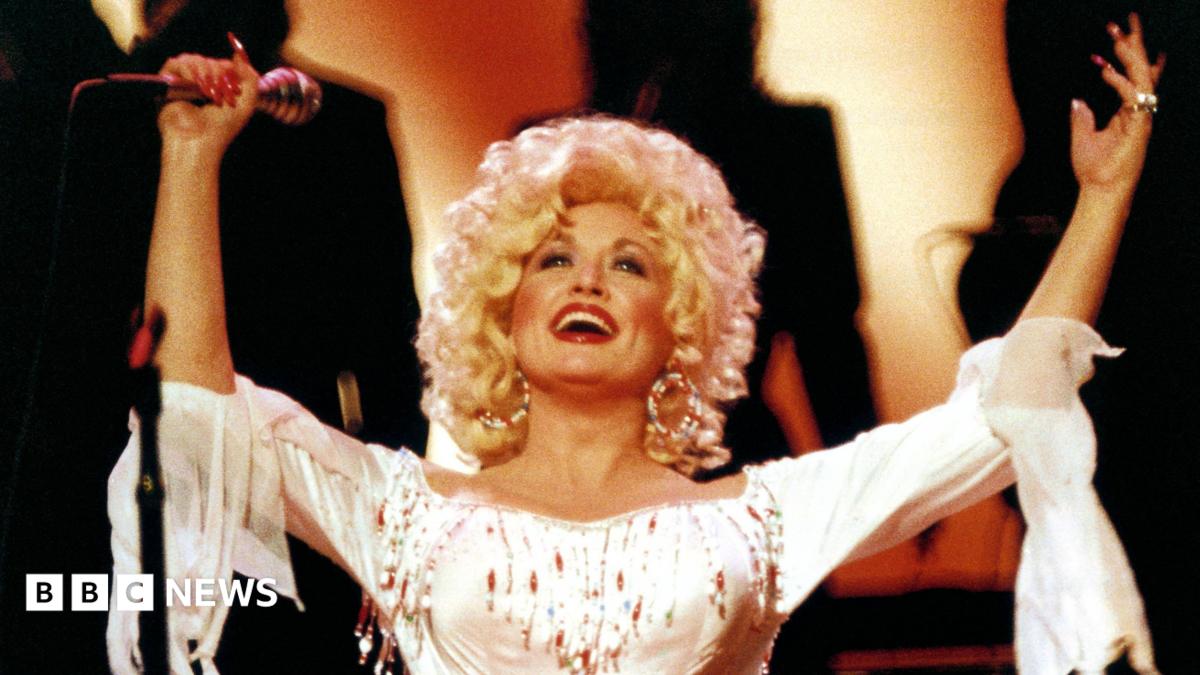
Image source, Getty ImagesByMark SavageMusic correspondentIn 1980, Dolly Parton was filming her first Hollywood movie, 9 To 5, and between scenes she had an idea for the tune that would become the movie's theme song. But her guitar was banned from the set - so she made the beat by strumming her acrylic nails together.
The sound, she realised, was just like the typewriter used by her character, a married secretary who is constantly belittled and sexually harassed by her boss. Excited, she ran over and sang the song to her co-stars Lily Tomlin and Jane Fonda, who was also the film's producer."
Lily and I looked at each other and we had goosebumps," Fonda said. " And we knew, this is not just a movie song, this is an anthem."
Released in November 1980, 9 To 5 became Parton's only US number one as a solo artist, and earned her an Oscar nomination for best song. She loved to tell the fingernail story, but 9 To 5 has another legacy - for its powerful statements about working life and women's place in the corporate world.
You can probably sing the hook off the top of your head. " Working 9 To 5 / What a way to make a living!"
It's jaunty and catchy. The sentiment is universal.
Work sucks. But dig deeper and Dolly's expressing real fury."
It's a rich man's game, no matter what they call it / And you spend your life putting money in his wallet," she sings. " They just use your mind and they never give you credit."
The lyrics tapped into real frustrations and gave working women a voice. But there's a reason why you might not have noticed the anger that fuels Dolly's song.
She simply doesn't sing it that way - even though she had every right to, having navigated the sexism of the music industry from the age of 13. Figure caption, Dolly Parton: The life of an iconic country singerHer early breakthrough came in 1967 when she was hired as the "girl singer" on The Porter Wagoner Show, a TV showcase for country singer Porter Wagoner that reached millions of viewers each week.
Together, they released 21 hit duets including Just Someone I Used to Know, If Teardrops Were Pennies and Please Don't Stop Loving Me. But as Parton's star rose, she began to outshine her co-star.
Eventually, she realised she needed to strike out as a solo artist – writing I Will Always Love You as a letter of apology to her former mentor. He responded by suing her for breach of contract in 1979, demanding $3m (£2,2m).
Wanting to avoid a lengthy court battle, Parton settled for about $1m." I made up my mind that if he could live with it, I could live without it," she wrote in her autobiography.
" I suppose Porter has done all right with it. I am neither his conscience nor his accountant."
It was typical of the star's ability to radiate cheery goodwill that she never held a grudge against Wagoner, always crediting him with giving her a crucial career break, even after their relationship fell apart. Nobody's foolBut she was nobody's fool.
Take, for example, the battle over the rights to I Will Always Love You. After it hit number one in the country charts, Elvis Presley called – he loved the song and wanted to record a cover."
You cannot imagine how excited I am about this," she told him. " This is the greatest thing that's ever happened to me as a songwriter."
But the night before the recording session, his notoriously hard-nosed manager, Colonel Tom Parker, called Parton and told her Elvis wouldn't record the song unless she handed over half of the lucrative publishing rights." I said, ' Well, that throws a new light on this.
Because I can't give you half the publishing. I'm gonna leave that to my family,'" Parton told Reba McEntire's podcast in 2020."
And he said, ' Well, then we can't do it.' "" I mean, it was like the worst thing," she told Country Music Television.
" People were saying, ' You're nuts. It's Elvis Presley.
'" I said, ' I can't.' I always wondered what it would sound like.
I know he would have killed it [in a good way]." Image source, Getty ImagesBut Parton had the last laugh.
When Whitney Houston recorded her blockbuster version of I Will Always Love You for The Bodyguard soundtrack in 1992, the country star still owned the rights and earned "enough money to buy Gracel and", Presley's mansion. Instead, she invested the money in a black neighbourhood in Nashville, Tennessee, saying she thought it was an apt way to honour Houston's legacy.
That determination to stand up for herself, and to value her music as more than just a commodity, is an essential part of Parton's legacy. Without her example, would Taylor Swift have stood up to the hedge funds who bought her back catalogue, re-recording her biggest hits to rob them of royalties?
Perhaps not – but either way, Dolly approved." Smart!"
she said when asked about Swift's masterplan. " She's so smart, she's so great, she's genius.
I mean really, look at what she's doing! That's amazing!"
Image source, ReutersMusically, her legacy is just as profound. Parton was about six years old when she wrote her first song: Little Tiny Tasseltop, an ode to her favourite doll and its corn-silk hair.
For the rest of her career, she turned everyday details like those into songs of hope and heart. Her 1971 classic Coat of Many Colors tells the profoundly moving story of Parton as a child being proud of the ragged, hand-sewn clothes her mother had made for her.
The 1974 concept album My Tennessee Mountain Home, meanwhile, is a musical autobiography that opens with Parton reciting the first letter she wrote home after moving to Nashville as a teenager." A couple of folks already told me that they might record a couple of my songs, so I'll be makin' enough money to get by," she sang.
" And I don't want you to be worrying about me bein' hungry or anything." The album cover is a photo of the two-room log cabin that was Parton's actual childhood home in the 1940s and 50s, and the rest of the songs paint an idyllic picture of her childhood.
Even when the family didn't have electricity and running water, she was determined to see the good in everyone and every situation." We might have been poor but we didn't know it / We'd heard that word but we didn't know what it meant."
Inspired generationsHer diaristic approach to songwriting also gave birth to hits like Jolene – written about a red-headed love rival – and All I Can Do, a heartfelt declaration of love to her husb and, Carl Dean. Funny and authentic, she captured the trials and tribulations of life in a way that was always relatable, even when her stage outfits and her hairstyle remained larger than life.
The feminist message of 9 To 5 was preceded by When Possession Gets Too Strong and Just Because I'm A Woman, which castigated double standards in relationships: " My mistakes are no worse than yours / Just because I'm a woman." And in an era where women were forced into gendered stereotypes – housewife, temptress, fallen woman, mixed-up girl – she satirised and sent up those roles, playing them to the hilt while emphasising her strength."
I've always been misunderstood because of how I look," she sang on 2008's Backwood Barbie. " Don't judge me by the cover, cos I'm a real good book."
Words like those inspired generations of women to be who they were, not who the world perceived them as. And she used her music to unite people, even as much of the country music establishment entrenched itself in conservatism.
In 2002, at the House of Blues in Los Angeles, Parton even replaced the name Jolene with "drag queen" as a crowd of drag performers looked on. Outside music, her philanthropy gave scholarships to impoverished students and supplied more than 200 million books to young readers.
Significantly, none of the country stars she inspired were ever billed as "the next Dolly Parton" because no-one did it like Dolly. She was unique.
Irreplaceable. Unreproducible.
A legend in her lifetime, and now beyond.
US President Donald Trump says he has reached an agreement with Russian President Vladimir Putin allowing Moscow to "immediately release" diesel into the global...