🔥 TRENDING452 people are currently reading about the Upper Assam Flood Relief efforts⚡ BREAKINGNew IT hub in Guwahati expected to generate 10,000+ jobs by next year🔥 TRENDING452 people are currently reading about the Upper Assam Flood Relief efforts⚡ BREAKINGNew IT hub in Guwahati expected to generate 10,000+ jobs by next year
' Graveyard of Saudi ambition': Why the Houthis remain Riyadh's biggest headache | The Local News
Iran gave the Houthis a technological edge. Years of war taught them how to make that advantage their ownYemen has long been described as the graveyard of Saudi ambition.
And this month Riyadh learnt its latest lesson. For more than a decade, the kingdom has spent billions of dollars, deployed advanced weapons and invested enormous political capital in trying to contain the Houthi movement on its southern border.
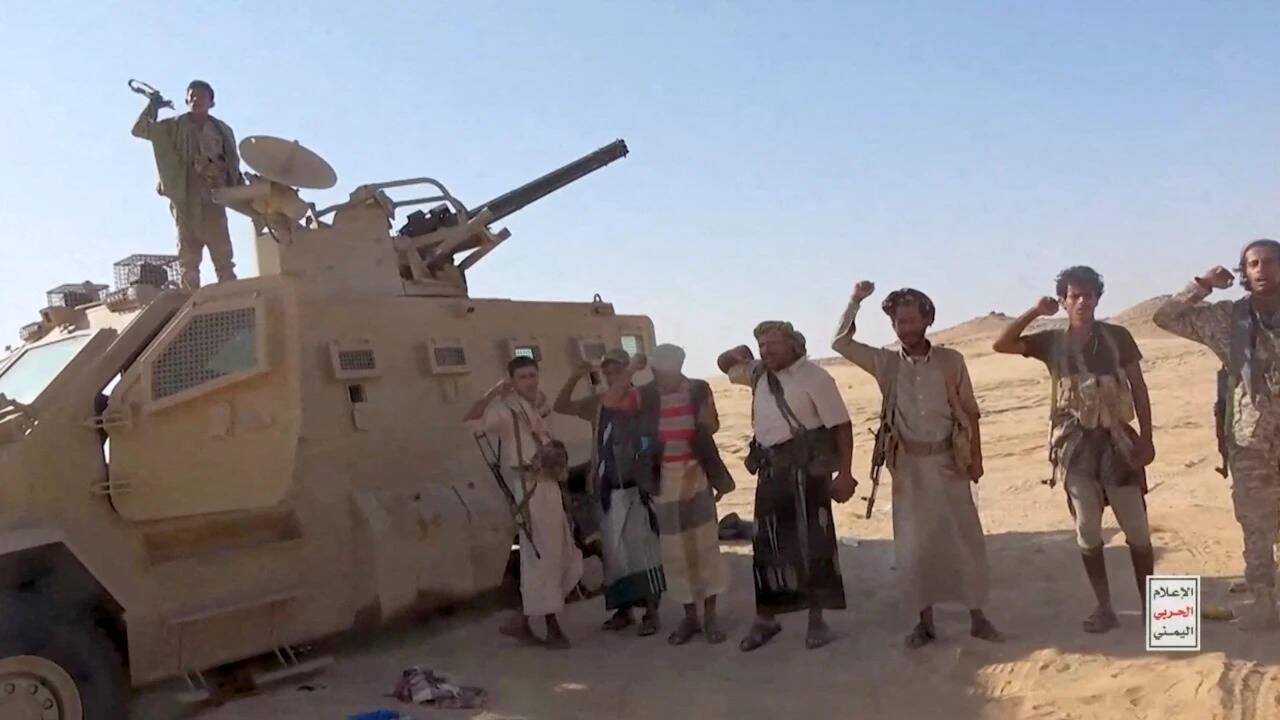
What began as a northern Yemeni insurgency has developed into a formidable military force capable of launching missiles and drones across the region and threatening one of the world's most important shipping routes. The latest setback came this month, when Houthi forces captured the Red Sea port of Mocha and then advanced towards the strategic island of Perim, also known as Mayyun, at the mouth of the Bab el-Mandeb strait.
Mocha was not the whole story. It was the door to a much bigger one.
The Houthi advance has brought the group closer to one of the world's most important maritime chokepoints at a time when Saudi Arabia is already dealing with disruption around the Strait of Hormuz and attacks on its energy infrastructure. For Riyadh, a war that once looked like a campaign to defeat a relatively weak neighbour has become a problem involving shipping, oil, national security and regional influence.
A decade of war has transformed the Houthis from a local insurgency into a force capable of threatening Saudi Arabia, Israel and international shippingThe question is no longer simply why Saudi Arabia has struggled to defeat the Houthis. It is why its enormous military and financial advantages have failed to produce a lasting political and military victory.
What is happening nowThe latest escalation comes amid a wider Middle East conflict, with the US and Israel fighting Iran. What we know about the Houthi attack: Mocha falls: Houthi forces captured the Red Sea port of Mocha in September, expanding their control along Yemen's western coast.
Perim comes next: The Houthis then moved onto Perim, an island sitting inside the Bab el-Mandeb strait, bringing them closer to a vital global shipping route. Saudi oil routes face pressure: With the Strait of Hormuz disrupted by the wider regional conflict, Saudi Arabia has relied more heavily on its East-West Pipeline to move crude to the Red Sea.
The pipeline was subsequently hit by a drone strike linked to Iran-aligned forces elsewhere in the region. The war reaches Saudi Arabia: Houthi missiles and drones have continued to target Saudi territory and energy infrastructure, including the Jazan area.
Saudi authorities also reported intercepting a drone approaching the southern sector of Mecca, an incident the Houthis denied was a deliberate attempt to target the holy city. Riyadh has not returned to ground war: Saudi Arabia has responded with air strikes and defensive operations but has so far avoided a major ground intervention.
The war that never really endedThe roots of the current crisis go back much further than 2015. The Houthis, formally known as Ansar Allah, emerged from a Zaydi revivalist movement in northern Yemen during the 1990s.
Zaydism is a branch of Shia Islam with deep roots in Yemen, particularly in the country's north. The movement grew partly in opposition to the spread of Saudi-backed Salafi religious influence in Yemen.
During the 2000s, the Houthis fought several wars against the Yemeni government and developed a growing military organisation. In 2014, the movement captured Sanaa and forced President Abd Rabbu Mansour Hadi's government out of the capital.
The Houthis then expanded southwards. The biggest weakness in the anti-Houthi camp has often been political rather than military: the forces opposing the Houthis have rarely shared the same vision for Yemen.
Saudi Arabia saw the rise of the movement as a direct security threat. A hostile force with links to Iran was now controlling large parts of the country next door.
In March 2015, Saudi Arabia assembled a coalition and launched Operation Decisive Storm. The objective was to restore the internationally recognised government and push the Houthis back.
The campaign began with overwhelming Saudi and coalition air power. But the expected quick victory never came.
Saudi aircraft could destroy weapons depots, command centres and military positions. What they could not do was create a stable political order on the ground.
Yemeni forces fighting the Houthis were divided, while the Houthis adapted to the campaign and became increasingly experienced. The war dragged on for years.
A UN-brokered truce in 2022 brought a major reduction in fighting. It did not produce a final political settlement.
Instead, the conflict entered a period of uneasy calm. For Saudi Arabia, the truce froze a conflict in which the kingdom had failed to restore the Yemeni government to power across the country.
Why Saudi Arabia could not turn military power into victorySaudi Arabia has some of the most advanced military equipment in the region. It operates sophisticated US-made fighter aircraft, precision-guided weapons and missile defence systems.
Yet the Yemen war exposed a basic problem with military power. An insurgency cannot normally be defeated through air strikes alone.
Saudi Arabia has the weapons. The harder problem has been turning that firepower into victoryAir power can destroy targets.
It cannot hold a town after the bombs stop falling. It cannot build a functioning government, persuade local communities to support an unpopular administration or settle rival political claims.
That problem became particularly severe in Yemen because Saudi Arabia did not have a single, unified Yemeni partner capable of taking territory and holding it. Instead, the anti-Houthi camp has been deeply divided.
The internationally recognised government has struggled with internal disputes. The Southern Transitional Council, backed by the United Arab Emirates, wants greater autonomy and has long pushed for southern independence.
Other forces, including the National Resistance Forces and Islah-linked groups, have their own interests and networks. Saudi Arabia and the UAE have also backed different actors at different points in the war.
That rivalry matters because defeating the Houthis requires more than driving them away from a particular battlefield. Someone has to take control afterwards.
If the forces fighting the Houthis disagree about what Yemen should look like, military victories become difficult to turn into lasting political gains. The Houthis have benefited from precisely this weakness.
They have had years to develop military experience while their opponents have spent much of the same period fighting among themselves. That is one reason the latest loss of territory is significant.
The problem is not simply that the Houthis are advancing. It is that there is no obvious unified force capable of reversing those gains and then governing the territory.
How a rebel movement built a modern arsenalThe Houthis Saudi Arabia first fought in 2015 were a very different force from the one now threatening the Red Sea. When the movement seized Sanaa in 2014, it inherited large quantities of weapons from Yemen's collapsing military, including Soviet-era missiles and other ageing systems.
The Houthis had fighters, experience and a huge stock of weapons, but they were still primarily a local insurgency. A decade of war changed that.
The Houthis received training and technical assistance from Iran and Hezbollah, while adapting their tactics through years of fighting. A 2025 UN report found evidence of both domestic weapons production and Iranian technical assistance, while Reuters reported this week that the group now has an estimated 350,000 fighters.
The Houthis' growing self-reliance has made them harder to contain, allowing Tehran to provide critical technology while the group develops much of the rest of its war machine locallyIran remains crucial, particularly for sophisticated missile technology and key components. But the Houthis have become increasingly capable of assembling and producing weapons inside Yemen.
According to The New York Times, larger components such as missile chassis are now manufactured in Houthi-controlled territory, while parts can be sourced through complex international smuggling networks. That has made the group harder to cripple through sanctions, blockades or attacks on individual weapons shipments.
Components can be moved separately through commercial supply chains and assembled later. The result is an arsenal that bears little resemblance to the force Saudi Arabia encountered at the start of the war.
Houthi ballistic missiles have reached Israel, more than 1,000 miles away, while anti-ship missiles and naval drones have allowed the group to threaten commercial vessels in the Red Sea. Drones have also become an increasingly important part of its battlefield operations inside Yemen.
The Houthis are also experimenting with newer technologies. The New York Times reported that an Anthropic investigation identified a group in northern Yemen using AI tools in an effort to develop guided weapons.
Anthropic said there was no evidence that an operational weapon had ultimately been produced, but the episode showed the group's willingness to use new technology to expand its capabilities. Iranian support helped transform the Houthis' arsenal, but the movement has increasingly learned to adapt, assemble and produce weapons inside YemenThere is another source of strength: the battlefield itself.
Years of fighting have given the Houthis experience in missile warfare, drones, infiltration, mining and attacks on shipping. The 2022 ceasefire then gave them time to regroup, recruit and expand their military infrastructure.
Their recent advance has added another advantage. As Saudi-backed forces retreated from the Red Sea coast, they abandoned or lost American and Saudi-supplied vehicles, weapons and other equipment.
Reuters reported that the Houthis captured some of this hardware during their advance. The transformation is therefore not simply about getting more weapons from Iran.
It is about learning how to make, modify, smuggle, deploy and replace them. That is what makes the Houthis such a difficult opponent for Saudi Arabia.
Riyadh is no longer fighting a lightly armed mountain insurgency. Both countries entered the Yemen war on the same side, but their interests in Yemen have never been identical.
Saudi Arabia has generally wanted a Yemeni government capable of maintaining the country's territorial unity and preventing a hostile force from controlling the north. The UAE has built strong relationships with southern forces, including the Southern Transitional Council, which supports southern independence.
Those competing interests have repeatedly produced tensions within the anti-Houthi camp. Saudi Arabia has also sought to strengthen its own preferred Yemeni partners, including Islah-linked forces, while trying to limit the influence of groups backed by Abu Dhabi.
The result has been a complicated network of alliances in which forces that share an enemy do not necessarily share the same political objective. For the Houthis, that fragmentation is an advantage.
A united opponent could concentrate its military strength against Houthi positions. A divided one has to constantly balance the Houthi threat against disputes among its own members.
This is perhaps the clearest explanation for why Saudi military superiority has produced such limited results. The kingdom has powerful weapons.
It has not had a powerful, unified political partner in Yemen. A problem for MBS and Vision 2030 For Mohammed bin Salman, the timing could hardly be more difficult.
The central promise of Vision 2030 is that Saudi Arabia can move beyond its dependence on oil and become a major hub for tourism, technology, investment and infrastructure. That requires stability.
Saudi Arabia has spent years trying to present itself as a country moving beyond the conflicts that have defined much of the Middle East. It has hosted international sporting events, expanded tourism, attracted investment and positioned itself as a major economic power.
The Yemen war complicates that image. The immediate economic threat is also clear.
Any prolonged disruption to oil production or export routes can affect government revenue and complicate the enormous spending required by Vision 2030. Yemen's old lessonThe deeper lesson from the Yemen war is not that military power does not matter.
It is that military power has limits when there is no political structure capable of turning battlefield gains into lasting control. Saudi Arabia can destroy Houthi weapons.
It can intercept missiles. It can launch devastating air strikes.
What it has struggled to do is create a unified Yemeni force capable of defeating the Houthis, hold the territory afterwards and build a political settlement that the country's competing factions will accept. The Houthis, meanwhile, have used years of war to become stronger, more experienced and more deeply embedded in Yemen's political and military landscape.
That leaves Riyadh facing a conflict it once expected to settle quickly but has instead helped transform into a regional security problem. The kingdom's wealth has bought it some of the world's most advanced weapons.
It has not bought it an easy victory. In Yemen, geography, local politics and military adaptation have repeatedly proved more powerful than the size of a defence budget.
And once again, Yemen is living up to its reputation as the place where Saudi ambitions go to die.
Amarinder Raja WarringNEW DELHI: Congress leader Amarinder Singh Raja Warring on Friday formally resigned as the Punjab Pradesh Congress Committee (PPCC) chief,...