🔥 TRENDING452 people are currently reading about the Upper Assam Flood Relief efforts⚡ BREAKINGNew IT hub in Guwahati expected to generate 10,000+ jobs by next year🔥 TRENDING452 people are currently reading about the Upper Assam Flood Relief efforts⚡ BREAKINGNew IT hub in Guwahati expected to generate 10,000+ jobs by next year
Gold, global equities, largecaps, midcaps and smallcaps: Samco CEO Jimet Modi’s five-way portfolio formula | The Local News
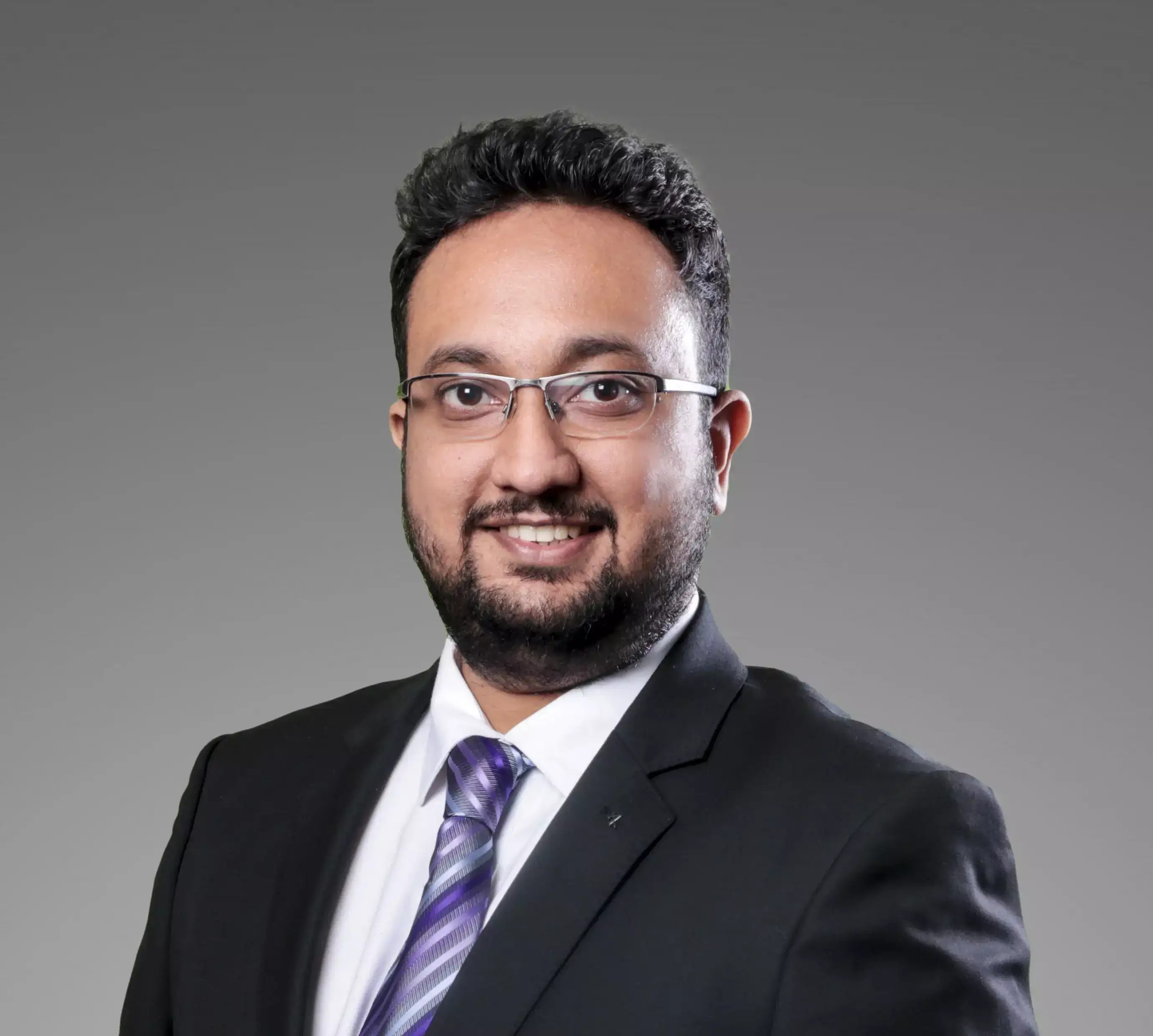
With India’s stock market caught between expensive mid and smallcaps and largecaps that lack strong growth drivers, Samco Securities founder and CEO Jimeet Modi is recommending a deliberately balanced portfolio: 20% each in largecaps, midcaps, smallcaps, gold and global equities. Modi expects the market to remain range-bound for the next 10 to 12 months, with neither an immediate bull market nor a deep, panic-driven bear market.
His message to investors is clear: avoid concentration, resist the rush into smallcaps and spread risk across asset classes as the market undergoes a prolonged time correction. Edited excerpts from a chat on market outlook and investing strategy: The market has seen both time and price correction in the last two years.
Where are we headed now? Jimeet Modi: Broadly, our view and assessment is that we are in the midst of a correction, and this correction will continue.
We don't see an immediate bull market, and neither do we see a deep, panic-driven bear market. It is a sideways market.
We are going through both price and time correction, and we have been range-bound for the last couple of years. We do not expect it to trend over the next 10 to 12 months either.
So it's going to be a range-bound market for possibly the next year or so. In this period, largecaps have been the biggest disappointment for investors.
Are these company-specific or sector-specific issues or is the opportunity much more attractive in the broader market? Jimeet Modi: Large cap, as the name suggests, captures what is large, and what has become large because of its history.
Markets are forward-discounting machines. They discount the future, and markets are essentially looking forward to what is going to happen 12 months, 18 months, 36 months out.
With that in mind, the current composition of the Nifty is not future-oriented. It has a lot of rich history, rich legacy, rich wealth creation, but very little of what future wealth creation and value creation will happen.
Broadly, our analysis and estimate is that larger wealth will get created from new technologies, innovations and new themes, and a lot of the current large-cap universe does not reflect any of these. Let's put it this way: the current large-cap universe has become a cash flow engine.
They are not a growth engine, and they are not an innovation engine. Because of that, they continue to get de-rated, because this is a market where people are essentially paying for growth globally rather than paying for cash flow.
To that extent, it's a function of the composition that's a problem. It's a function of how these businesses are run that's a problem.
And it's also a function of the fact that there is very little of the future that is getting captured in the current state of the large-cap index. Read more: ETMarkets Smart Talk | Earnings growth, ROCE and cash flows are key to identifying future wealth creators: Aditya KhemaniSo on one side, in large caps, we're not seeing any growth.
On the other side, in mid and small-cap pockets of the market, we are seeing growth, but valuation is becoming a problem. The valuation is attractive in large caps, but in mid and small caps, growth is there but valuation is expensive.
In such a situation, how should one balance a portfolio, in your opinion? Jimeet Modi: That is why I'm saying there will be a time correction.
In one place there is no growth, and in another there is no valuation comfort. Only time will correct all of this over a period and bring everything back to the base rate.
You'll get tired of hearing people say, do asset allocation, don't gravitate towards one side of the market. But for a normal retail investor, that is generally good advice: you should have some money in all buckets right now.
Unfortunately, what is happening is that there is too much of a queue going towards small caps. Everybody is just chasing small caps.
Money is flowing into small-cap funds. Retail investors are flocking towards small caps.
Retail investors are building margin-trading positions in small caps and mid caps. So there is too much participation, or crowding, in that segment, and that's not really good.
I am extremely bullish on the small-cap space over the long term. Over an 8 to 10 year period, I think small caps are still going to create disproportionate wealth compared to large caps, by an order of magnitude larger than what, let's say, the Nifty 100 could create.
But it's going to happen over time. If people think, " I'm putting in money chasing small caps right now with an immediate expectation that next week I will make money, or next month, or next year," be ready to be disappointed.
You will make a lot of money, but you'll have to be patient, and that patience will pay off in small caps. If you have a slightly shorter view, you need to have a well-balanced basket across multiple asset classes.
That has large caps, mid caps, small caps, gold, some amount of debt, and some amount of global equities as well. You cannot be tilted towards just one size factor, which is small, mid or large.
You cannot go to large only because valuations in large are cheaper. So I think a broadly balanced mix of these five assets is what I would suggest.
If somebody comes to me today and asks what I would do if I had to have an extremely oversimplistic asset allocation strategy, I would say put 20% each in large, mid, small, gold and global equity. That would probably be a more peaceful experience for a moderate investor profile.
I would not give this advice to a 60-year-old, but I'm saying, generally... Whatever your risk capital is.
Let's say somebody has a 1 crore corpus and decides, " I want to keep 25 lakh rupees in debt because I need that liquidity." You keep that piece aside.
Once you've decided that you have 75 lakh of risk capital, this is how we should allocate. Now, it's interesting that you're still saying that 20% should go into global equities.
At the same time, there's a lot of noise in the market that the AI trade will end one day and the global market will crash. So where do you see this?
And can India benefit if the AI trade unwinds? Jimeet Modi: Unfortunately, I don't think India is going to be a preferred market if there is an anti-AI trade.
Today, global allocators and investors are positioning themselves so that, if at all there is an anti-AI trade, Brazil is the top priority market, because of the change in government and the commodity-oriented nature of that market. The number one ranked market for all global allocators for an anti-AI trade is Brazil, not India.
And India has its own set of problems in terms of taxation. We have disincentivized people with long-term capital gains tax, blah, blah, blah, the same old story, which we all are aware of.
That's why India is not on the map of a global allocator who wants to hedge the anti-AI trade. So that is the second part of your question.
Now, going back to the first part of your question. This fear that an anti-AI trade could play out is coming from the fact that the majority of people are drawing an analogy between the current AI move and the dot-com move.
In the dot-com bubble, everything went into bubble territory, so it had a crash. The thinking is that, in the same way, this will also go into bubble territory and will crash.
Our view is that we are not yet in a bubble, because there are very strong earnings, there is very strong growth, and there is still reasonably strong free cash generation playing out in the entire AI trade. If you look at the peak of the dot-com bubble, the whole index was trading at upwards of 60, 70, 80 times earnings.
We are still sub-30 times. So we are nowhere in the bubble territory that NASDAQ was in during the dot-com era.
Can this AI trade continue for longer? Definitely, yes.
I think more people will go bankrupt trying to call the top in the AI trade and trying to short it than will actually get it right. So I think it's premature to conclude that this is a bubble that is going to burst, and that we should therefore position ourselves immediately.
Nobody knows how long this will last. This could probably last for another year, two years, three years.
No one knows. I remember Samco had a very bullish call on gold.
What makes you continue to be bullish on gold even after it crossed $5,000, and is now at around $4,200 levels? Jimeet Modi: Gold is, let's call it this way, the currency of Mother Earth and the currency of God.
With whatever is happening across the world in terms of the geopolitical situation, as it stands today, a lot of countries are hedging their bets, moving away from US Treasuries and US bonds and moving to what is, in their minds, an alternate safe haven, which is gold. If you see the last year or so, some of the largest buyers of gold have been global governments, and not just individuals like you and me.
It has been broadly institutional buying, central banks buying. From that perspective, gold has seen a good 20 to 25% correction.
I'm not saying gold will go up tomorrow, but it's a must-have in a rapidly changing world. We are in a world where no currency is essentially able to store its value.
Currencies are seeing moves on either side, depending on which side of the geopolitical equation they stand. In such a time, it's good to have a 20% allocation to an asset like gold, which has generally been a good hedge, both in terms of panic as well as against inflation.
Read more: ETMarkets Smart Talk| India’s next wealth creators may be hidden in specialised manufacturing and energy infrastructure: Paresh BhagatA lot of investors who began buying gold amid the peak in January are now sitting with losses. Should one look at gold as a diversifier or core portfolio allocation?
Jimeet Modi: Yes, you have to look at it as a diversifier. If people gravitate and crowd towards a particular asset, and all signals point to crowding, then there is a challenge with future returns.
The same thing happened with gold in January, and silver in January, where there was too much crowding. People started realizing that that is the only asset that's making money, the only asset that's going up, and there was such a large fear of missing out that you went to the extreme end of the spectrum.
When you go to one extreme end of the spectrum, future returns are disappointing. If you were a buyer of gold in January, nothing can be changed, but that was the wrong call to make.
But after a 25% correction, at the $4,100 to $4,200 range, when you are buying almost $1,000 to $1,500 off the peak, it's a good time to be allocated to gold. The risk-reward in the current position is much, much more favorable.
And again, like I said, there is no need to have a concentration bet. Don't put 100% of your money in gold.
If you have 20% allocated to gold, let's say even if it underperforms by 10%, you are underperforming relatively by only about 2%. The problem happens when you put 100% of your money in gold and then it underperforms.
That can be painful. Going back to equities, can you also share some insights on which sectors, at this stage, could see earnings growth?
Auto has been a disappointment now, with the numbers coming in, and people are saying the impact of GST could be tapering off. So which sectors do you think?
Is consumption one of them? Jimeet Modi: Broadly, we are not very bullish on the traditional sectors, so to speak, whether it's consumption, IT, autos or banks.
Sectors that are not seeing any transformation are not sectors that we are currently bullish on, because they are still reasonably priced. They are not cheap.
The whole consumption pack has corrected from the top, but it's not at mouthwatering valuations. In the same way, banks have corrected from the top, but it's not like it's a throwaway price, that it's dirt cheap and therefore you need to get extremely excited about it.
The space we are more interested in is, like I said, what is more futuristic in nature. If you are playing sectors in India, there is very little to play the AI theme directly, but you can take a picks-and-shovels approach.
You can build positions around heavy electrical equipment as a sector, metals and mining, industrial products, and some amount of power and utilities. On every correction, it has good secular trends and tailwinds.
Generally, industrial products, chemicals and petchem are, again, an interesting sector with good tailwinds. And finally, even capital markets on dips.
The trend of financialization of savings is strong. It is a non-reversible trend at the moment.
It will go through a correction, but from a decadal opportunity perspective, every correction remains a strong opportunity. And finally, I think defense is an evergreen opportunity in India.
From a multi-decadal opportunity perspective, defense will be a great wealth creator and compo under on every correction. So not all of the sectors I spoke about are necessarily a buy at today's valuation, but they are a buy on every dip if you take a 5 to 8 year view.
Jimeet Modi: Yeah. Generally, we are momentum investors.
As momentum investors, we are looking for not just price but price, earnings, growth, all of these factors. And in all of the sectors that I spoke to you about, by and large, they are a play on the future.
If you look at banks, IT, autos and so on, they are all steady-state businesses. They are good businesses, good cash-flow-generating businesses, but nothing world-changing, sea-changing or transformational is happening in any of these businesses.
So we find it hard to create disproportionate wealth. If you need to create disproportionate wealth from these segments, then you need to buy at dirt-cheap valuations, so that your entry-point valuation is so cheap that your money gets made from the valuation and not from PE rating.
I don't think any of these sectors are going to get re-rated, because nothing transformational is happening, and valuations are also not mouthwatering, like I said earlier. If neither of these conditions is met, there is no need for any of us to be bullish on any of these age-old traditional businesses today.
Imphal: President Droupadi Murmu on October 21 conferred the Lalit Kala Akademi National Award on Manipuri sculptor Nimai Singh Sarungbam for his teak wood scul...