🔥 TRENDING452 people are currently reading about the Upper Assam Flood Relief efforts⚡ BREAKINGNew IT hub in Guwahati expected to generate 10,000+ jobs by next year🔥 TRENDING452 people are currently reading about the Upper Assam Flood Relief efforts⚡ BREAKINGNew IT hub in Guwahati expected to generate 10,000+ jobs by next year
Fuel paradox: Russia has oil, so why is it importing petrol from India? | The Local News
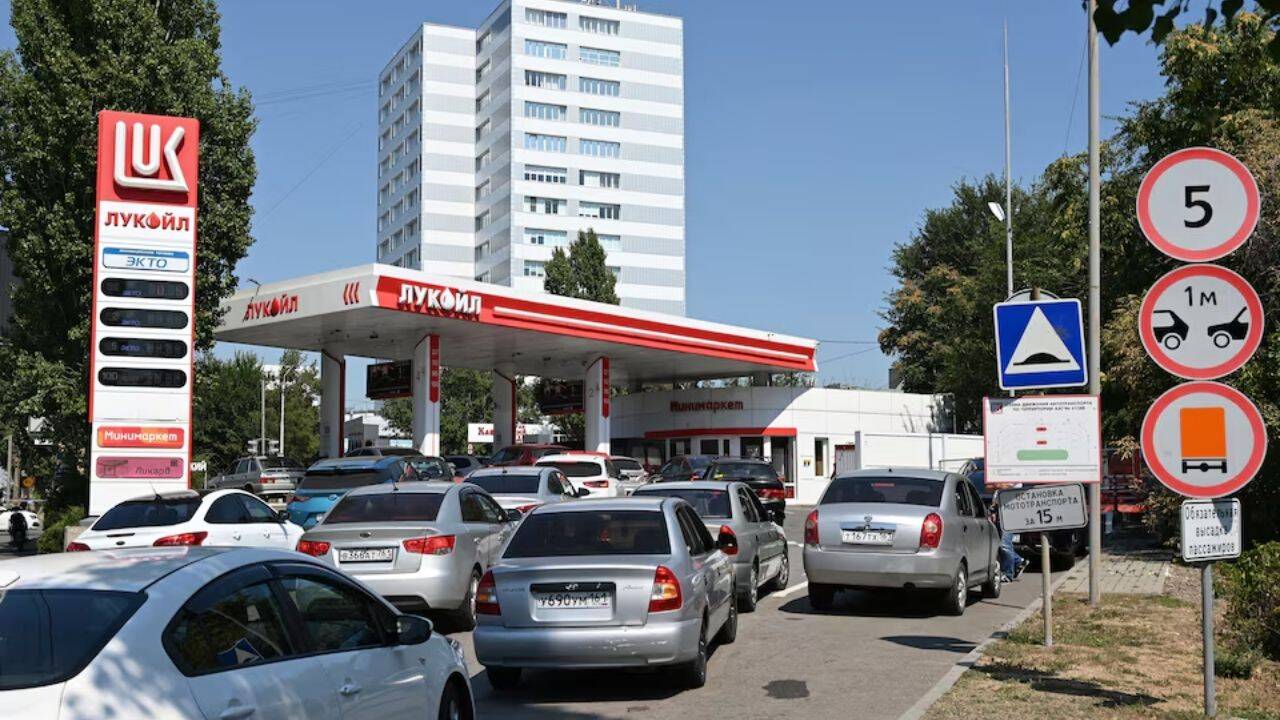
Cars queue to refuel at a Lukoil fuel station amid fuel shortages following recent series of Ukrainian air attacks on oil refineries in Russian regions. (Reuters) Russia, one of the world’s biggest oil producers, is now rationing petrol at home as Ukrainian drone strikes hit its oil refineries and disrupt fuel supplies.
Reuters reported that petrol stations in Moscow have reintroduced limits on fuel sales as shortages return. Gazprom Neft has capped petrol purchases at 40 litres at automated stations and 60 litres at other stations, while Rosneft has limited sales to 30 litres per vehicle across Russia.
Tatneft has also set a 50-litre limit. Long queues have also returned at petrol stations in Moscow and the surrounding region.
The restrictions come after an earlier wave of shortages eased for a short period in July. But fresh Ukrainian attacks on refineries, along with strong seasonal demand and refinery maintenance, have again tightened supplies.
Ukraine hits Russia's oil refineriesRussia has oil, but it is short on petrolThe scale of the problem becomes clearer when Russia’s oil industry is taken into account. 89 million barrels of crude oil per day in 2025, making it the world’s second-largest crude oil producer after the US, according to the US Energy Information Administration (EIA).
76 million barrels of crude oil per day in July 2026. 86 million barrels per day recorded in June, but it shows that Russia continues to produce huge volumes of crude even as its petrol market faces shortages.
Russia also has a massive refining industry. 4 million barrels of oil per day in 2024, according to the EIA.
The country has major refineries spread across its vast territory, including facilities in Omsk, Kirishi, Ryazan, Nizhny Novgorod, Yaroslavl, Volgograd, Perm and Nizhny Novgorod. That is the key to understanding the current crisis.
Russia is not running out of crude oil. It is facing pressure on the system that turns crude into petrol, diesel and other fuels.
When a refinery is damaged or forced to stop processing, crude oil can still be produced, but less of it can be converted into usable fuel. That creates a shortage at petrol stations even when the country continues to pump millions of barrels of oil every day.
Russia's fuel crisis in numbersHow Ukraine is hitting Russia’s oil lifelineUkraine has increasingly targeted Russian oil refineries and other energy facilities with long-range drone attacks. Kyiv has said the campaign is aimed at reducing Russia’s ability to finance and sustain its war effort.
The latest attacks show how quickly the pressure is building. On August 26, Ukraine struck the NORSI refinery in Russia’s Nizhny Novgorod region, forcing the plant to suspend crude processing, according to three industry sources cited by Reuters.
The attack damaged several processing units, inter-unit infrastructure and other plant facilities. NORSI is not a small facility.
Reuters described it as Russia’s fourth-largest oil refinery and second-largest gasoline producer. It can process about 15 million tonnes of crude a year and produce around 5 million tonnes of petrol, more than 5 million tonnes of diesel and about 2 million tonnes of fuel oil.
The NORSI shutdown came just days after another major refinery was forced to stop. The Perm refinery, Russia’s seventh-largest oil-processing plant by volume, halted operations after a Ukrainian drone attack on August 21 caused a fire and damaged technological units.
The attacks have also hit the Afipsky refinery in Russia’s southern Krasnodar region. The plant caught fire after a drone attack on August 25, according to the regional governor.
2 million tonnes of crude in 2024, equivalent to around 144,000 barrels per day. The repeated strikes are important because they are hitting the part of Russia’s energy system that produces the fuel used by its domestic economy.
The damage does not have to destroy an entire refinery to create a wider problem. If major processing units are shut, overall output can fall even if other parts of a plant remain operational.
Russia has oil, but petrol is shortThe shortage already visible before latest strikesThe petrol crisis did not begin with the latest attacks. Russia had been facing supply pressure since the spring, with Ukrainian strikes on refineries becoming a growing problem.
By early July, Russian petrol production had fallen to around 65 per cent of average seasonal demand, according to industry sources cited by Reuters. The estimated shortfall was around 40,000 to 45,000 tonnes a day, while summer petrol demand was around 115,000 to 120,000 tonnes a day.
Russia began restricting fuel exports, using available stocks and increasing imports. It also relaxed some fuel-quality requirements so that refineries could produce more fuel for the domestic market.
Reuters reported in June that the government was allowing some refineries to produce fuel with lower environmental specifications as Ukrainian attacks squeezed supplies. The first shortage wave showed some improvement in late July as some refineries returned to operation.
But the recovery was short-lived. New attacks in late July and August again reduced refinery output, while strong summer demand continued to put pressure on supplies.
Russia is now importing petrol from IndiaThe most unusual response has been Russia’s decision to import finished petrol. In July, Russia began buying petrol from overseas as domestic supplies tightened.
Imports were coming from countries including Belarus and Kazakhstan, while Russia also turned to India for seaborne supplies. In August, the India connection became more concrete.
A cargo of around 68,000 tonnes of petrol loaded at India’s Vadinar port reached Russia’s Arctic port of Vitino, according to LSEG shipping data and industry sources cited by Reuters. The fuel was then being moved by rail to domestic buyers.
At least two more petrol cargoes from India were expected to arrive at Russian ports within two weeks of the August 17 report, according to LSEG data cited by Reuters. Industry sources had also previously told Reuters that the petrol was produced by Nayara Energy, the Indian refiner in which Russian oil major Rosneft has a stake.
The India shipment is striking because the normal energy relationship runs in the opposite direction. India has become a major buyer of Russian crude.
India's petrol goes to RussiaIndia buys Russian crude, Russia buys Indian petrolRussia remained India’s largest crude supplier during April-July 2026. 47 million barrels per day, according to trade data cited by Reuters.
25 per cent. India depends on imports for more than 90 per cent of its crude oil requirements, making Russian supplies an important part of the country’s oil market.
That makes the current flow particularly unusual: India is buying huge quantities of crude from Russia, while Russia is importing some finished petrol from India. The two flows are not directly linked to each other, but together they highlight the difference between crude production and refining.
Russia can remain a major crude producer while still needing to buy finished fuel if its domestic refining system cannot produce enough petrol. The pressure is spreading beyond petrol pumpsThe impact is also showing up in Russia’s wider fuel trade.
Russian seaborne oil-product exports fell sharply in July. 93 million tonnes.
Unplanned refinery maintenance linked to Ukrainian drone attacks was among the factors behind the decline. At the same time, Belarus increased its fuel supplies to Russia.
Its gasoline exports to Russia reached 212,000 tonnes in July, up 13 per cent from June, while diesel exports doubled to 162,000 tonnes. From January to July, Belarusian gasoline shipments to Russia were 25 times higher than in the same period of 2025.
This shows that Moscow is trying to fill the gap from several directions at once, by restricting exports, moving fuel between regions and bringing in supplies from neighbouring countries and Asia. What does this mean for Russia’s war effort?
Ukraine’s refinery campaign is not the same as destroying Russia’s oil production. Russia continues to produce large amounts of crude, and Moscow has several tools to manage a temporary refining disruption.
But the attacks create a different kind of pressure. A refinery shutdown can reduce the supply of petrol and diesel available to civilians, businesses and transport operators.
The government then has to decide where limited fuel should go, while trying to prevent prices from rising sharply and ensuring that essential sectors continue to receive supplies. Reuters reported in July that the Russian government was prioritising fuel for vehicles delivering food to large retail chains as the shortage spread.
The central bank also warned that the drop in fuel production could hurt economic growth. The Kremlin can also protect strategically important consumers, including the military, from some of the effects of a civilian fuel shortage.
Therefore, the current petrol crisis does not prove that Russia's military is running out of fuel. What it does show is that the energy system supporting the wider economy is under increasing strain.
The bigger problem for MoscowThe most important question now is how quickly Russia can repair damaged refineries and restore lost processing capacity. Russia can compensate for some losses through imports and by moving fuel from one region to another.
But if refinery outages continue, those measures become more expensive and harder to sustain. Russia still has the oil.
It is still producing millions of barrels of crude every day. But Ukraine is increasingly targeting the infrastructure that turns that crude into the fuel Russia needs.
For one of the world's biggest oil producers, the unusual part is no longer simply that petrol stations are imposing limits. It is that Russia is producing the crude while importing the petrol.
And one of the countries helping to fill that gap is India, the same country that has become Russia's biggest crude-oil customer.
Guwahati, Oct 9: As counting of votes in the Nagaon Lok Sabha bypoll is underway on Friday, BJP candidate Devasish Sharma, who is leading, has expressed confide...