
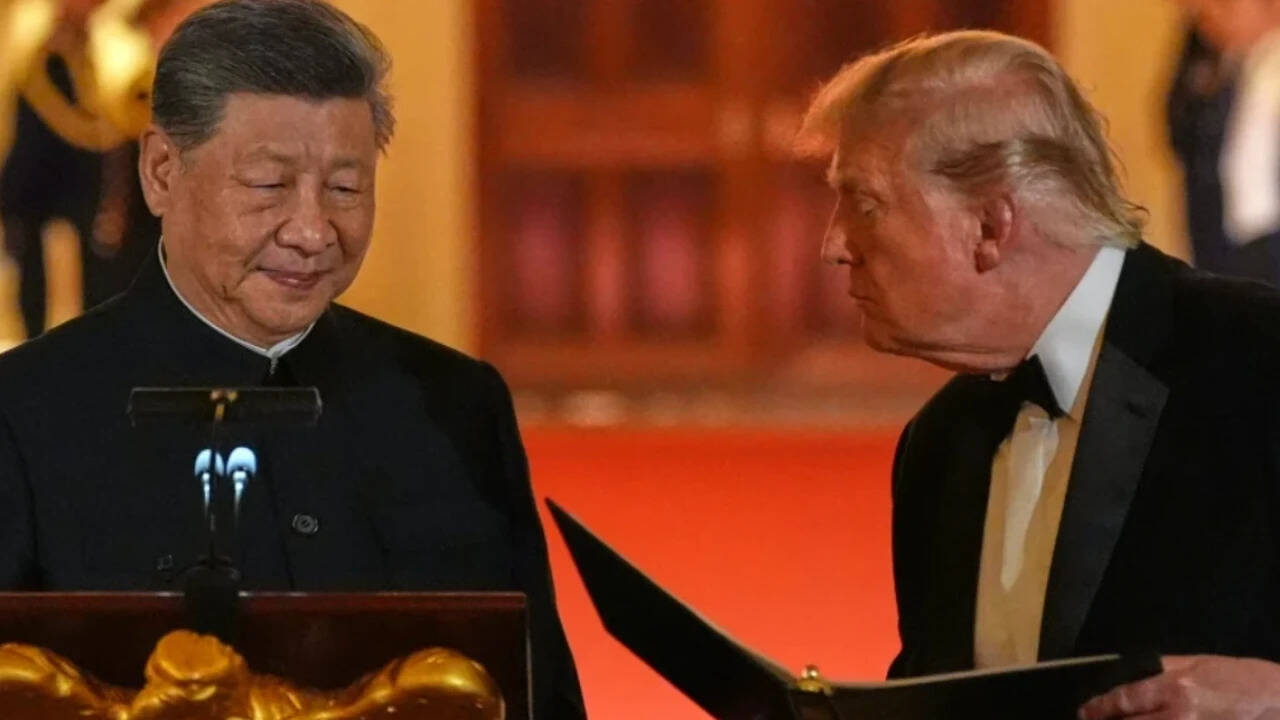
Trump-Xi meeting puts US-China ties, Taiwan and Washington’s arms policy in focusTOI correspondent from Washington: MAGA supremo Donald Trump has spent much of his presidency telling allies and partners, including India, to buy more American weapons. At his meeting with Xi Jinping, America’s top arms salesman apparently decided to extend the same customer-service offer to Washington’s principal military rival, China.
In a jaw-dropping disclosure, a fall-out from which American mandarins are scrambling to contain, US ambassador to China David Perdue has revealed that President Trump offered to sell arms to China, since Washington sold weapons to many other countries around the world. “He actually asked President Xi, would he like to buy some, at one point,” the ambassador told Fox News Sunday amid a clattering of jaws to the floor across much of the world which sees China as a US adversary, and is looking to Washington’s leadership to meet challenges from Beijing.
The State Department promptly applied diplomatic varnish to the bombshell, asserting that “US law prohibits arms sales to China and there is no offer or plan to sell arms to China.” The White House likewise said there were no plans for such a sale, but the clanger rippled across the diplomatic world despite Trump’s reputation as a maverick who adopts unorthodox ways and means to diplomacy.
Perdue himself reeled back from the implication that Trump is ready to throw Taiwan under the Chinese bus. “President Trump has already sold 50 percent more arms to Taiwan than any other president since 1979, and so I don't accept the premise that he's not doing all that we should be doing for Taiwan,” he said in a follow-up post on X.
Four Republican senators last week separately urged the administration to uphold US defense commitments to Taiwan. Countries from Japan to Australia to India would be affected by any policy pivot that results in arms sales to China, but the stakes are particularly high in Taiwan.
Xi's Washington visit came as Beijing was pressing Trump to halt arms sales to the island, while Taiwan awaits a roughly $14 billion US package that Trump has previously described as a “very good negotiating chip” in dealings with China. But the episode has inevitably raised questions in Taipei and among Washington's China hawks about whether Taiwan's security can become a bargaining chip in a Trump-Xi transaction.
For US allies and partners, who have been building their defense strategies around the assumption that Washington regards China's military power as a rival and a threat, Trump’s suggestion that Beijing might be a customer for American weaponry would create an extraordinary strategic contradiction, notwithstanding the legal obstacle his administration would face in funneling arms to China. The US has maintained restrictions on arms exports to China since the 1989 Tiananmen crackdown.


