
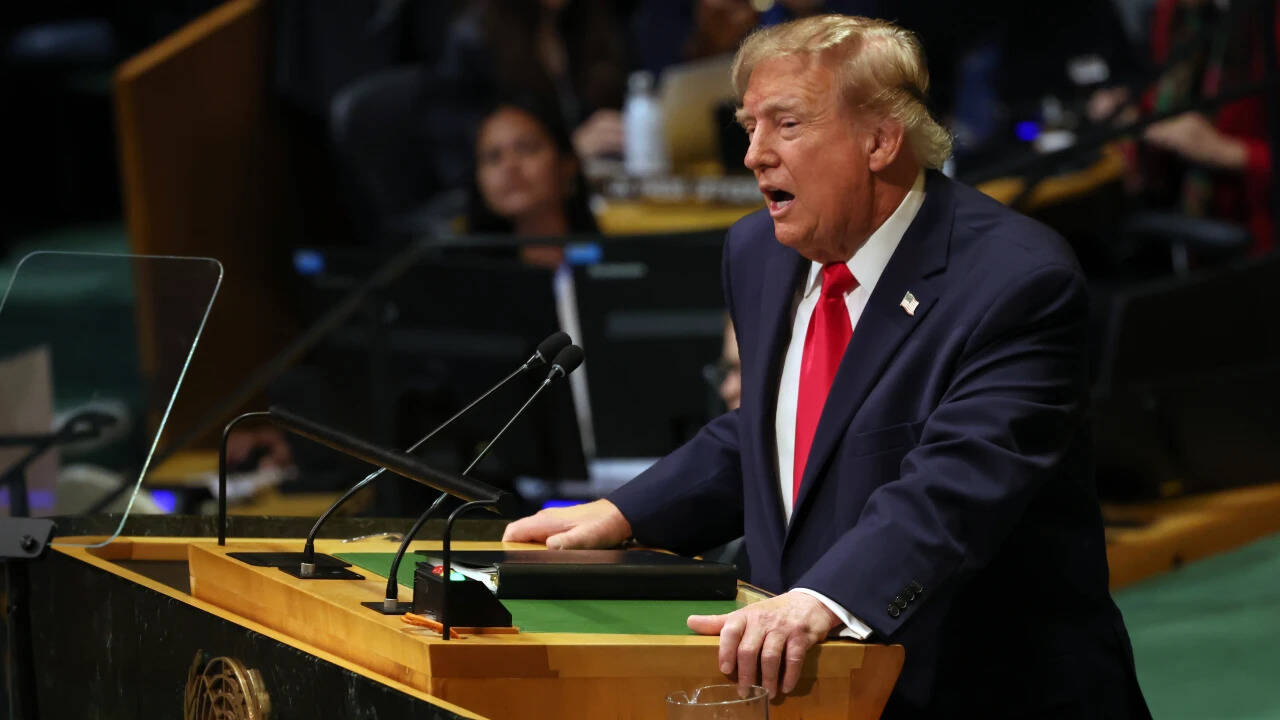
In a 40-minute speech before UNGA that ranged from the Middle East and Ukraine to climate change, AI , drug cartels and the future of the UN itself, Trump defended the US-Israeli war against Iran and said he believed Tehran would ultimately agree to a deal after America's November midterm elections. TOI Correspondent from Washington: US President Donald Trump issued his starkest warning yet to Iran on Tuesday, saying he faces a choice between reaching a deal with Tehran and “annihilating the Islamic Republic,” while scolding the rest of the world for not confronting it.
In the process, he also portrayed American military and economic power as the principal force capable of reshaping a turbulent world. “I have a big decision to make,” Trump told the assembled leaders, transparently reflecting a quandary.
“Will a deal be made with Iran ... or do I annihilate the Islamic Republic, and do it quickly?”
“As President of the most extraordinary nation in history, I have no interest in leaving dangers to grow for another day. I do not believe in letting problems fester; they only become harder to solve.
So, while others have talked, I have acted. While others have spoken of peace, I have made peace.
While others have ignored threats, I have confronted them. While others have talked of courage, America has shown it.
While others have promised strength, I have used it to make America the most powerful country in the world,” Trump said. The US President also claimed credit for ending the Gaza war and bringing home all remaining hostages, describing the outcome as a diplomatic achievement and praising the Security Council's endorsement of his 20-point Gaza peace plan.
On Ukraine, however, he offered no new diplomatic solution, saying simply that Washington was working closely with Moscow and Kyiv and that the war, which had pledged to end on " Day One" of his presidency, would be resolved “more quickly than people understand.” The conflict, now in its fifth year, continues despite repeated US mediation efforts.
Trump devoted an unexpectedly large portion of his address to artificial intelligence, rechristening the technology “super intelligence” and presenting American dominance in the field as a strategic imperative. On the eve of Chinese President Xi’s visit to Washington this week, he said the United States was “leading now over China by a lot” and argued that he would not restrict a technology he believes could prove more consequential than the Industrial Revolution.