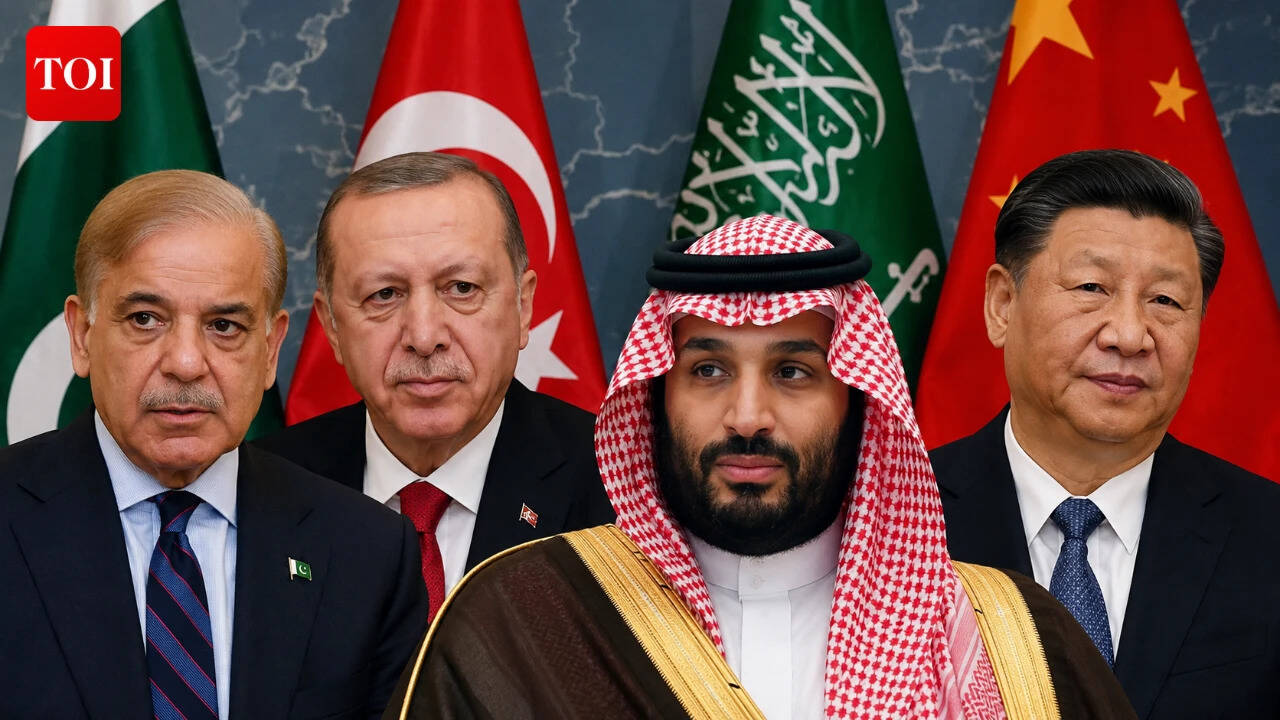
Mecca pact: Pakistan, Saudi Arabia & Turkey’s defence deal might end up being a big headache for China. There is no other way to put it: The new Pakistan-Saudi Arabia-Turkey defence pact is a setback for India.
True, it’s not directly aimed at India and one of the main financers of the deal, Saudi Arabia, is not agnostic towards India. In fact, India-Saudi Arabia ties have grown many folds in recent years.
But, if Pakistan is involved in any defence pact and that too as a net security provider, India will have to take note of it. Kanwal Sibal, India’s former foreign secretary, described the development as a "very negative development for Indian interests".
The Mecca agreement aims to strengthen defence cooperation and collective deterrence among Turkey, Saudi Arabia and Pakistan. The pact may embolden Pakistan to take a more belligerent attitude towards India.
Even if Saudi Arabia refuses to support Pakistan militarily in an India-Pakistan conflict, Islamabad could potentially benefit from intelligence cooperation, weapons flows, diplomatic support or financial assistance.. It was quite visible during Operation Sindoor.
So, the Mecca pact is definitely a concerning development for India. What about ChinaFor now, Beijing looks like a quiet winner.
Its entire approach to the Gulf has rested on staying friendly with everyone at once. It's been arming Pakistan, buying Iranian oil, courting Saudi Arabia and Turkey, and doing business with the UAE without ever picking a side.
With the new defence pact, Chinese weapon systems could even gain greater access to Gulf markets through Pakistan. But that is only half the story.
“The Pak-KSA-Turkey agreement is a logical outgrowth of the deepening security ties of these 3 countries in recent months. A more self-reliant Saudi Arabia, Turkey and Pakistan could reduce the need for constant US military attention in West Asia.
That, in turn, could give Washington greater capacity to concentrate on its principal long-term competitor: China. The Mecca pact may provide the US more leeway to put extra focus on the Indo-Pacific region and China.
The US regards China, not Russia or Iran, as its principal long-term strategic competitor. Any potential reduction in American military burdens in West Asia may allow Washington to devote additional resources on the Indo-Pacific front, critical minerals, advanced technology, supply-chain resilience and alliances surrounding China.