
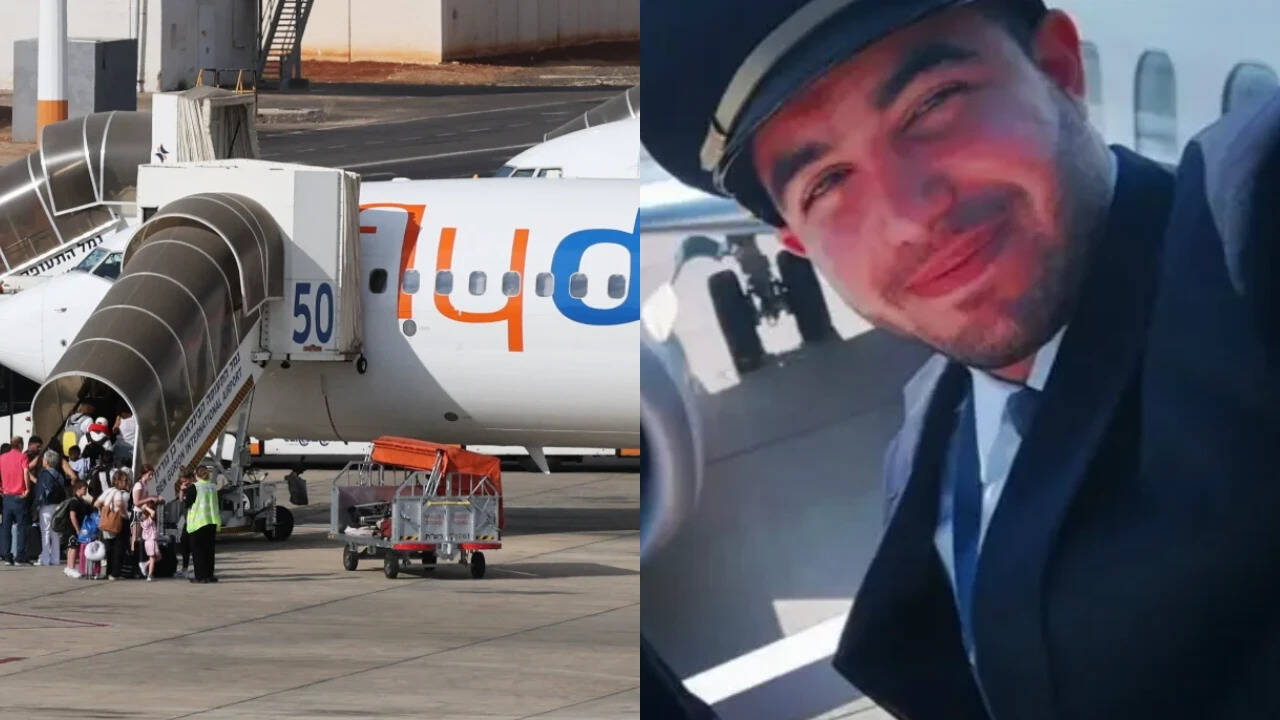
Hamam al-Hammami, the accused co-pilot in the flydubai incident (Image source: LinkedIn) The Omani co-pilot who attacked the captain of a flydubai flight bound for Tel Aviv may have tried to crash the aircraft in the Saudi desert after realising that passengers were about to thwart his attempt to seize control of the plane, according to an investigation by Italian newspaper Corriere della Sera cited by Ynet News. The report said the co-pilot, identified as Hamam al-Hammami, after repeatedly striking Indian captain Smit Machchhar with a crash axe, took control of the Boeing 737 after the injured captain activated the switch that allowed the cockpit door to be opened.
Once he realised his plan to crash the aircraft would fail, he allegedly tried to bring it down in the Saudi desert. According to the investigation, the attacker disconnected the autopilot and pushed the aircraft's controls sharply forward, sending the plane into a steep descent.
The aircraft lost around 16,000 feet in less than a minute. Report raises possibility engines were shut downThe Corriere della Sera investigation also raised a possibility not previously reported, that the co-pilot may have cut the fuel supply to the aircraft's engines.
Two Boeing 737 captains who examined videos recorded inside the aircraft reached this possibility after noticing that the emergency lights in the passenger cabin suddenly came on during the flight, Ynet News reported. The emergency lighting is designed to assist passengers during an evacuation or when an aircraft is on the ground.
According to the report, such lights would not normally be activated at cruising altitude. The two captains told Corriere della Sera that emergency lights can switch on when a Boeing 737 loses its main electrical power supply and moves to battery power.
That can happen if the aircraft's generators or engines are shut down. Investigators will therefore need to establish whether the co-pilot moved the switches controlling fuel flow to the engines from the “Run” position to “Cutoff”, according to the report.
Corriere della Sera said its investigation was based on passenger testimony, reports submitted to security authorities by the flight crew, accounts from people familiar with the incident, airport employees, air traffic controllers and data from several platforms. Videos recorded during the flight were analysed by Boeing 737 captains who spoke to the newspaper.
Emergency codes changed during crisisThe report also disclosed details about the emergency codes transmitted from the aircraft after additional pilots were called into the cockpit. One of the pilots transmitted squawk code 7700, which indicates a general emergency on a commercial aircraft without specifying its nature.