
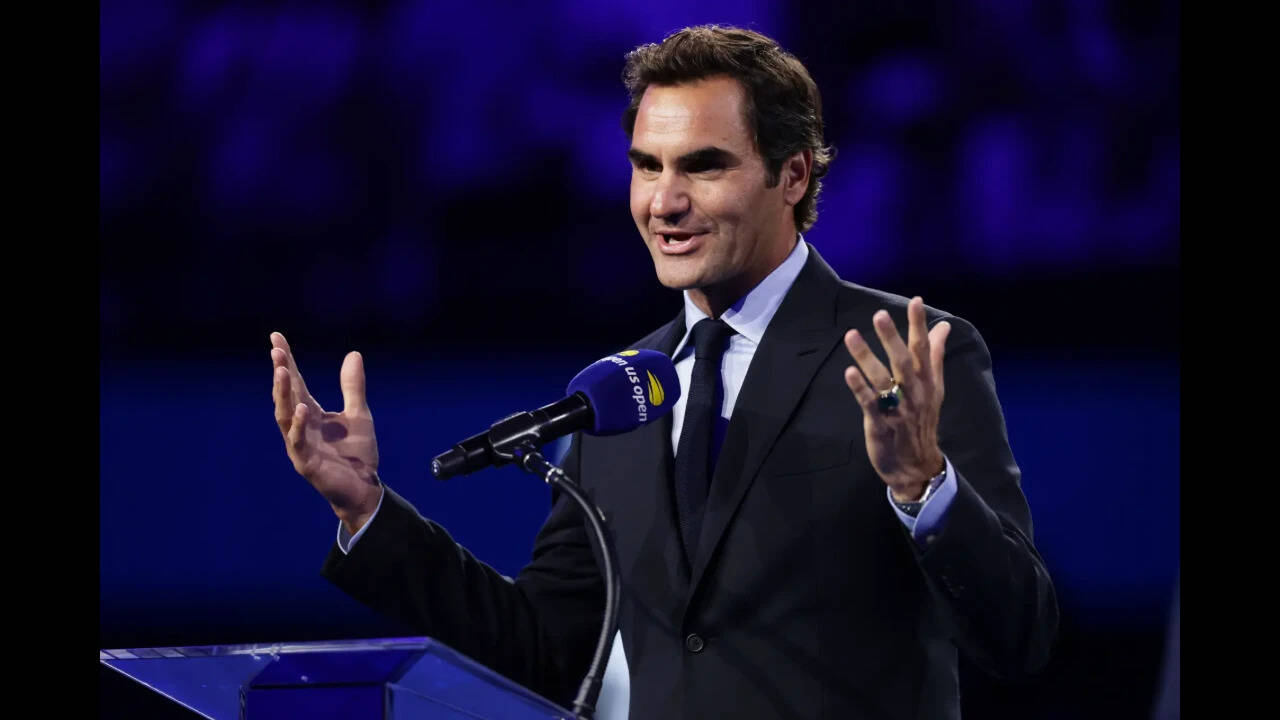
S. Open.
(AP Photo) Roger Federer’s career was built on numbers that seem almost impossible to comprehend. Twenty Grand Slam titles.
One hundred and three tour-level trophies. Three hundred and ten weeks as the world No.
1, including 237 consecutive weeks at the top. Five successive US Open titles between 2004 and 2008, a record that remains untouched in the Open Era.
But years ago, when the Swiss great was asked by a group of Golden State Warriors players how he had managed to sustain that extraordinary level for so long, his answer had remarkably little to do with the usual language of sporting greatness. No talk of outworking everyone.
No grand speech about sacrifice. No obsession with being better than the next player.
Instead, Federer spoke about something far more ordinary: his daily routine and the joy he found in it. The anecdote has stayed with Warriors coach Steve Kerr ever since.
Federer’s remarkable career, in perspectiveFederer, 45, was officially inducted into the International Tennis Hall of Fame on August 29 in Newport, Rhode Island. A few days later, he returned to New York to receive his Hall of Fame ring inside Arthur Ashe Stadium and spent time around the US Open — the tournament where he produced one of the toughest records in modern tennis.
Federer won five consecutive US Open titles from 2004 to 2008. He remains the only player, man or woman, to win five straight titles in New York during the Open Era.
Yet one of the most revealing stories about his approach to longevity came not from a Grand Slam final or a record-breaking season, but from a conversation with the Warriors during their 2017 trip to China. A question from Draymond GreenFederer was in Shanghai for the Masters tournament when the Warriors invited him to speak to the team.
“I’ll tell you a great story about Roger Federer. We were playing in China with the Warriors in 2017.
”“Draymond Green asked him, ‘How do you sustain success? How have you managed to win majors 20 years after you first won one?’
Everyone was expecting him to say, ‘I work harder than everybody,’ the will, all the clichés.” Instead, Federer talked about getting up in the morning, making breakfast for his children, taking them to school and then going to train.


