
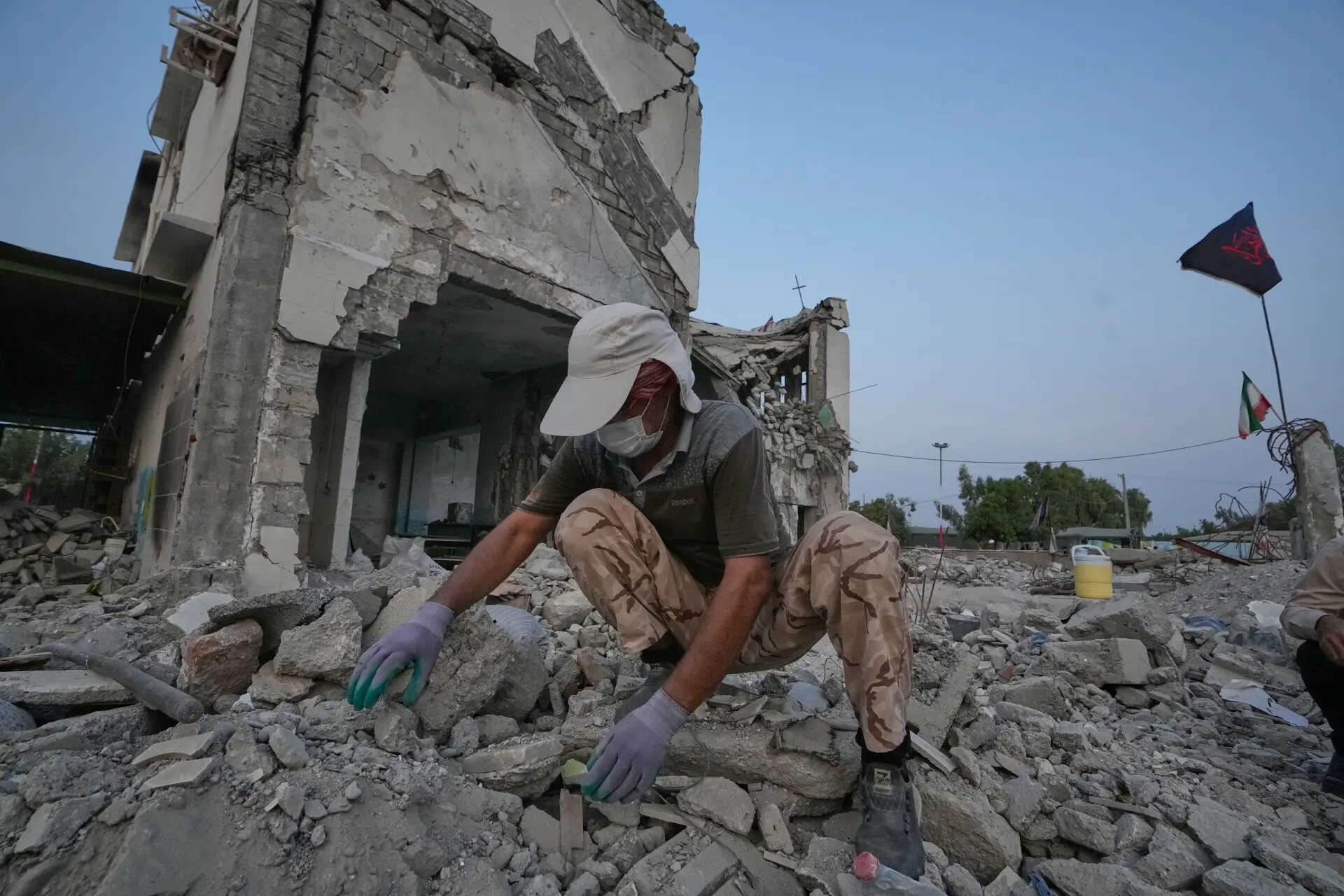
S. airstrike on Feb.
28, in MinabOutdated intelligence, a rushed targeting process and reliance on an AI-enabled system may have contributed to the deaths of more than 150 people, including at least 123 children, in a US missile strike on a school in Iran’s Minab in February. The findings do not establish that artificial intelligence independently selected the school as a target.
Instead, investigators have identified a series of failures across the US military's targeting process, including outdated satellite imagery, intelligence that was not properly updated, reduced civilian-harm checks and reliance on the AI-enabled Maven Smart System to help process information and prioritise targets, according to a Bloomberg report. The Pentagon has not publicly accepted responsibility for the strike and has said the incident remains under investigation.
The full findings of the probe, which began in March, have not been released. Maven, developed by Palantir Technologies, has become a central part of US military operations, combining information from more than 150 data sources to help personnel assess potential targets and coordinate operations.
Officials involved in the investigation said some personnel appeared to expect the system to identify inconsistencies or stale information in the intelligence supplied to it. AI-enabled kill chainThe Minab site had reportdly been classified in the US military's main intelligence database as an Islamic Revolutionary Guard Corps facility.
But the site had changed significantly over the years and had been operating as a school. Commercial satellite imagery showed that walls and entrances had been built to separate the school from the military compound, with a soccer pitch and other visible signs of civilian use.
One US intelligence analyst had identified changes at the site as early as 2019, but those observations were recorded in a system that was not connected to the primary database used for targeting. The investigation also found that the US military was working under intense time pressure before the February 28 assault.
More than 1,000 Iranian targets were struck during the first 24 hours, and work that would normally take much longer to assess and approve potential targets was compressed into days or even minutes, according to officials familiar with the probe. The Minab site emerged as one of the recommended targets.
The military's targeting process, known as the "kill chain", involves multiple stages. Intelligence analysts assess potential targets, imagery specialists examine the site, weapons planners determine how to conduct the strike, lawyers assess whether the target qualifies as a lawful military objective and commanders ultimately approve the attack.