
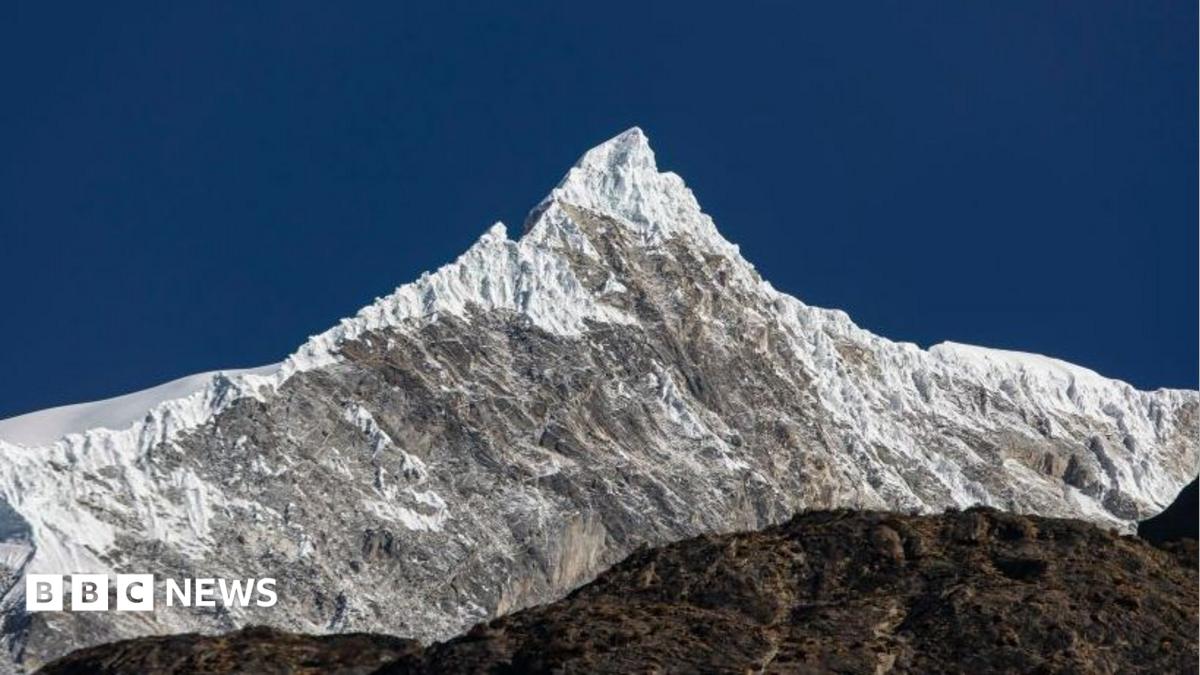
Initial reports of an earthquake led many to believe that a tremor had caused a landslide, which in turn caused the flood that has killed at least 389 people. However, the US Geological Survey then clarified that the disaster was caused by a "glacial collapse", which is when a glacier or part of a glacier disintegrates.
2, according to USGS data and scientists who have analysed the event. Dr Simon Cook, a glacier expert with the University of Dundee, told the BBC his team had detected that the lower part of a glacier in Nepal near the Langtang Lirung peak - which is approximately 15km (9 miles) west of the site of the floods - had collapsed.
He estimated that the glacier collapsed in a northwesterly direction and then travelled westwards downstream. This caused a "large volume of ice and rock debris" to enter the Lende Khola, a tributary of the Bhote Koshi river, which in turn generated a sudden surge in the river carrying water, sediment and large boulders downstream.
The centre found that water levels in rivers downstream rose by between seven and nine metres within a span of 30 minutes, and several water monitoring stations were washed away or damaged. Image source, Getty ImagesImage caption, Scientists say a collapsed glacier near the Langtang Lirung peak likely caused the disasterMike Searle, a professor of earth sciences at Oxford University, said that this whole process - from landslide to flood - could have taken hours or even days."
The sheer wave of debris suggests there could have been a landslide first; the water built up, dammed the river, and then it burst in one huge great flood," he told the BBC. The topography of the area could have also exacerbated the flood.
Searle pointed out that Langtang Lirung sits on the crest of the high Himalayas and there are "incredibly steep valleys" on both sides of the mountain, which could have funnelled the water at higher speeds. Image source, ReutersImage caption, Images from the scene show the steep sides of the affected valleyIt is still unclear what caused the glacier to collapse on Wednesday.
Searle said that Langtang Lirung, like the rest of the Himalayas, has been slowly rising due to long-term tectonic movement, where one plate has been pushing another plate up. "" As the mountain is rising, the glacier gets steeper and steeper, and it's inevitable that parts of it fall off."
But usually these are smaller chunks which temporarily block the rivers, and are easily flushed out, he said. However, in this disaster, the whole glacier seems to have collapsed "in one go", which Searle said is "very unusual".