SynopsisClevel and Fed President Beth Hammack has stressed the urgency of adopting a strict monetary policy as a response to mounting inflation that now permeates various sectors, not just energy. She advocates for prompt adjustments to keep inflation on target at 2%, emphasizing transparency in Fed policies to aid both households and businesses in their financial planning amidst rising prices.
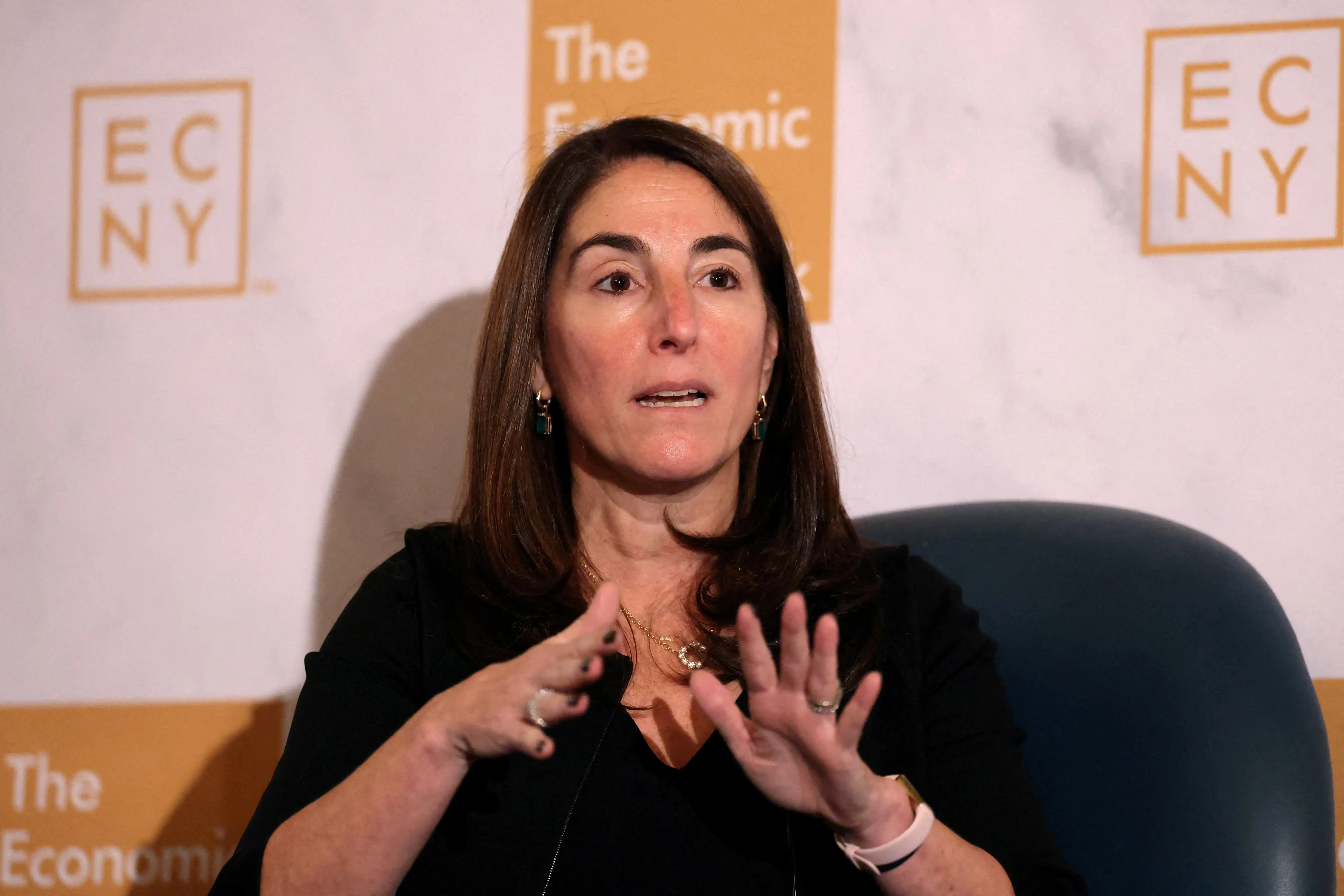
, November 6, 2025. REUTERS/Brendan McDermid/File PhotoClevel and Fed President Beth Hammack said on Monday the US central bank should move "relatively quickly" to a restrictive monetary policy stance in order to control inflation she feels has become more broad-based and is starting to influence firms' price-setting plans."
I see inflation pressures as relatively broad-based rather than concentrated in one component. Energy has been making headlines this year, with prices rising for oil, retail gasoline, and diesel, but it isn't the whole story," Hammack said in remarks prepared for delivery to a National Association for Business Economics conference.
Her remarks cited recent conversations in her district with firms planning to boost prices faster than their input costs are rising." A restrictive monetary policy stance is appropriate to ensure a timely return to 2% inflation," Hammack said.
" When feasible, I generally think it's preferable to make smaller adjustments, and to do so relatively quickly, rather than to wait and risk needing a larger course correction" if inflation becomes more persistent or inflation expectations start to rise. ".
This is raising costs for data centers, yes, but also for projects that use similar components in aviation, electricity production, and construction," Hammack said. Current data does not point to "an economy in which the crew are exhausted and the boat is taking on water.
It reads, instead, as one that can handle a tighter hand on the tiller to finish the job on inflation," Hammack added. 00% range at its October 27-28 meeting.
Hammack, a voting member of the central bank's policy committee, has been among the more hawkish Fed voices, and dissented in favor of raising rates at the meeting in July. Her colleagues, including Fed Chairman Kevin Warsh, joined her in voting to raise rates in September.
Hammack also said she felt it was important for policymakers to continue explaining their views, in particular providing their likely reaction to different economic data. Warsh has said he prefers a "quieter" Fed and is particularly opposed to forward guidance, or firm commitments to future policy decisions.