China has vowed to protect its interests after the US announced plans to widen economic sanctions against Iran and its trading partners, which include Beijing. Foreign ministry spokesman Lin Jian said China was firmly opposed to what it called "illegal unilateral sanctions" and would take "all necessary measures" to safeguard its rights.
This came after US Treasury Secretary Scott Bessent announced the new measures on Monday, warning any nation financially partnering with Iran would be isolated. China is the biggest buyer of Iranian oil, although the trade has declined under the US blockade of Iran's ports.
Lin said: " Cooperation between China and Iran has always been conducted within the framework of international law and should not be interfered with or disrupted." Bessent described the plans for sanctions as "the single greatest financial offensive ever" against Iran, warning banks and businesses would share in Iran's isolation if they refused to cut ties with the country.
The US has dubbed its latest sanctions " Operation Economic Outcast" and described them as an "economic D-Day" against Iran. It comes almost six months after the start of the Iran war.
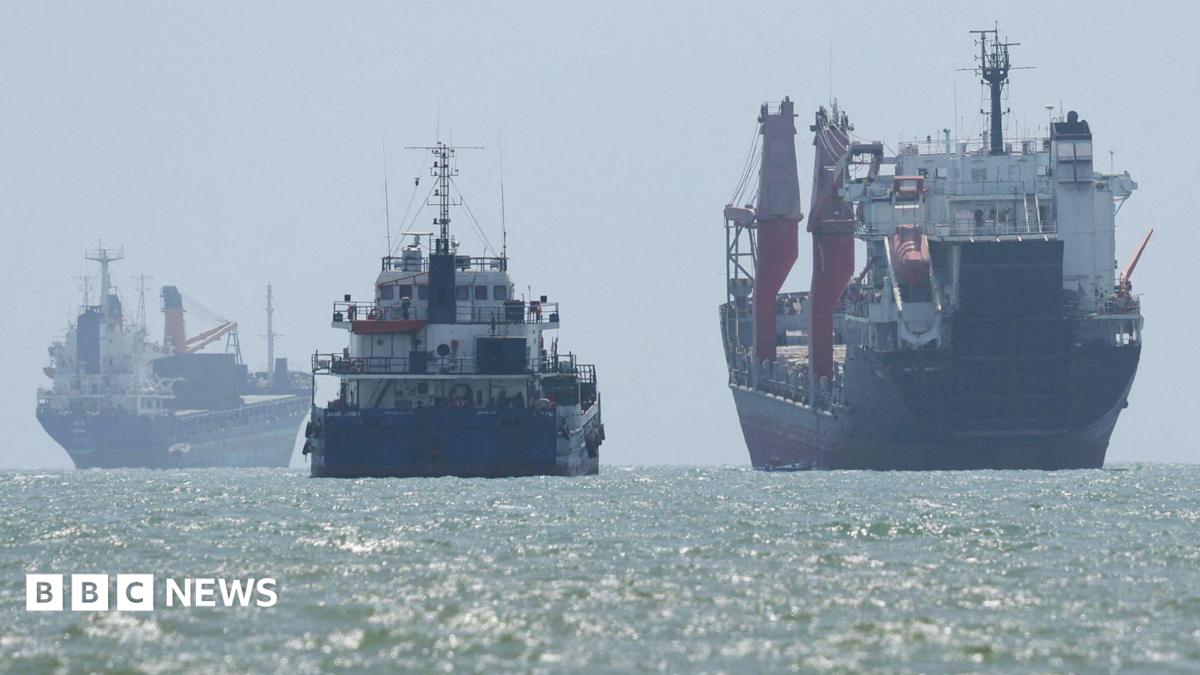
The conflict has since led to hikes in oil prices worldwide, with Tehran effectively blocking exports through the Strait of Hormuz - a waterway vital to the global economy. The US has also slowed traffic via its own naval blockade.
Recent attempts to end the conflict via diplomacy have failed, and a 60-day ceasefire formally expired last week with no sign of a settlement. Iran is already under heavy sanctions from the US, but Bessent said these go further.
He said the Treasury had mapped financial channels, facilitators and networks used by Iran to evade sanctions to trade oil, imposing sanctions on almost 60 entities, individuals and vessels. But analysts had cast doubt on the latest measures even before China's response.
David Oxley, chief climate and commodities economist at Capital Economics, told the BBC the direct impact on Iran's energy revenues would be "somewhat of a damp squib". " We suspect that the new package will have only a limited direct impact on Iranian energy flows in the short term," he added.
Ali Vaez, deputy director of the Middle East and North Africa Program at the International Crisis Group, said: " Generally, the Chinese are against unilateral sanctions. They would comply with multilateral or international sanctions, but unilateral sanctions just imposed by the US - they have always seen that as illegitimate."