
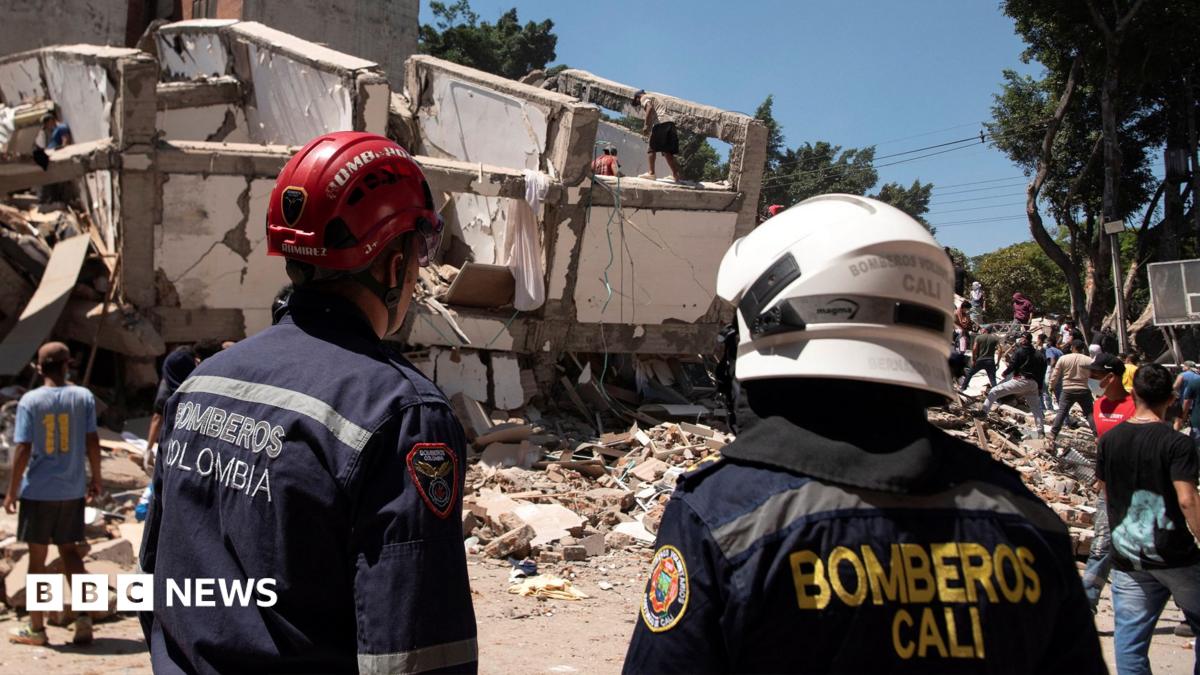
4 earthquake struck western Colombia at 07:34 (12:34 GMT) on Monday, killing at least 132 people and injuring more than 480 others.
The quake occurred at a depth of 103km (64 miles) in Chocó province, with its epicentre located near the village of San José del Palmar.
Colombia's President Abelardo de la Espriella has declared a national disaster situation after confirming that more than 1,500 homes have been damaged.
The tremors were felt across hundreds of miles in western Colombia, as well as in neighbouring Venezuela, Ecuador, and Panama. Despite proximity to the epicentre, San José del Palmar Mayor Leó n Fabio Marí n Moncada reported no deaths or injuries in the village, though local access roads sustained damage.
Key impact details across affected areas include:
Pereira: Authorities reported at least 40 deaths and 65 collapsed buildings in the metropolitan area, with people believed to be trapped in 15 of them. A curfew was implemented in parts of the city until 05:00 local time on Tuesday.
Cali: Located 160km south of Pereira and about 200km from the epicentre, the city recorded 32 collapsed buildings. Manizales: At least two fatalities were confirmed in the city, located approximately 150km from the epicentre.
Infrastructure: Regional airport damage was reported in Pereira, Manizales, Quibdó, Armenia, Cartago, and Buenaventura. Bogotá: Buildings cracked and traffic lights shook violently, but no serious infrastructure damage was reported in the capital.
International support has been offered following the disaster. US Secretary of State Marco Rubio stated the US is ready to support, EU chief Ursula von der Leyen noted that the EU's Copernicus satellite is assisting rescue operations, and President of El Salvador Nayib Bukele offered rescue personnel and equipment.
According to the US Geological Survey, an estimated 1.5 million people felt shaking close to magnitude seven. The USGS noted that deep earthquakes like this one typically break further from the Earth's surface and release energy that can damage structures while resulting in fewer but potentially stronger aftershocks.