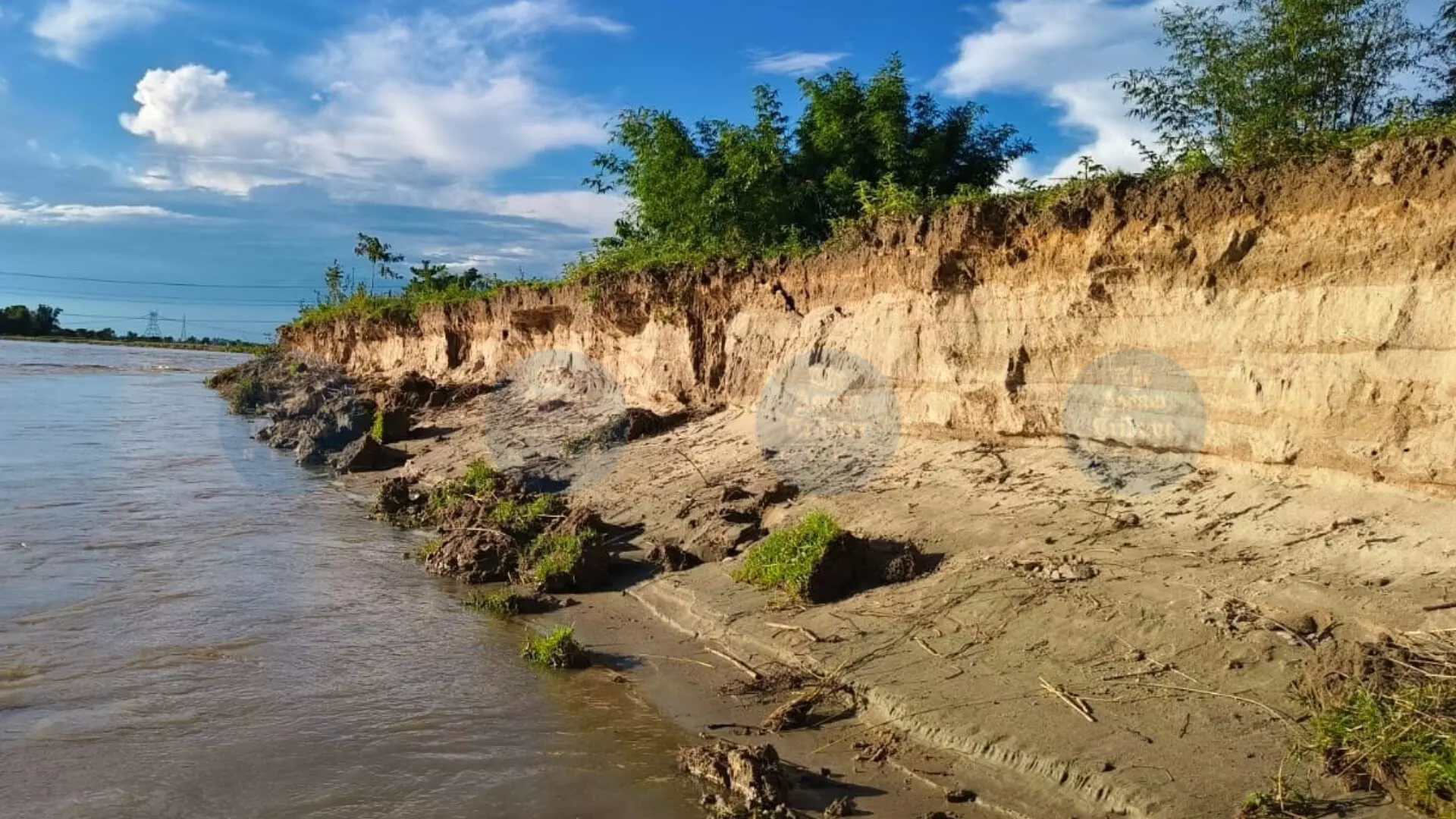
It is utterly disappointing that the people of Assam have had to keep wrestling with natural disasters like floods, riverbank erosion, landslides and other environmental problems year after year, particularly during the rainy season, since the great earthquake of 1950 changed the course of the Brahmaputra and its tributaries. It is high time that the authorities came out with a long-term scientific strategy to mitigate the untold suffering of the floodand erosion-affected people.
Sadly, there is thus far no sign at the end of the tunnel of finding a sustainable solution to address Assam’s flood and erosion problems. The fact that floods are not just far too insidious but also ravaging has become much more pronounced recently when four districts of the State, namely Sivasagar, Charaideo, Jorhat and Golaghat, which were traditionally not affected by floods of such a colossal dimension, confronted unprecedented, widespread devastation as swelling rivers like the Dikhow flowed downstream, and age-old embankments tottered under the mounting pressure of raging river currents, and floodwaters spread across towns, villages and agricultural land in no time.
A study reveals that key water-carrying channels like the Desang, Jhanji and Dikhow have lost between 30 and 70 percent of their depth. Resultantly, the riverbeds have become alarmingly shallow.
However, the immediate reason for the disaster was without doubt the exceptionally heavy rainfall over Nagal and and its adjoining hilly regions, which caused the monstrous flooding in Upper Assam. The study reveals that within a short span of time, excessive rainfall can cause large-scale damage to public and private property, standing crops, besides claiming human and livestock lives, as is evident from the ferocity of the recent Upper Assam floods due to record rainfall and rising riverbed levels caused by heavy sediment.
Flooding is a recurring hazard in Assam; every year, floods wreak havoc on the people during the rainy season. If we make a comparative study of the intensity of the recent floods and those of the previous years the State has experienced, a few crucial things will come to the fore.
For instance, due to global warming, changing weather conditions and the lack of an early warning system, the flood situation is worsening every year following torrential rains, making life miserable beyond comprehension for the flood-affected people. To tide over the crisis, the government will do well to draw lessons from the best flood-control measures adopted in other countries and try to thoughtfully replicate them in our State.