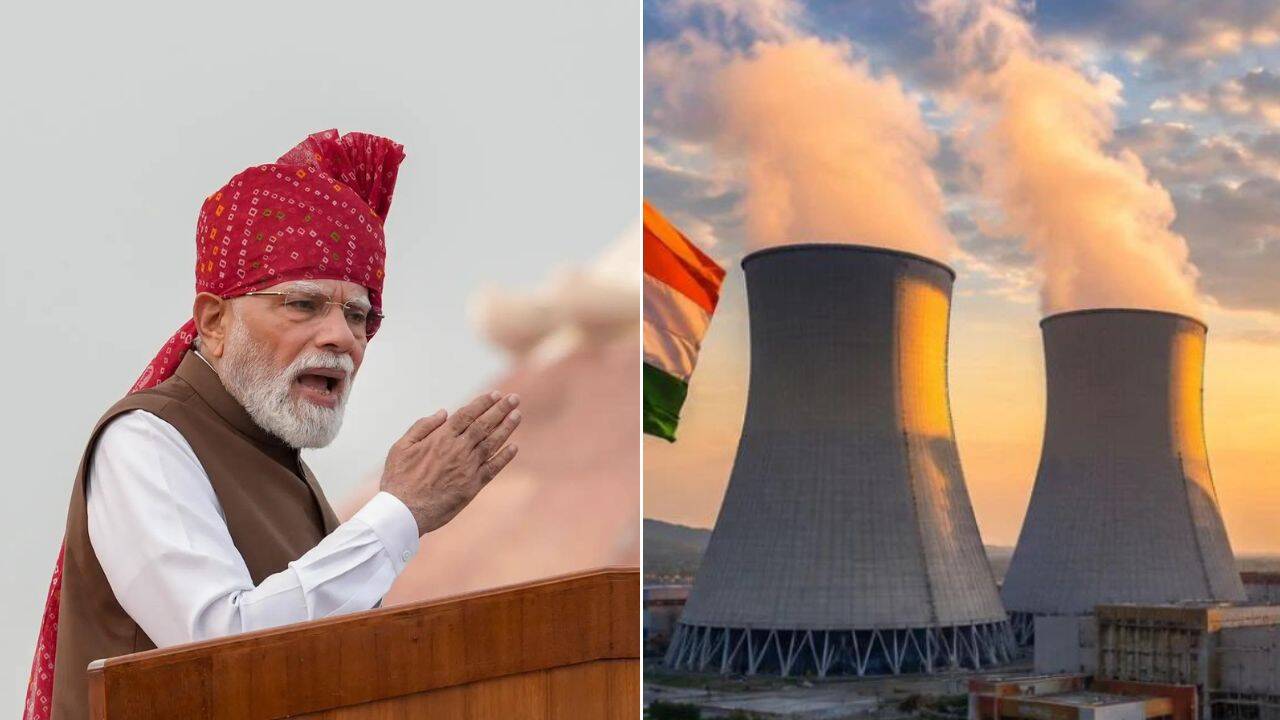
Target of 100 GW of nuclear energy by 2047, 5 new nuclear reactors to be operational within 6-7 years: PM ModiNEW DELHI: Prime Minister Narendra Modi on Saturday announced an expansion of India's ambitious nuclear power programme, setting a target of 100 GW of nuclear power capacity by 2047. PM Modi said five new nuclear reactors would be operationalised during this decade as the country seeks greater energy security and self-reliance.
Addressing the nation from the ramparts of the Red Fort on the 80th Independence Day, PM Modi said India had taken an important step towards self-reliance in nuclear energy with the 500 MWe Prototype Fast Breeder Reactor (PFBR) at Kalpakkam in Tamil Nadu attaining first criticality in April this year. PM Modi said nuclear power would be an important component of India's energy security as demand for electricity rises with the expansion of technologies such as semiconductors, artificial intelligence and data centres.
“The new world cannot run without energy. Whether they are (semiconductor) chips, AI or data centres, the country needs lots of electricity … That’s why we have already taken strong steps to ensure energy security,” he added.
PM Modi said India had set the goal of reaching 100 GW of nuclear power capacity by 2047, with five new reactors expected to become operational in the current decade. India enters second stage of three-stage nuclear programmeThe PFBR at Kalpakkam marks India's entry into the second stage of its three-stage nuclear power programme, originally conceived by Homi J Bhabha.
The 500 MWe reactor, developed and built indigenously at the Kalpakkam Nuclear Complex, attained first criticality on April 6, 2026. It is being built by Bharatiya Nabhikiya Vidyut Nigam Limited, or BHAVINI, under the Department of Atomic Energy, with technology developed by the Indira Gandhi Centre for Atomic Research.
The first stage of India's nuclear programme relies on Pressurised Heavy Water Reactors, or PHWRs, which use natural uranium as fuel and produce plutonium as a byproduct. The second stage uses this plutonium in fast breeder reactors.
The PFBR uses uranium-plutonium mixed oxide, or MOX, fuel and is designed to produce more fissile material than it consumes. The third stage of the programme is aimed at using India's large thorium reserves to produce uranium-233 for nuclear power generation.
The PFBR is therefore intended to serve as a bridge between India's existing uranium-based nuclear programme and its longer-term thorium-based energy strategy. Why PFBR matters for India's nuclear expansionThe PFBR is a 500 MWe sodium-cooled fast breeder reactor designed to use plutonium-based fuel while breeding additional fissile material.